Cuenca Marches for Its Water Again: A Year After the 100,000-Strong Quinto Río
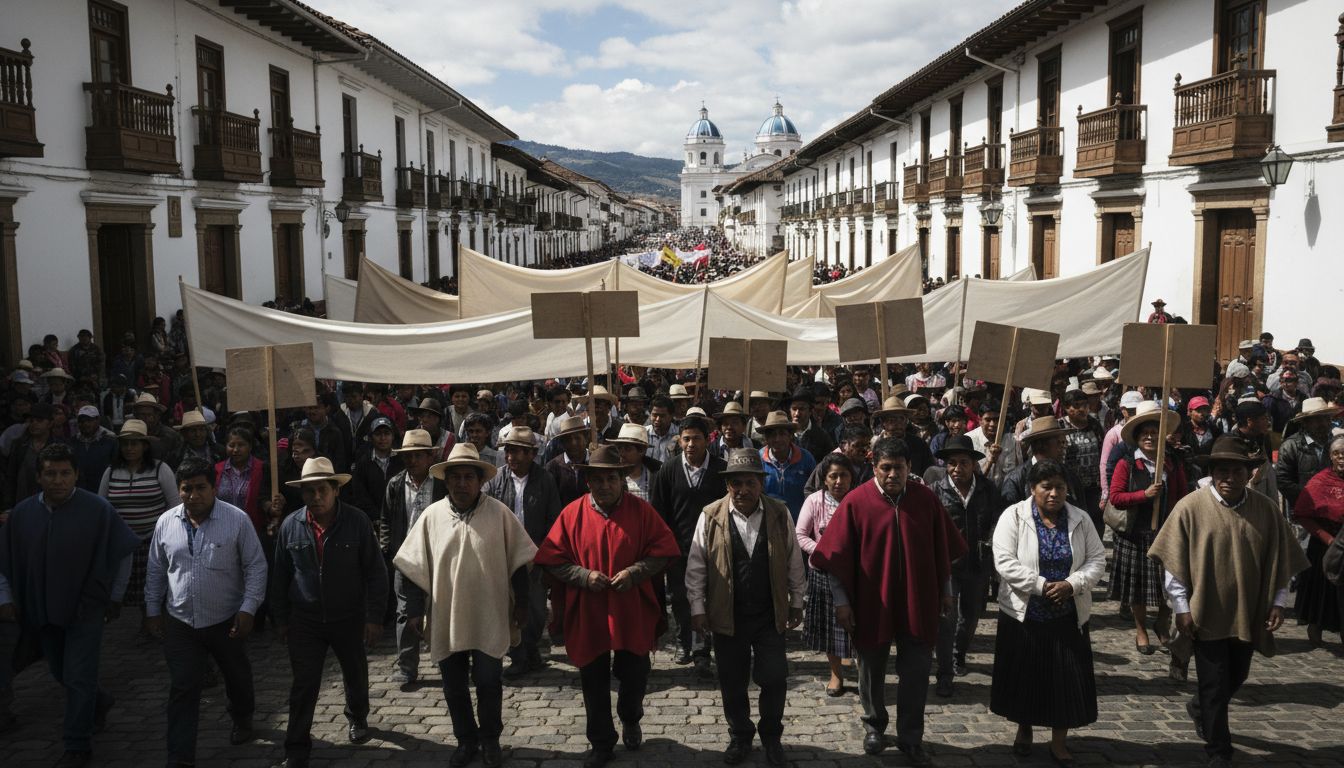
Cuenca Marks One Year Since 'Quinto Río' With Second Water Defense March
On September 16, 2026, residents of Cuenca, Ecuador gathered for the second consecutive year to commemorate the Quinto Río mobilization, a march that drew an estimated 100,000 participants in 2025 and stands as one of the largest environmental demonstrations in the country's recent history. This year's turnout was notably smaller, with wire reporting placing the crowd at roughly a thousand people. Organizers and participants framed the event as a continuation of a broader campaign to protect water sources in the Quimsacocha páramo from mining activity, chiefly tied to the long-contested Loma Larga project.
Many observers note that the shift in scale between the two marches raises questions about momentum, fatigue, or shifting public attention, though no single explanation has been confirmed across the available reporting. The event unfolded against a backdrop of continued tension between mining interests and communities who see the páramo's water sources as central to their livelihoods and identity.
What Protesters Are Demanding
Demonstrators voiced opposition to the Loma Larga mining project and to mining concessions more broadly near the Quimsacocha lagoons. Recurring demands included greater transparency regarding concessions, land registries, and environmental licenses tied to mining operations in the area.
A central theme was the call for authorities to honor the outcomes of popular referendums held in 2019 and 2021, in which a large majority of Cuenca voters, reported at approximately 80 percent, voted against large-scale mining activity in the region. Protesters and organizers argue this sovereign decision has not been fully respected in subsequent years. A manifesto addressed to President Daniel Noboa was reportedly read during the event, reiterating these transparency and enforcement demands, though the full contents and any official response have not been independently verified in the available coverage.
Who Participated and How the March Unfolded
According to live coverage, the march followed a route from the San Roque neighborhood to the historic Plaza de San Francisco. Participants included members of indigenous and social organizations such as Ecuarunari, Conaie, and FOA, reflecting a coalition of environmental and indigenous rights groups long involved in the Quimsacocha dispute.
Indigenous leader Leonidas Iza was reported among those present, lending additional political visibility to the event. Coverage also referenced ancestral ceremonial elements incorporated into the demonstration, alongside more festive components such as music, dance, and traditional costumes, a blend that outlets described as both commemorative and protest-oriented in character.
Political Timing and the Proselytism Question
The march took place weeks ahead of Ecuador's local elections scheduled for November 29, a timing that added political sensitivity to the event. Organizers reportedly made explicit requests that the march not be used as a platform for electoral campaigning or proselytism.
Despite these requests, multiple outlets noted the presence of political figures and, in some cases, electoral candidates at the demonstration. A recurring concern among some observers is that civic and environmental mobilizations of this kind can become entangled with electoral politics, complicating the line between grassroots advocacy and campaign visibility. Whether this occurred to a significant degree at this particular event is not clearly established across the available reporting.
Unresolved Questions and Claims Requiring Context
Several aspects of the story remain only partially clarified in current coverage. The Loma Larga project's operational status has been described by at least one source as currently paralyzed, though this characterization has not been corroborated across all outlets reviewed. The project's ownership, reportedly tied to Canadian mining interests, is referenced in passing across sources but not elaborated in detail.
Claims regarding potential environmental or health risks associated with mining in the Quimsacocha area are generally attributed to activists and public figures, including Yaku Pérez, rather than presented as independently verified findings by the reporting outlets themselves. A recurring community concern voiced by participants centers on possible impacts to water quality and agricultural livelihoods, but these remain framed as warnings and positions taken by advocates rather than established conclusions.
Finally, the marked difference in turnout between the 2025 and 2026 marches, roughly 100,000 versus approximately 1,000, is noted across sources without a clear consensus on its significance. Some may read it as a natural ebb following a landmark mobilization, while others may see it as a signal worth watching as the movement continues into an election season.