Yahuarcocha: The Lake of Blood Where an Expat's Afternoon Drive Met Ecuador's Buried History
Yahuarcocha: The Lake of Blood Where an Expat's Afternoon Drive Met Ecuador's Buried History
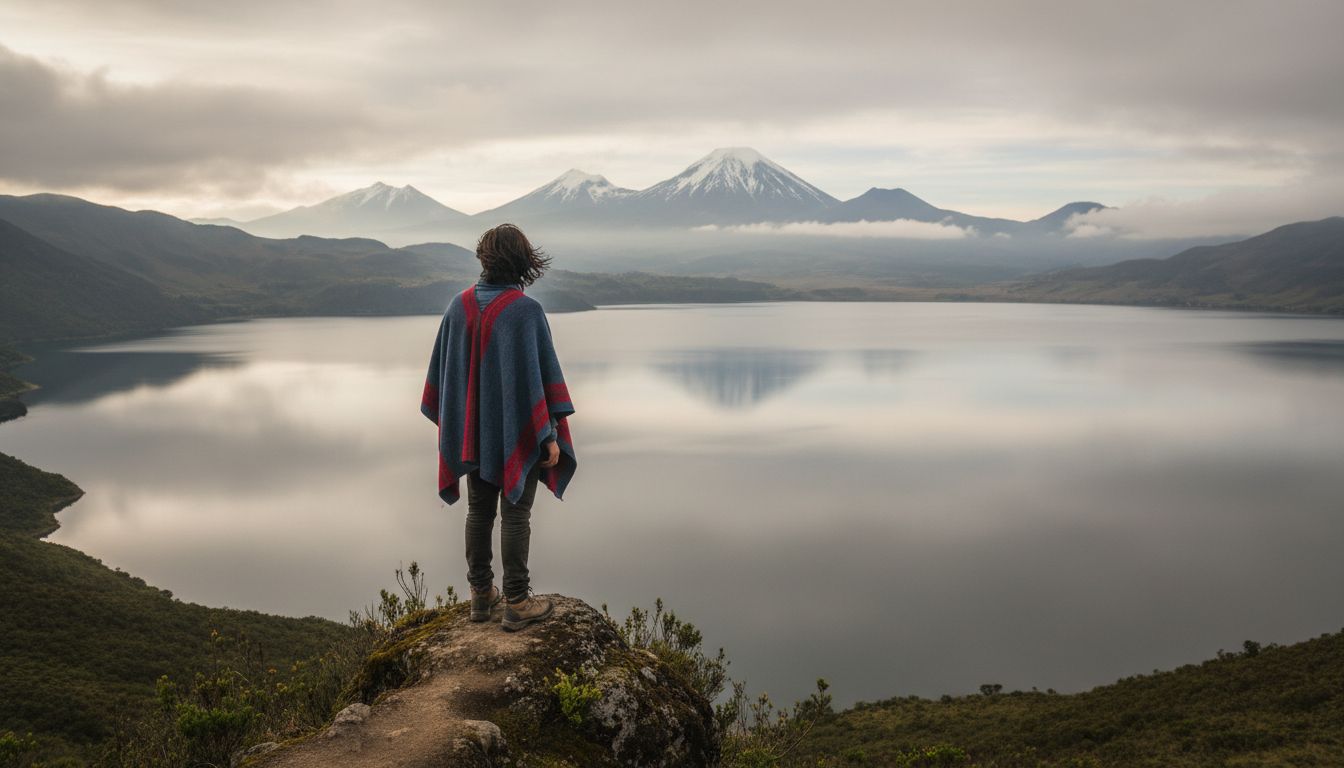
The first time I saw Laguna de Yahuarcocha, I had no idea what its name meant. I had driven up from Ibarra on a whim, chasing a recommendation from a neighbor who said the lake was worth the detour. What I found was a wide, glassy stretch of water framed by green hills, dotted with paddle boats and rimmed by a paved track that seemed built for speed rather than serenity. It was, by any measure, beautiful.
It was only later, scrolling through a translation app out of idle curiosity, that I learned the name in Quichua: Yahuarcocha, "Lake of Blood." The words landed with a strange weight. I had just spent an hour admiring the view, unaware that the lake carried a name meant as a warning rather than an invitation.
The Legend Locals Tell
Ask around Ibarra long enough and you will hear some version of the story. According to local oral tradition, the lake's name traces back to a brutal battle between Inca forces under Huayna Capac and the indigenous Caranqui people, fought sometime in the late fifteenth century. The telling varies depending on who you ask, but the core is consistent: thousands of Caranqui warriors were said to have been killed, their bodies cast into the lake until the water itself ran red.
I want to be careful here, because this is legend passed down through generations, not a footnoted historical record. The versions I heard differed in details — the number of dead, the exact sequence of events, even which side is described as the aggressor. What stayed constant was the emotional core of the story and the discomfort it left behind. The first time a shopkeeper near the lake told me this, half in Spanish and half in gestures toward the water, I felt a mix of skepticism and unease that I still haven't fully shaken.
When the Ground Gave Up Its Bones
What complicates the legend, at least in the way it circulates locally, is a claim I've heard repeated but never seen formally documented: that archaeologists at some point found bones roughly a meter below the lake's floor. I want to flag this clearly — I have not been able to verify this claim through any accessible primary source, and there's no plaque, marker, or public record at the site explaining such a find in detail. It may be true, it may be exaggerated, or it may be one of those details that gets attached to a legend until it hardens into something that sounds like fact.
Still, the emotional effect of hearing it is hard to describe. A story that had lived comfortably in the realm of folklore suddenly felt uncomfortably physical. Legends are easy to hold at arm's length. The idea of actual remains beneath the water you're looking at is not. Whether or not the claim holds up to scrutiny, it changed how I looked at the lake for the rest of the afternoon.
A Racetrack Circles the Grave
What makes Yahuarcocha stranger still is what surrounds it today. The Autódromo José Tobar Tobar, a motorsport circuit, wraps almost entirely around the lake, drawing racing fans and weekend visitors from across the region. On the day I visited, the sound of engines mixed with music from a lakeside restaurant, and families were out picnicking along the shore. Locals fished quietly near the reeds. Tourists pedaled paddle boats in slow loops, seemingly unbothered by — or simply unaware of — the story beneath them.
There is something particularly Latin American about this juxtaposition, though it's far from unique to Ecuador: leisure and recreation layered directly on top of sites carrying real or rumored historical trauma. It's not that people are indifferent to the past. It's that daily life continues, has to continue, even in places where the past is heavy. Watching a child laugh from a paddle boat while I turned the legend over in my mind felt like standing at the intersection of two entirely different relationships to the same place.
What an Expat Takes From a Lake Like This
Encountering Yahuarcocha changed the way I look at landscapes here more broadly. Ecuador is full of places that look purely scenic until you learn their names, their stories, their unresolved histories. As an outsider, I try to hold these stories with some humility — repeating local legend is not the same as confirming historical fact, and I think there's a responsibility in making that distinction clear, especially with something as serious as a claim of mass violence.
What I can say honestly is this: the lake is beautiful, the legend is old and heavily varied in its telling, and the claim about buried remains is one I can neither confirm nor dismiss. That uncertainty, oddly, feels like an appropriate way to leave it. Living abroad means constantly discovering that the places you fall in love with often carry pasts far heavier than their surfaces suggest.
I think about Yahuarcocha most vividly at dusk, when the racetrack empties out and the water goes still and dark. The engines quiet down. The paddle boats are pulled ashore. And the lake just sits there, calm and reflective, giving nothing away about what, if anything, might still lie beneath it.