Why Some Places Change You Forever
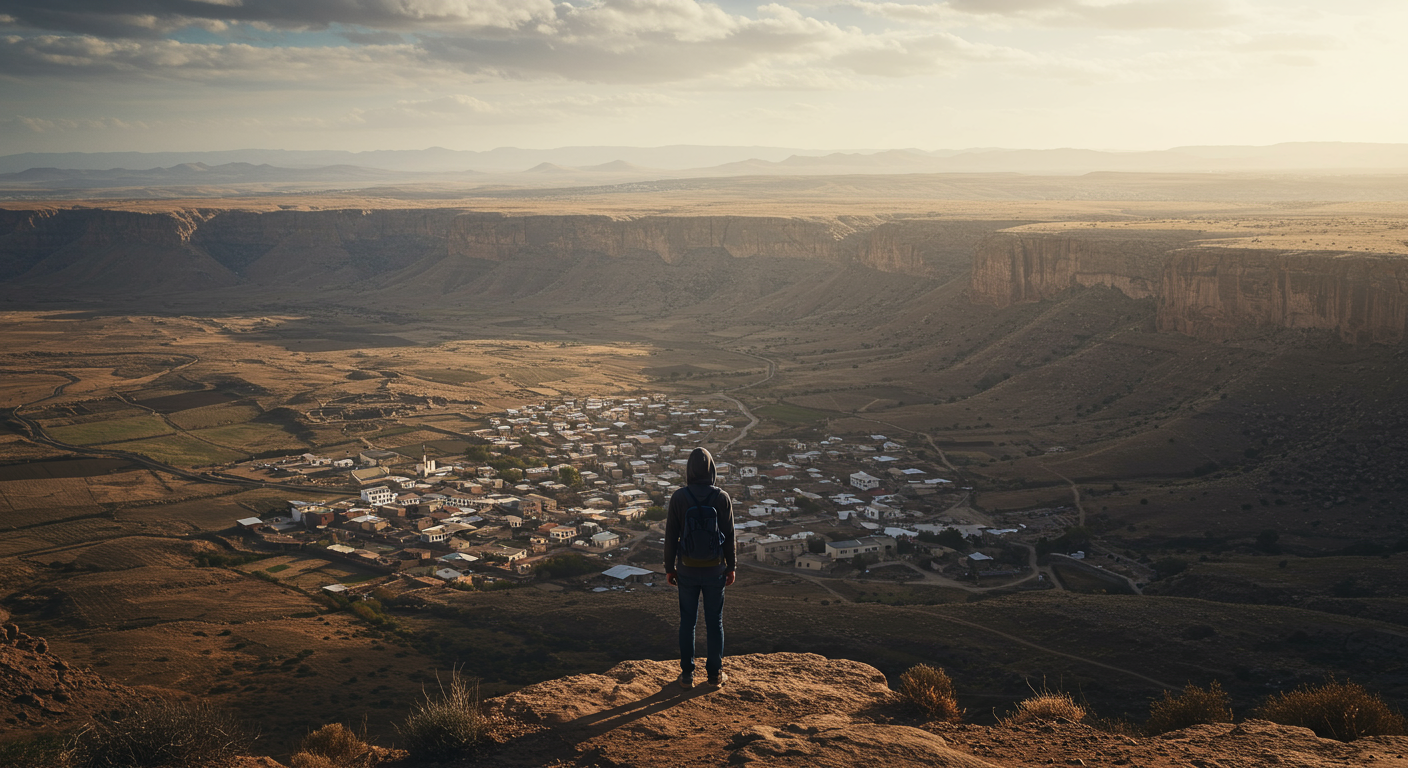
There are places that mark us in ways we never anticipated. Not the tourist destinations we visit for a week, snapping photos and collecting memories, but the places that somehow manage to rewire our understanding of who we are and who we might become. For many expats, these transformative locations become turning points in their personal narratives—the before and after places that divide their lives into distinct chapters.
The Geography of Transformation
What gives certain places the power to fundamentally alter us? It's not always the most obviously beautiful or exotic destinations that leave the deepest marks. Sometimes it's an unremarkable city where you first lived alone, or a small town where you learned to navigate life in a second language. These transformative places seem to possess an almost magnetic quality, drawing out versions of ourselves we didn't know existed.
The difference between visiting and being changed by a place lies in vulnerability and time. When we're tourists, we're protected by the knowledge that we'll soon return to familiar territory. But when we stay—when we must figure out how to pay bills, make friends, and build routines in an unfamiliar context—the place begins to work on us in deeper ways. Our physical environment becomes a mirror, reflecting back not just who we are, but who we're becoming.
When Displacement Becomes Discovery
There's something profound about being removed from the contexts that shaped us. Away from hometown friends who knew us in high school, family members with fixed ideas about our personality, and familiar routines that kept us in comfortable patterns, we become free to experiment with different ways of being. The cultural discomfort that initially feels destabilizing often becomes the catalyst for growth.
Many expats describe the paradoxical experience of feeling more themselves in places where they initially felt most foreign. Stripped of familiar social cues and expectations, they discover aspects of their personality that had been dormant or suppressed. The shy person becomes bold when navigating in a new language. The rigid planner learns to embrace uncertainty when local customs defy their attempts at control.
The Timing Factor
The same place can leave dramatically different impressions depending on when we encounter it in our lives. A city that might have felt overwhelming at 22 could feel like home at 35. Life transitions—graduation, career changes, relationship shifts, loss—create windows of particular receptiveness to transformation. During these periods of internal flux, we're more likely to allow external environments to influence our direction.
This internal readiness acts as a kind of key, unlocking a place's transformative potential. When we arrive somewhere carrying questions about our future or doubts about our path, we're more likely to remain open to the lessons that place might teach us. The external environment provides the classroom, but our internal state determines how much we're willing to learn.
Language, Community, and New Ways of Being
Learning to navigate life in a new language literally rewires our thought patterns. Different languages offer different ways of organizing experience, expressing emotion, and understanding relationships. When we begin to think in another language, we're not just translating words—we're accessing different cultural frameworks for understanding the world.
The friendships formed in foreign places often carry a particular intensity and authenticity. When shared cultural references are limited and language barriers require extra effort, connections must be built on more fundamental human elements. Many expats find that their international friendships feel more intentional and less circumstantial than relationships formed in their home countries.
These new communities become laboratories for experimenting with different versions of ourselves. Among people who have no preconceptions about who we should be, we're free to try on new personality traits, explore different values, and express aspects of ourselves that might have felt inappropriate or impossible in our original context.
The Challenge to Core Beliefs
Perhaps nothing transforms us more powerfully than having our fundamental assumptions questioned. Different cultural values—about family, work, success, time, relationships—force us to examine beliefs we may have never consciously chosen. What we thought were universal truths reveal themselves as cultural constructs, opening space for us to consciously decide what we actually believe.
This process can be deeply disorienting. Values that once felt like solid ground suddenly feel arbitrary. But this disorientation often gives way to a kind of liberation—the freedom to consciously choose our beliefs rather than simply inheriting them. Many expats describe moments when their previous worldview suddenly felt small, not wrong necessarily, but limited in ways they hadn't recognized before.
Carrying the Change Forward
Transformative places leave permanent imprints on our identity. Even after we leave, we carry forward the perspectives gained, the confidence earned, and the expanded sense of what's possible. But integrating these new versions of ourselves with old contexts can be challenging. Family and friends may struggle to recognize the changes, or may expect us to slip back into familiar patterns.
Some people become perpetual seekers, moving from place to place in search of the next transformation. But the most profound changes often come not from constantly seeking new environments, but from deeply engaging with one place long enough for it to work its slow magic on us. The transformation happens not in the dramatic moments of culture shock, but in the quiet accumulation of small daily adaptations that eventually reshape who we are.
These places that change us forever become part of our internal geography, shaping how we navigate all future experiences. They remind us that identity is not fixed, that growth is possible at any age, and that sometimes the most profound journeys are not about discovering new places, but about discovering new versions of ourselves.