Why Neil Armstrong Descended into an Ecuadorian Cave — and What He Did Not Find
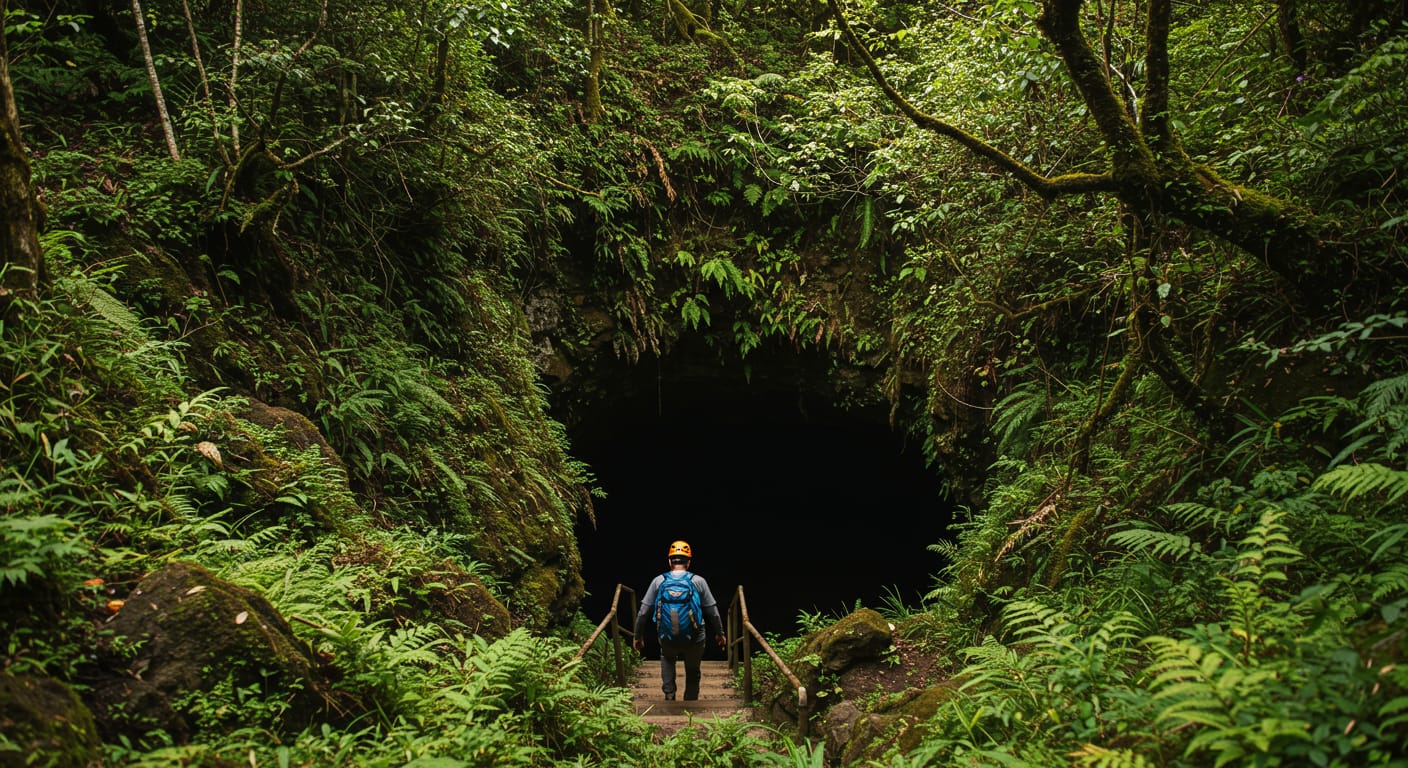
Few images seem less likely to belong together than Neil Armstrong and a remote cave in Ecuador. Yet years after becoming the first man to walk on the moon, Armstrong joined an expedition associated with Cueva de los Tayos, a place already surrounded by stories of hidden passages, strange relics, and ancient secrets.
That contrast helps explain why the episode still captures attention. On one level, it was a straightforward exploration story: a difficult descent into a demanding natural environment. On another, it became tangled in legends that had grown far larger than the evidence behind them. The result is a story that sits somewhere between documented adventure and enduring folklore.
The Strange Day Neil Armstrong Went Underground in Ecuador
Armstrong’s presence on an Ecuadorian cave expedition gave the event a glow that few scientific or exploratory journeys ever achieve. When a figure so closely tied to one of humanity’s greatest achievements chooses to go underground in a little-known corner of South America, curiosity follows.
The cave most often linked to this story is Cueva de los Tayos, which had already earned a reputation for mystery well before Armstrong’s involvement. For many people, his participation seemed to suggest that something extraordinary might be waiting below. But that fascination says as much about public imagination as it does about the expedition itself.
Why Armstrong Was There in the First Place
The clearest way to understand Armstrong’s involvement is to see it as part of a serious expedition, not a simple hunt for buried treasure. His participation brought international attention and credibility to a journey shaped by exploration, logistics, and curiosity about a difficult and little-understood environment.
Over time, speculation has flourished about why he agreed to join. Some accounts treat his presence as proof that organizers expected a world-changing discovery. But that conclusion goes further than the available evidence comfortably allows. A more measured reading is that Armstrong, like many explorers and public figures drawn to challenge, was attracted by the unknown and by the chance to take part in an unusual expedition.
The Cave’s Reputation Before Armstrong Arrived
Long before Armstrong descended into the cave system, Cueva de los Tayos had become linked to stories of hidden chambers, ancient artifacts, and lost civilizations. Adventure narratives and sensational retellings helped turn the cave from a striking natural site into a blank screen for speculation.
Among the most dramatic claims were tales of metallic libraries, mysterious objects, and evidence of forgotten cultures hidden beneath the earth. Such stories gave the cave a mythic reputation that spread far beyond Ecuador. But reputation is not proof, and many of the most extraordinary claims remained rumor rather than documented fact.
What Explorers Expected to Discover
By the time the expedition drew worldwide attention, the atmosphere around the cave was charged with possibility. Serious exploration existed side by side with public fantasies about treasure, relics, or discoveries that might rewrite history.
That tension is central to the story. Expeditions often attract hopes far greater than what the terrain ultimately yields. In this case, expectation fed on celebrity, remoteness, and the cave’s already colorful mythology. But as with many famous mysteries, what people hoped might be there and what could actually be verified were two very different things.
What Armstrong Actually Encountered Underground
The reality of descending into a cave like this is less cinematic than legend suggests. It means darkness, slippery rock, confined spaces, difficult footing, and the constant discipline required in a hazardous environment. Whatever symbolic meaning later attached itself to Armstrong’s visit, the physical experience would have been grounded in endurance and careful movement.
That matters because it returns the story to its real setting. This was not a theatrical unveiling of hidden wonders. It was cave exploration: demanding, methodical, and uncertain. The achievement was not the discovery of some mythic chamber, but the willingness to enter a place that was challenging enough on its own terms.
What He Did Not Find
This is where the legend and the record part ways most sharply. Armstrong’s participation did not produce confirmed evidence of a hidden library, an alien cache, or a lost civilization waiting beneath Ecuador. No definitive revelation emerged to settle the grandest claims attached to the cave.
That does not erase the cave’s mystique, but it does clarify the limits of the story. The expedition reinforced the cave’s fame, yet it did not confirm the most sensational narratives built around it. In that sense, one of the most important things Armstrong’s descent revealed was what remained unproven.
Why the Story Still Fascinates People
The story endures because it brings together three powerful ingredients: a global icon, a wild and difficult landscape, and a mystery that refuses to disappear. Once Armstrong’s name became attached to the cave, every rumor surrounding it gained new life. If a moonwalker went there, many people assume, perhaps the legends deserved to be taken literally.
But the deeper appeal may be simpler. People are drawn to places where evidence runs out and imagination takes over. Cueva de los Tayos remains compelling not because its biggest legends were confirmed, but because they were not. The gap between what was hoped for and what was found keeps the mystery alive.
A Better Way to Tell the Story
There is a more interesting version of this episode than the usual treasure-hunt retelling. It is the story of how serious explorers can be drawn to places already burdened by myth, and how fame can magnify uncertainty instead of resolving it. Armstrong did not need to uncover a lost civilization for the journey to matter.
In the end, the lasting value of the story may lie in its restraint. A legendary explorer entered a legendary cave, and the result was not proof of fantastic claims, but a reminder that mystery often survives precisely because an expedition fails to confirm it. Sometimes what is not found tells the clearest story of all.