Why Manabí’s June 29 San Pedro y San Pablo Festival Crowns the Mock Governments of Blancos y Negros
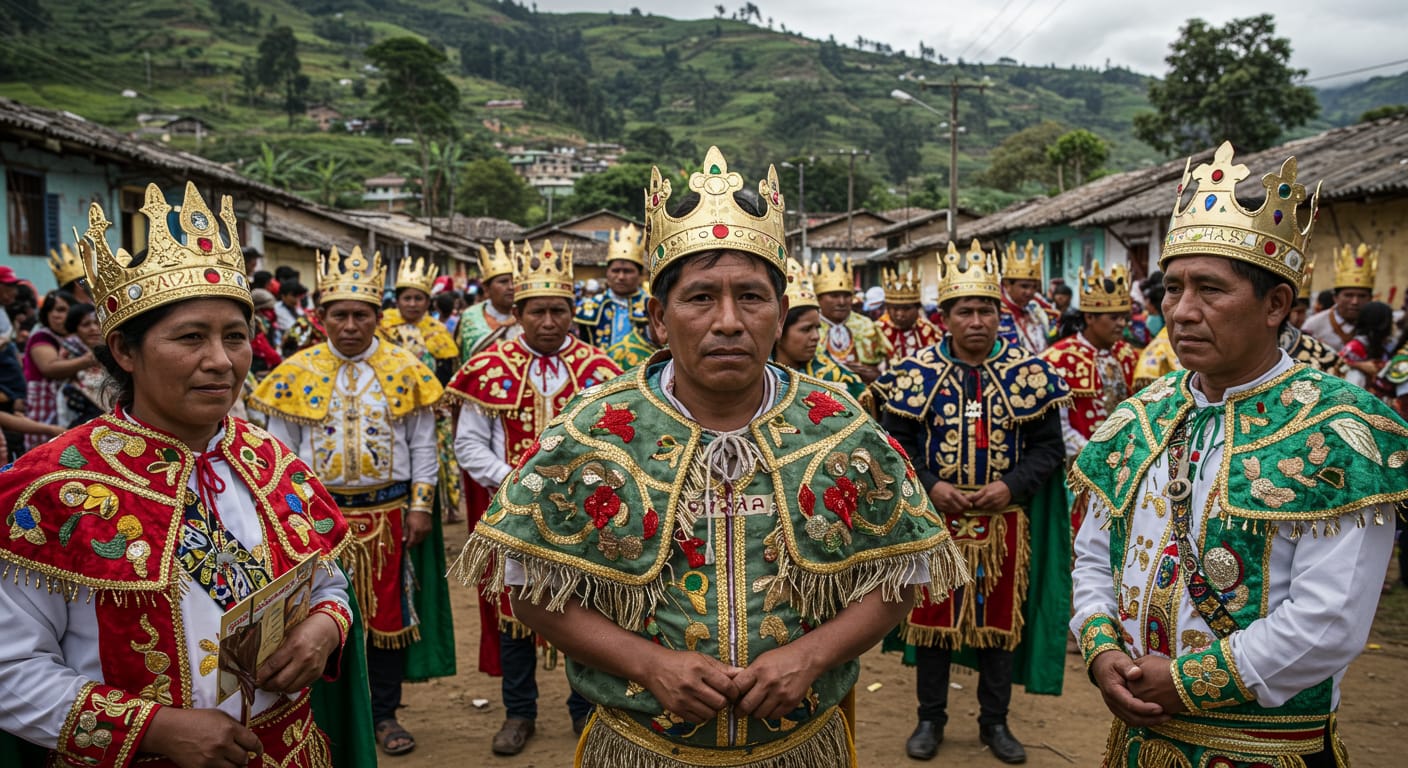
For many people in coastal Manabí, June 29 means far more than just another date on the calendar. It is the feast of San Pedro y San Pablo, a day tied to religious devotion, neighborhood celebration, and traditions that return each year with a strong sense of continuity.
One of the most distinctive features of these festivities is the crowning of the mock governments of Blancos y Negros. To outsiders, the phrase can sound political at first. In practice, it is better understood as part of ceremonial life: a form of communal theater, symbolism, and public ritual woven into the celebration.
Why June 29 matters in coastal Manabí
In many coastal communities, patron-saint festivities are not just church events. They are also social landmarks that bring together families, neighbors, organizers, musicians, and relatives returning home. June 29, dedicated to Saints Peter and Paul, has long been one of those yearly moments when faith and festivity meet in public view.
Within that setting, local customs can take forms that feel both reverent and playful. In Manabí, San Pedro y San Pablo celebrations are remembered not only for their religious meaning, but also for the way they animate community life through ceremony, music, costumes, and shared participation.
What the Blancos y Negros governments are
The Blancos and Negros governments are best understood as ceremonial or symbolic authorities presented during the festivities. They are not real governing bodies with civic power. Instead, they are ritual roles within a larger celebration, complete with titles, visible rank, and formal moments of recognition such as crowning.
That is part of what makes the tradition so memorable. The language of government is borrowed for pageantry. For a time, the festival creates its own parallel structure of authority, turning leadership into performance and performance into communal identity.
In that sense, the crowning is less about politics than about representation. It gives shape to the celebration, assigns public roles, and helps transform a feast day into a living drama that people can watch, join, and remember.
How the crowning becomes a community spectacle
The crowning itself naturally draws a crowd through its visual elements: crowns, formal dress, symbolic offices, musicians, processions, and a public ceremony with a clear sense of occasion. Even without focusing on one specific town’s version, it is easy to see why this moment stands out within the wider festival.
These ceremonies work because they invite many layers of participation. Families help prepare. Local groups take on roles. Organizers coordinate the order of events. Spectators become part of the atmosphere. What emerges is not a private ritual, but a public spectacle shaped by the community itself.
There is also room for more than one emotional tone at once. A celebration like this can honor the saints while also embracing humor, rivalry, costume, and performance. That blend is often what gives traditional festivals their staying power: they can be solemn and festive at the same time without feeling contradictory.
What the tradition may symbolize for locals
The enduring appeal of the Blancos y Negros crowning may lie in what it allows a community to express. Ritual roles can stand in for belonging, pride, memory, and social connection. They offer people a way to see themselves reflected in a shared event larger than any one household.
It also helps to approach Blancos and Negros here as festival identities within a ritual framework, rather than reading them too literally through an outsider’s assumptions. In traditional celebrations, named groups often function as parts of a larger ceremonial drama, carrying inherited meanings that make the most sense within local custom.
Each year’s crowning can therefore act as a renewal. The event does not simply entertain; it reaffirms that the community still knows how to gather, perform, remember, and pass something on. For many locals, that continuity may matter as much as the ceremony itself.
Why expats and visitors find it so distinctive
For expats and travelers, the idea of a saint’s feast that includes mock governments can seem unusual at first. That reaction is understandable. Many people arrive expecting a religious procession or a town party, not a layered tradition that mixes devotion with symbolic authority and public performance.
But the celebration becomes easier to appreciate when viewed through the lens of local custom. In Manabí, communal festivals are often about more than one thing at once. They can honor patron saints, strengthen neighborhood bonds, and stage cultural memory in ways that are vivid, theatrical, and deeply local.
For outsiders, the best response is usually respectful curiosity. Rather than forcing the tradition into familiar categories, it helps to ask what it means to the people who celebrate it. That perspective opens the door to seeing the crowning not as an oddity, but as a meaningful expression of place.
What should be said carefully
Because traditions can vary from one community to another, it is wise to avoid overly precise claims about exactly when this practice began, how every mock government is organized, or how identical the custom is across Manabí. Local versions may differ in emphasis, roles, or style.
What can be said with confidence is that the June 29 San Pedro y San Pablo celebrations remain an important part of coastal cultural life, and that the crowning of Blancos y Negros stands out as one of the festival’s most striking ceremonial features.
For anyone trying to understand the tradition, the clearest starting point is the most visible one: a recurring community celebration where ceremony, symbolism, participation, and seasonal repetition come together in a form that locals continue to recognize as their own.