Why Ecuador's Street Dogs Taught Me More About Compassion Than I Expected
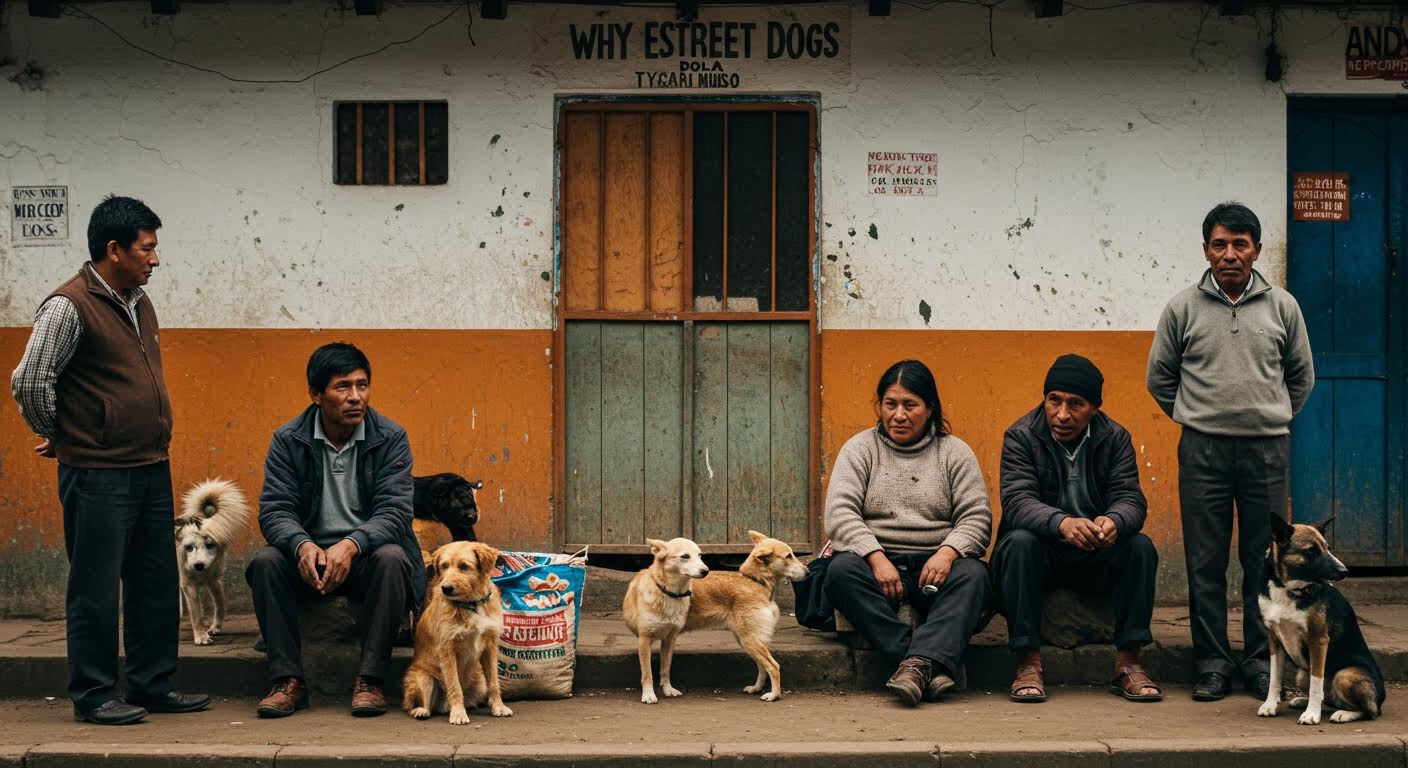
Moving to Ecuador, I thought I was prepared for the cultural adjustments ahead. I'd read about the food, language barriers, and different pace of life. What I hadn't prepared for was how profoundly a pack of street dogs would reshape my understanding of compassion itself.
First Encounters: My Shock at Ecuador's Street Dog Reality
Walking through Cuenca's cobblestone streets for the first time, I was struck by something I'd never experienced in my hometown: dogs everywhere, wandering freely without collars or leashes. My initial reaction was pure Western instinct—these animals needed help, homes, rescue.
I found myself mentally cataloging every dog I saw, noting their condition, wondering about their stories. Some were clearly well-fed, others more gaunt. Some moved with confidence through the streets as if they owned them, while others seemed more tentative. My immediate impulse was to intervene, to somehow fix what appeared to be a massive animal welfare crisis.
These preconceptions about proper animal care dominated my first few weeks. I carried treats in my pockets, researched local shelters, and even considered personally rescuing a few of these seemingly abandoned creatures. I was operating from a framework that equated freedom with abandonment and assumed suffering where I saw independence.
The Dogs That Changed My Perspective
It was Luna who first made me pause and reconsider. I'd named her myself after seeing her silver-gray coat gleaming in moonlight during evening walks. She had claimed a section of 12 de Abril as her territory, and what struck me wasn't her supposed vulnerability, but her remarkable confidence.
Luna knew every shopkeeper, every regular pedestrian, every delivery driver. She had her favorite sunny spots and preferred doorways during rain. She'd emerge for meals that appeared like magic—scraps from the panadería, a bowl of rice from the corner store, treats from children walking to school. This wasn't random luck; this was a sophisticated social network.
Then there was the pack that gathered in Parque Calderón each morning. I watched them for weeks, fascinated by their complex social dynamics. They had hierarchies, territories, and what could only be described as friendships. The older dogs mentored younger ones, showing them which vendors were generous and which areas to avoid. They demonstrated intelligence, adaptability, and a form of street wisdom I'd never witnessed.
One rainy afternoon, I watched this same pack collectively care for an injured member, taking turns staying close while others foraged for food. Their behavior challenged everything I'd assumed about their individual suffering and collective abandonment.
Learning the Local Context
As my Spanish improved and I began having deeper conversations with neighbors, a different picture emerged entirely. These weren't abandoned animals in the way I'd understood abandonment. Many had complex relationships with multiple families, shop owners, and community members.
Doña María, who ran a small tienda near my apartment, explained her relationship with three regular dogs. "They're not mine," she said, "but they're not nobody's either." She fed them daily, provided shelter during storms, and even took them to a veterinarian when needed. This arrangement seemed to work perfectly for everyone involved—dogs included.
I learned that many Ecuadorians viewed the human-animal relationship differently than I'd been raised to understand it. Care didn't necessarily mean ownership. Love didn't require possession. Community support could extend beyond human boundaries to include neighborhood dogs who were as much a part of the social fabric as anyone else.
The informal networks of care were everywhere once I knew how to see them. Restaurant owners saving kitchen scraps, children sharing their snacks, families leaving bowls of water outside their gates. These dogs weren't forgotten; they were integrated into daily life in a way that was completely foreign to my experience but undeniably functional.
Redefining Compassion
This realization forced me to examine my own definitions of compassion and care. I'd arrived with the assumption that Western approaches to animal welfare represented some universal standard of kindness. But watching these animals thrive in their own way, with their own form of community support, made me question whether my impulse to "rescue" them was actually about their needs or my own discomfort with a different system.
True compassion, I began to understand, might require stepping back from my urge to impose familiar solutions on unfamiliar situations. These dogs had agency, intelligence, and established relationships. My desire to relocate them to homes with yards and feeding schedules might actually represent cultural imperialism disguised as kindness.
This didn't mean ignoring genuine suffering when I encountered it, but it did mean learning to distinguish between my discomfort with difference and actual distress that required intervention. Some dogs clearly needed medical attention or more support, but many others were living rich, full lives that just didn't match my previous template for animal welfare.
What the Dogs Taught Me About Community
Perhaps the most profound lesson came from observing how these animals navigated community relationships with such sophistication. They understood reciprocity—the dogs who helped guard shops at night received better food and shelter. They practiced mutual aid, sharing information about food sources and safe spaces. They demonstrated loyalty without possessiveness, maintaining connections across territorial boundaries.
In many ways, their social structures mirrored what I was learning about Ecuadorian human communities. There was an emphasis on collective support rather than individual ownership, on flexible relationships rather than rigid structures, on adaptation and resilience rather than control and predictability.
These dogs were teaching me about survival not as a desperate struggle, but as a collaborative art form. They showed me that security could come from community connections rather than individual ownership, and that freedom and belonging weren't mutually exclusive concepts.
Watching them navigate the complex social environment of city streets with such grace and intelligence gave me insights into how I might better navigate my own expat experience. They were masters of reading social cues, building relationships across cultural boundaries, and finding their place in an established community without losing their essential nature.
Taking These Lessons Home
This experience with Ecuador's street dogs fundamentally changed how I approach compassion in all areas of my life. I've learned to pause before assuming that different means deficient, and to look for the wisdom in systems I don't immediately understand.
When I encounter situations that trigger my "helper" instincts—whether with animals, people, or communities—I now try to first understand the existing networks and relationships before deciding what kind of support, if any, would actually be helpful. Cultural humility has become as important as cultural curiosity in my expat journey.
These lessons extend far beyond animal welfare. They've influenced how I approach friendships with locals, how I engage with unfamiliar customs, and how I think about my role in my adopted community. The dogs taught me that being an outsider doesn't automatically give me clearer perspective on what needs fixing or improving.
Two years later, I still see Luna on her familiar street corner, still thriving in her complex web of community relationships. She's taught me that compassion isn't always about changing circumstances to match our expectations—sometimes it's about expanding our expectations to encompass different forms of thriving.
These street dogs didn't need me to rescue them from their lives, but they did rescue me from the limitations of my own assumptions. That might be the most profound form of mutual aid of all.