Why Drivers Are Talking About Spectacled Bear Sightings on the Road East of Cuenca
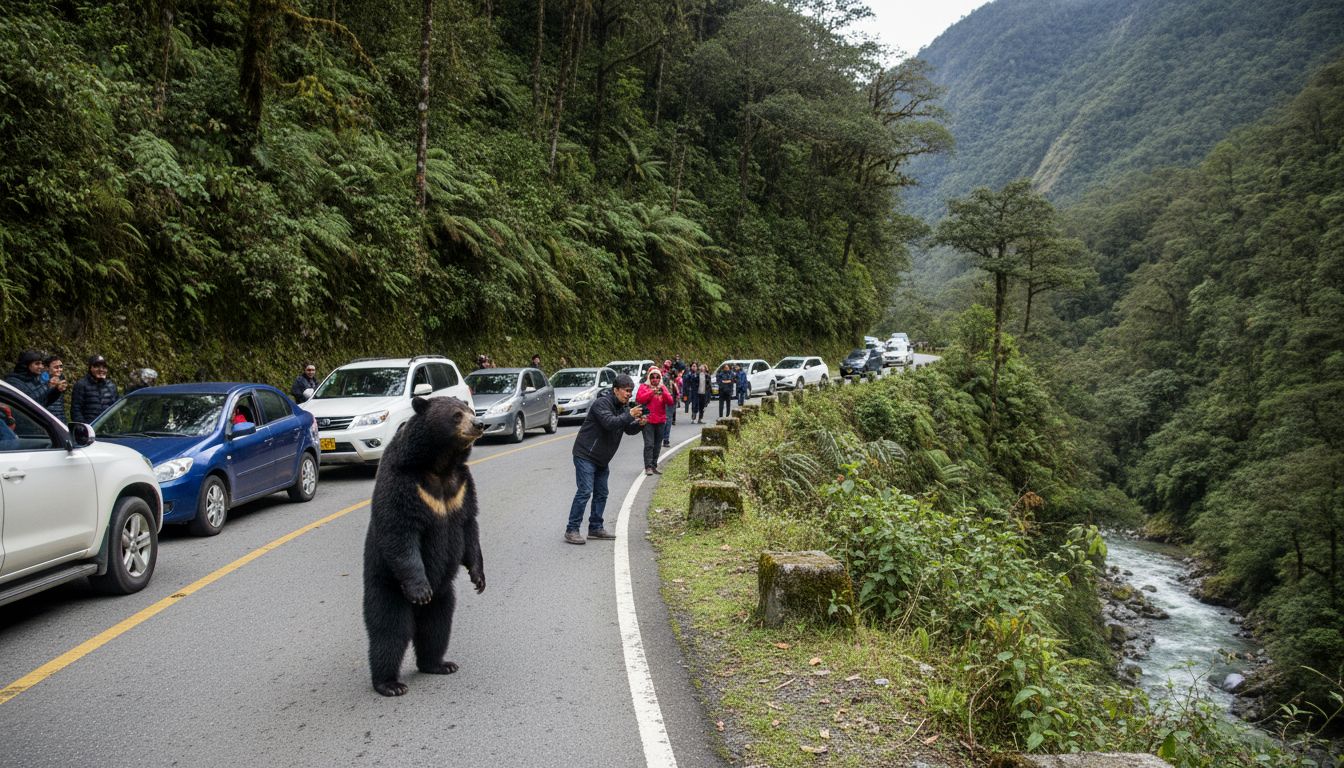
Drivers east of Cuenca have been swapping stories about an unusual kind of roadside encounter: glimpses of spectacled bears along the Gualaceo–Plan de Milagro–Limón road, followed by quick photo attempts and excited retellings. In local and expat circles, the story has spread quickly because it brings together two things people remember well in the Andes: dramatic mountain travel and the chance to see wildlife unexpectedly close.
For now, it is best understood as a community-observed phenomenon rather than a verified trend backed by official counts or formal reporting. Even so, the repeated anecdotes have made the route feel especially vivid for people who drive it often or hear about it from friends and neighbors.
What people say they are seeing on the route
The basic story is simple. Some motorists say they have spotted spectacled bears near the roadside and, like many travelers would, slowed down or stopped to take photos. Others say they heard about sightings soon afterward from people coming the other direction or from regular drivers who know the corridor well.
Many observers also note that even a brief sighting can grow into a much bigger story by the time it reaches town. That does not mean the experience is untrue, but it does suggest caution with details such as how often it happens, whether the same animal is involved, or exactly where sightings occur unless future reporting brings confirmation from wildlife or road authorities.
Why the sightings feel unusual and memorable
Part of the fascination comes from the animal itself. The spectacled bear carries a strong symbolic presence in the Andes, and for most people it is not something they expect to encounter during an ordinary drive. That contrast is what makes these stories stick: one moment it is just another mountain road, and the next it becomes a brush with the wild.
For residents, travelers, and expats, these moments also reinforce a broader truth about life around Cuenca and the eastern highlands. Roads here do not pass through empty scenery. They move through living landscapes where weather, terrain, farms, forests, and wildlife can intersect in surprising ways.
Caution on the road and around wildlife
If sightings are happening, the practical lesson is not only wonder but restraint. Drivers should avoid sudden stops, risky shoulder parking, or blocking a narrow section of road just to get a better photo. On winding mountain routes, a few seconds of distraction can create problems for everyone behind you.
The same caution applies to the animal. Wild creatures should be given space. Approaching, feeding, calling to, or trying to prolong the encounter can create unnecessary stress and may encourage unsafe behavior from both people and wildlife. The better mindset is simple: appreciate the moment, keep your distance, and continue safely.
What remains unconfirmed
Several parts of this story remain open questions. There is no basis here to say with certainty how frequent the sightings are, what may be causing them, or whether they reflect any larger change in wildlife behavior. It would also be premature to draw conclusions about habitat pressure, population shifts, or conservation implications without credible supporting information.
That uncertainty does not make the story any less interesting. It simply means that, for now, it belongs in the category of local observation and conversation rather than settled fact. If wildlife officials, conservation groups, or transportation authorities comment in the future, the picture may become clearer.
Why this matters for expats
For many expats, small stories like this are part of learning what it means to live in southern Ecuador. They show how close everyday life can be to the region’s ecological richness, and how quickly a routine drive can become a reminder that the Andes are not only scenic but deeply alive.
That is part of what gives the road east of Cuenca its character. It is more than a route from one town to another. It is part of a shared landscape, used by people every day but never fully separated from the wildlife and natural systems around it. Whether the bear stories continue or fade, they have already done something valuable: they have made people look at the landscape with a little more attention.