When Travel Turns Strangers Into Family
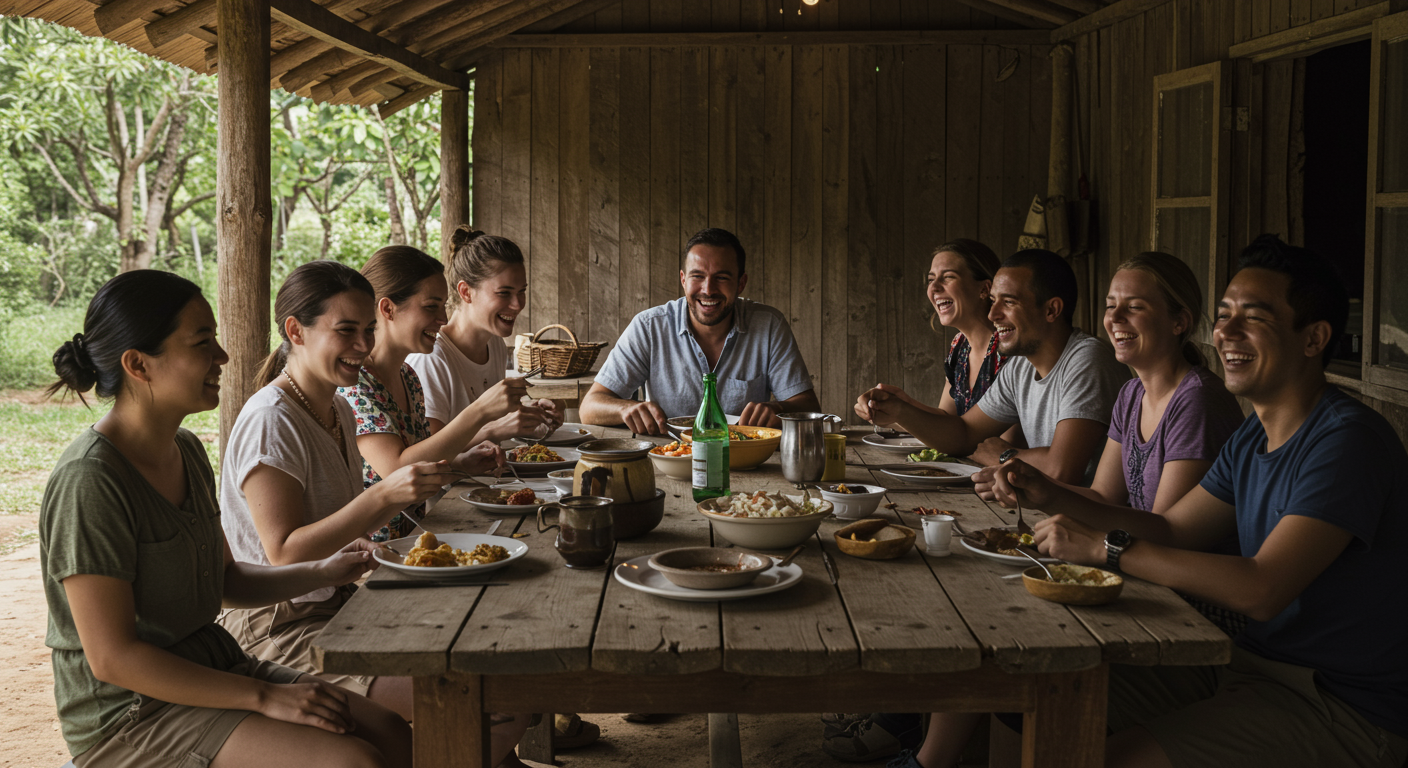
There's something magical that happens when we step outside our familiar worlds and into the unknown. In those moments of vulnerability—lost in a foreign city, struggling with a language barrier, or simply sharing a meal with someone whose name we can barely pronounce—we discover that strangers can become family in ways that defy conventional understanding.
The Alchemy of Shared Vulnerability
Travel strips away our carefully constructed social armor. Without the familiar props of home, career, and established social circles, we become more authentically ourselves—and paradoxically, more open to authentic connections with others.
When Sarah found herself stranded at a remote train station in rural India after missing her connection, it was Priya, a local teacher heading home from work, who not only helped navigate the complex local transport system but invited her to stay with her family for three days. "We couldn't really communicate beyond basic English and gestures," Sarah recalls, "but somehow that made everything more real, more immediate. We had to connect as humans first, without all the usual small talk and social positioning."
This vulnerability creates a unique form of interdependence. Unlike relationships that develop gradually in familiar environments, travel relationships are often forged in moments of genuine need. Whether it's navigating bureaucratic challenges, dealing with illness far from home, or simply finding your way in an unfamiliar place, these shared struggles create bonds that feel both immediate and profound.
The masks we wear in our daily lives—professional personas, social roles, cultural expectations—become not just unnecessary but counterproductive when navigating foreign terrain. This stripping away reveals our common humanity and creates space for connections that might never have emerged in our normal social contexts.
When Cultural Barriers Become Bridges
Ironically, the very differences that might seem like obstacles often become the foundation for deeper connection. When words fail, we're forced to communicate through gesture, expression, shared laughter, and acts of kindness that transcend language.
Marcus, a software engineer from Seattle, discovered this during a month-long stay with a farming family in rural Vietnam. "None of us spoke the other's language fluently, but we developed this whole system of communication through cooking together, working in the fields, and just being present with each other. By the end of the month, I felt closer to them than to some colleagues I'd worked with for years."
These language barriers often lead to more authentic forms of communication. Without the ability to fall back on verbal cleverness or cultural references, relationships must be built on more fundamental human experiences: shared meals, mutual assistance, laughter, and the simple act of being present with one another.
The universal experiences—caring for children, worrying about family, celebrating small joys, facing daily challenges—emerge as more important than the surface differences. A grandmother's smile as she teaches you to fold dumplings, a father's pride as he shows you his garden, a child's delight in teaching you their game—these moments create understanding that goes beyond cultural knowledge.
The Intensity of Knowing Time Is Limited
Perhaps the most surprising aspect of travel relationships is how their temporary nature often intensifies rather than diminishes their impact. Knowing that time is limited removes the luxury of gradual revelation and social maneuvering that characterizes many traditional friendships.
"There's this urgency to really connect," explains Elena, who spent a gap year traveling through South America. "When you know you might only have a few days or weeks with someone, you cut through all the superficial stuff really quickly. You end up sharing things and caring about each other in ways that might take years to develop in a normal friendship—if they develop at all."
This compressed timeline creates what feels like accelerated intimacy. Without the promise of unlimited future encounters, people often share more openly, help more generously, and connect more deeply. The knowledge that the relationship exists outside normal social structures and expectations frees both parties to be more vulnerable and authentic.
The temporary nature also means these relationships often exist in a kind of pristine state, unmarred by the daily irritations and complications that can erode traditional friendships. They're preserved in memory at their most intense and pure moments, creating bonds that feel almost sacred in their simplicity and depth.
Chosen Family Across Continents
The relationships that emerge from these travel encounters often transcend the typical categories of friendship or acquaintanceship. They become something more akin to chosen family—people who, despite geographical distance and cultural differences, maintain a place of special significance in each other's lives.
Take the story of the "Bangkok Kitchen Table Coalition"—a group of six travelers from different continents who met while staying at the same guesthouse in Thailand fifteen years ago. Despite returning to their respective lives in Australia, Canada, Germany, Japan, and the United States, they've maintained regular contact, supported each other through major life transitions, and even coordinated international gatherings every few years.
"When my mother was dying," recalls Tom, one of the group members, "it was actually Kenji and Anna who helped me process the grief more than some of my oldest friends back home. There was something about the way we'd connected initially—so openly, without all the history and expectations—that made it easier to be vulnerable with them during that difficult time."
These chosen families often provide a unique form of support that complements but differs from traditional relationships. Because they're based on mutual choice and shared transformative experiences rather than obligation or circumstance, they carry a special quality of understanding and acceptance.
The loyalty that emerges can be remarkably strong. Stories abound of travel connections dropping everything to help during crises, offering homes during difficult transitions, or providing emotional support across time zones and cultural divides. The initial gift of hospitality or kindness that strangers offered creates a legacy of mutual care that can last decades.
Nurturing Long-Distance Soul Connections
Maintaining these special relationships across continents and time zones requires intention and creativity. Unlike local friendships that can be sustained through regular in-person contact, travel families must find ways to stay connected despite physical distance and the inevitable changes that come with time.
Modern technology has made this easier, but it's the thoughtfulness behind the connection that matters most. Regular video calls timed to catch up across time zones, sharing photos of daily life, remembering important dates and celebrations—these small acts maintain the emotional intimacy that distance might otherwise erode.
Many travel families create their own traditions and rituals. Some send postcards from every new place they visit, maintaining a chain of connection that started with their initial meeting. Others coordinate annual reunion trips, creating new shared experiences while honoring the original bond. Some maintain group chats that serve as ongoing conversations about life, dreams, and daily experiences.
The key seems to be treating these relationships as the significant connections they are, rather than casual acquaintances. This means making the effort to stay truly current with each other's lives, offering support during difficult times, and celebrating successes together despite the distance.
Perhaps most importantly, it means being open to the relationship evolving. People change over years and decades, and the travel family members who remain closest are often those who allow space for growth while maintaining the core connection that brought them together.
The magic of travel-born family lies not just in the initial connection, but in the choice to nurture something beautiful that began with strangers sharing vulnerability in an unfamiliar place. These relationships remind us that family isn't just about blood or geography—it's about recognition, care, and the decision to remain present for each other across whatever distances might separate us.
In a world that can feel increasingly fragmented and impersonal, these connections offer hope and proof that human hearts can still find each other in the most unexpected places, creating bonds that geography cannot break and time cannot diminish.