When a 1949 ‘War of the Worlds’ Broadcast Was Said to Spark Panic in Quito
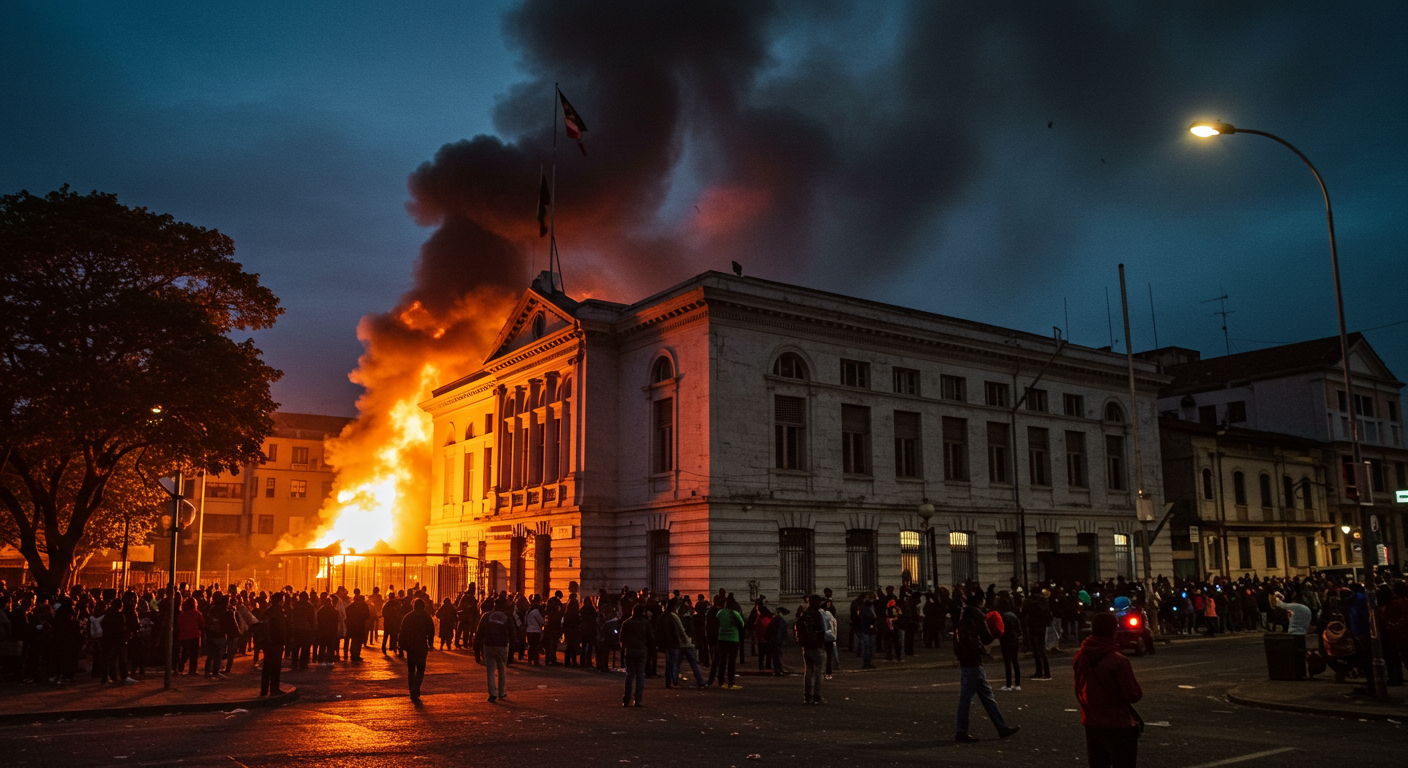
Few media stories are retold with as much dramatic force as the claim that a 1949 Ecuadorian radio adaptation of The War of the Worlds sent Quito into chaos. In the popular version, listeners believed aliens were invading, outrage spread when the deception became clear, and the backlash ended with Radio Quito in flames. It is an unforgettable story, but it also deserves careful handling. The broad outline is widely repeated, while some of the finer details, including casualty counts and the exact sequence of events, are often stated more confidently than the historical record appears to support.
The Night Quito Heard an Invasion
The Quito episode has long occupied a strange space between documented history and media folklore. At its center is a local radio dramatization of The War of the Worlds, adapted in a style that reportedly sounded enough like live news to alarm listeners. The program is generally dated to 1949 and tied to Radio Quito, but many retellings compress the story into a neat moral lesson: radio sounded authoritative, people believed what they heard, and panic turned into fury.
That version may capture the spirit of the event, but not necessarily every verified detail. Historical reconstructions of media panics are often shaped by repetition, embellishment, and the temptation to tell a clean story with a shocking ending. In Quito’s case, it makes more sense to view the episode not as a perfectly settled anecdote, but as a remembered crisis whose broad outlines are clearer than every statistic attached to it.
What Was Actually Broadcast in 1949
The core claim is straightforward: a dramatized adaptation of H. G. Wells’s The War of the Worlds aired in Quito and was presented in a style that some listeners understood as real-time reporting. That framing matters. The power of the story has always depended less on science fiction itself than on radio’s ability to mimic the urgency of breaking news.
What is harder to pin down, at least from the material available here, is the exact on-air structure and how clearly fictional framing was provided before or during the broadcast. Some later retellings suggest that listeners tuned in after an introduction and heard only the most alarming segments. Others emphasize the production style, arguing that dramatic interruptions or bulletin-like narration gave the broadcast its plausibility. Without contemporary records in hand, it is wiser to separate the enduring narrative from details that may have been sharpened over time.
Why Listeners May Have Believed It
To modern audiences, it can seem surprising that a fictional radio drama could provoke real fear. But in the late 1940s, radio was not background noise. It was one of the most immediate and trusted forms of mass communication available. A voice on the radio, especially one delivered in the cadence of a news bulletin, carried authority.
That authority was magnified by the nature of radio itself. Listeners often encountered a program midstream. A dramatic interruption or a realistic reporter’s tone could make fiction feel indistinguishable from fact for anyone who missed the setup. In a media environment without instant cross-checking, a startling claim could move through homes and neighborhoods faster than it could be corrected.
There is also a local dimension worth remembering. In cities where radio was a central public medium, broadcasters were not just entertainers. They were civic voices. Trust in those voices was part of daily life. If a program sounded official enough, belief may have followed not because audiences were naive, but because the medium itself had earned credibility.
From Panic to Violence in Quito
The most dramatic part of the story is what allegedly happened after listeners realized the broadcast was fictional, or believed they had been deliberately misled. According to the standard account, anger replaced fear. Crowds reportedly turned against the broadcaster, and unrest escalated into an attack associated with Radio Quito.
This is also the point where the historical record is most vulnerable to exaggeration. Many summaries say that the station or its associated facilities were attacked and burned. Some accounts also mention deaths and injuries. But without verified sourcing, those claims are best treated cautiously. The destruction of property appears to be one of the most consistently repeated elements of the episode; specific casualty figures are much less stable in retellings and should not be presented as settled fact without stronger documentation.
Did Radio Quito Really Burn Down? Untangling the Historical Record
The claim that Radio Quito burned down is central to the legend, and it is one reason the Ecuador episode is often described as more serious than other War of the Worlds panic stories. Yet even here, historical narration can blur important distinctions. Did the station itself burn? Were associated newspaper offices or shared facilities involved? How extensive was the damage? Different retellings do not always separate those questions clearly.
That does not mean nothing happened. It means dramatic events often become even more dramatic in the retelling, especially when they fit a ready-made cautionary tale about the power of media. Historians and journalists looking back at such episodes often agree on the broad event but disagree on its scale, sequence, and toll. The Quito story appears to belong in that category: memorable, likely grounded in a real public backlash, but vulnerable to simplification.
How the Ecuador Incident Compares to the Better-Known 1938 U.S. Panic Story
The Quito broadcast is often compared with Orson Welles’s famous 1938 American adaptation of The War of the Worlds. In popular memory, the U.S. case is linked to mass panic, though later scholarship suggests that the scale of that panic was likely overstated. The Ecuador story, by contrast, is remembered less for fear itself than for the violence said to have followed.
The comparison is useful because both stories show how media myths grow. A real event, or a limited event, becomes a symbol. Over time, nuance falls away. The audience becomes more gullible, the deception more complete, the reaction more universal, and the consequences more spectacular. Quito’s story survives because it sits at the point where historical incident and media legend reinforce one another.
Why This Story Still Resonates
For international readers and expats, the enduring fascination of the 1949 Quito broadcast is not just its shock value. It is what the story says about trust, authority, and collective uncertainty. A community hears something alarming from a trusted source. Information spreads unevenly. Emotion outruns verification. By the time reality catches up, the damage may already be done.
That pattern feels modern, even if the technology has changed. Radio bulletins have become social feeds, forwarded voice notes, livestreams, and viral posts. The mechanics are different, but the deeper human question is familiar: what happens when a credible medium carries something false at exactly the wrong moment?
That may be why this episode remains so compelling in Quito’s historical imagination. It is remembered not only as a strange media story, but as a warning about how quickly rumor, performance, and public trust can collide. And like many stories that endure for generations, its power comes partly from the fact that it lives somewhere between verified history and legend.