Wear Your Hat on Fridays: Cuenca Spends September Reclaiming the Panama Hat as Ecuadorian
Wear Your Hat on Fridays: Cuenca Spends September Reclaiming the Panama Hat as Ecuadorian
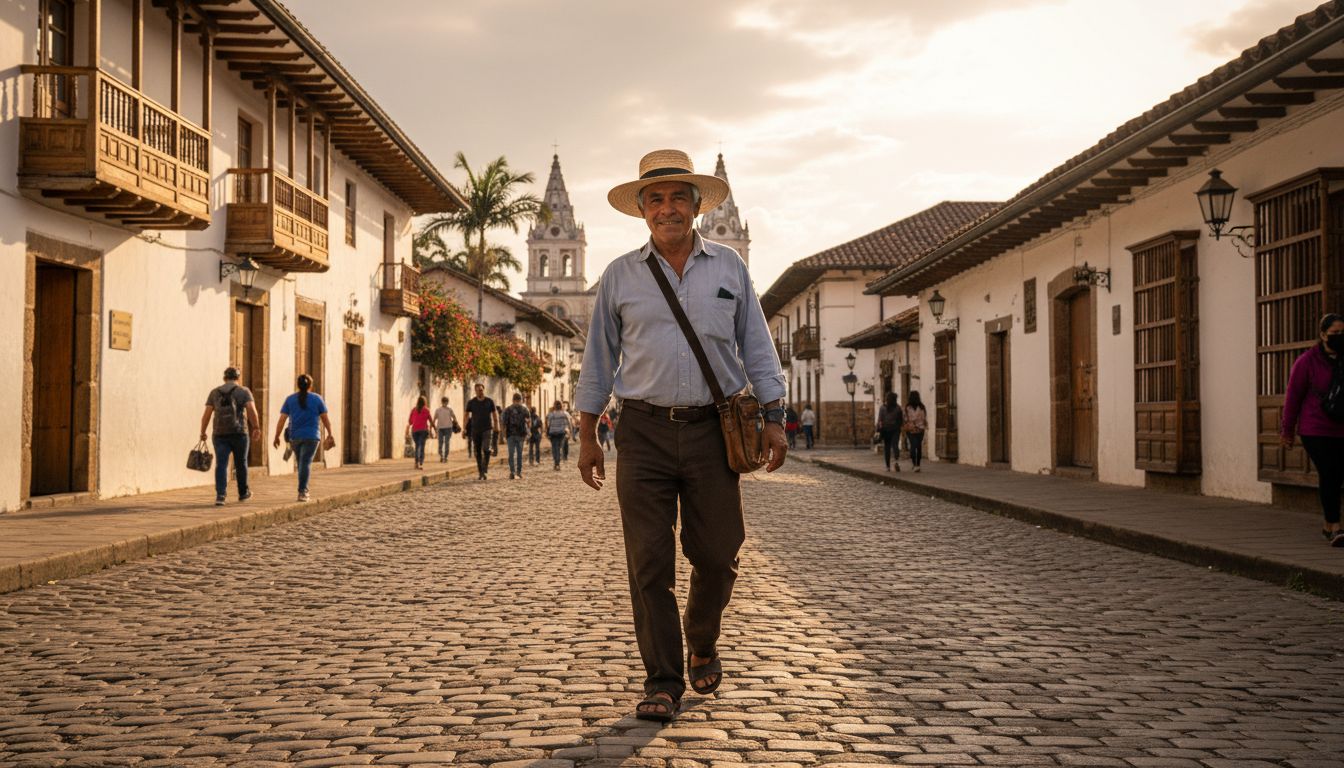
It was a Friday in September when I first noticed it. Walking down a cobblestone street near the Río Tomebamba, I passed more toquilla straw hats in twenty minutes than I usually see in a week. An older man selling bread wore one, tilted back on his head. A group of university students had them too, looking almost self-consciously proud. A shopkeeper adjusted hers in a window reflection before opening her doors. It felt like something was happening, even if no one had officially told me what.
Someone at a café mentioned, almost in passing, that Fridays in September had become a kind of unofficial occasion to wear the hat — not for a wedding, not for tourists, but simply because. I have not been able to confirm whether this is a formal campaign with organizers and a name, or something closer to a mood that caught on and spread. Either way, the hats were undeniably present, and so was the sense that they meant something.
Because here is the tension at the heart of it: the hat the world calls "Panama" is not from Panama at all. It is Ecuadorian, through and through, and nowhere more than in Cuenca.
The Hat That Was Never From Panama
Most people I have talked to here, and most general accounts of the hat's history, agree on the basic shape of the story, even if the finer details are debated. The hat is woven from toquilla straw, a plant native to Ecuador's coast, and the finest weaving traditions come from Cuenca and the coastal town of Montecristi. The craft itself is old, painstaking, and deeply local — some of the best hats reportedly take months to weave by hand.
So how did it end up named after a different country entirely? The commonly told version goes something like this: in the nineteenth century, Ecuadorian-made hats were shipped through the Isthmus of Panama on their way to markets abroad, since Panama was a major transit hub during the era of the California Gold Rush and, later, the construction of the Panama Canal. Travelers picked up the hats there, associated them with the place of purchase rather than the place of origin, and the name stuck. Whether every detail of that story holds up to historical scrutiny, I cannot say with certainty. This is the popular, widely repeated version rather than something I have independently verified.
What is clear is the irony: a hat that represents generations of Ecuadorian artisanship carries the name of a country that mostly just shipped it. For many people here, that misnaming is not a trivial quirk of etymology. It is a small, persistent erasure.
Why September, Why Fridays
I found myself wondering why this ritual, if that is what it is, would take the shape of a month of Fridays rather than a single festival day. My best guess, and it is only a guess, is that repetition does something a one-time event cannot. A single parade or ceremony can be seen and forgotten. A weekly, month-long habit asks people to keep choosing it, over and over, until the choosing itself becomes visible.
Walking through the artisan shops near the historic center, I noticed hat vendors seemed to be leaning into whatever was happening, whether they had organized it or were simply riding a wave of interest. Displays looked a little more prominent. Conversations with customers lingered a little longer. There was a sense of grassroots momentum, though I want to be careful here: I do not know whether a municipal office, a cultural association, or simply word of mouth is behind "Wear Your Hat on Fridays." I have not found confirmation of official organizers, sponsors, or a formal campaign name, and I do not want to imply certainty where I have none. What I can say is that the atmosphere, at least on the Fridays I observed, felt genuine rather than staged.
An Expat's View: Wearing the Hat, or Not
As a foreigner living in Cuenca, I found myself hesitating before buying one. Was putting on a toquilla hat an act of respect for a craft I admire, or was it a kind of costume — a gesture that looks like solidarity but risks feeling hollow, or worse, appropriative? I do not think there is a clean answer.
I asked a shopkeeper, in halting Spanish, what the hat meant to her personally. She told me, more or less, that her family had woven hats for generations, that the work was hard on the hands and the eyes, and that she wished more people understood the hat as Ecuadorian before they understood it as anything else. I cannot claim this conversation represents every artisan's view, but it stayed with me. It suggested that for the people whose livelihoods depend on this craft, the stakes are not abstract. They are economic as much as symbolic.
What I have landed on, at least for now, is that wearing the hat with curiosity, humility, and a willingness to ask questions feels different from wearing it as a photo prop. Buying directly from a weaver rather than a mass-market shop, if possible, seems like a small way to put money where the gesture is. Expats navigating local customs will likely draw their own lines, but I suspect the difference between appreciation and performance often comes down to whether we are listening as much as we are participating.
Craft, Identity, and the Weight of a Name
Zooming out, the Friday ritual — however organized or unorganized it turns out to be — seems to connect to something larger than hats. It touches on how communities reclaim narratives that have been misattributed, sometimes for over a century. Names matter. A hat called "Panama" instead of "Ecuadorian" is a small linguistic accident with real consequences for who gets credited, and who benefits, from global recognition.
For weaving communities in Cuenca and Montecristi, the economic stakes are real, even if I cannot cite specific figures here. Tourism, export sales, and cultural pride are tightly interwoven with how the hat is perceived and marketed. A misnamed product can still sell, but it does not always tell the right story about who made it and why it matters.
What strikes me most, walking home on a September Friday with a hat I am still not entirely sure I have earned the right to wear comfortably, is how much symbolic weight a small, repeated act can carry. Nobody needs a permit to put on a hat. Nobody needs an official campaign to decide that a Friday feels different when more heads are covered in pale, finely woven straw. Sometimes reclaiming an identity looks less like a declaration and more like a habit, quietly repeated until it becomes impossible to ignore.