Verdeloma: The Hilltop Near Biblián Where Cuenca's First Republic Fell
Verdeloma: The Hilltop Near Biblián Where Cuenca's First Republic Fell
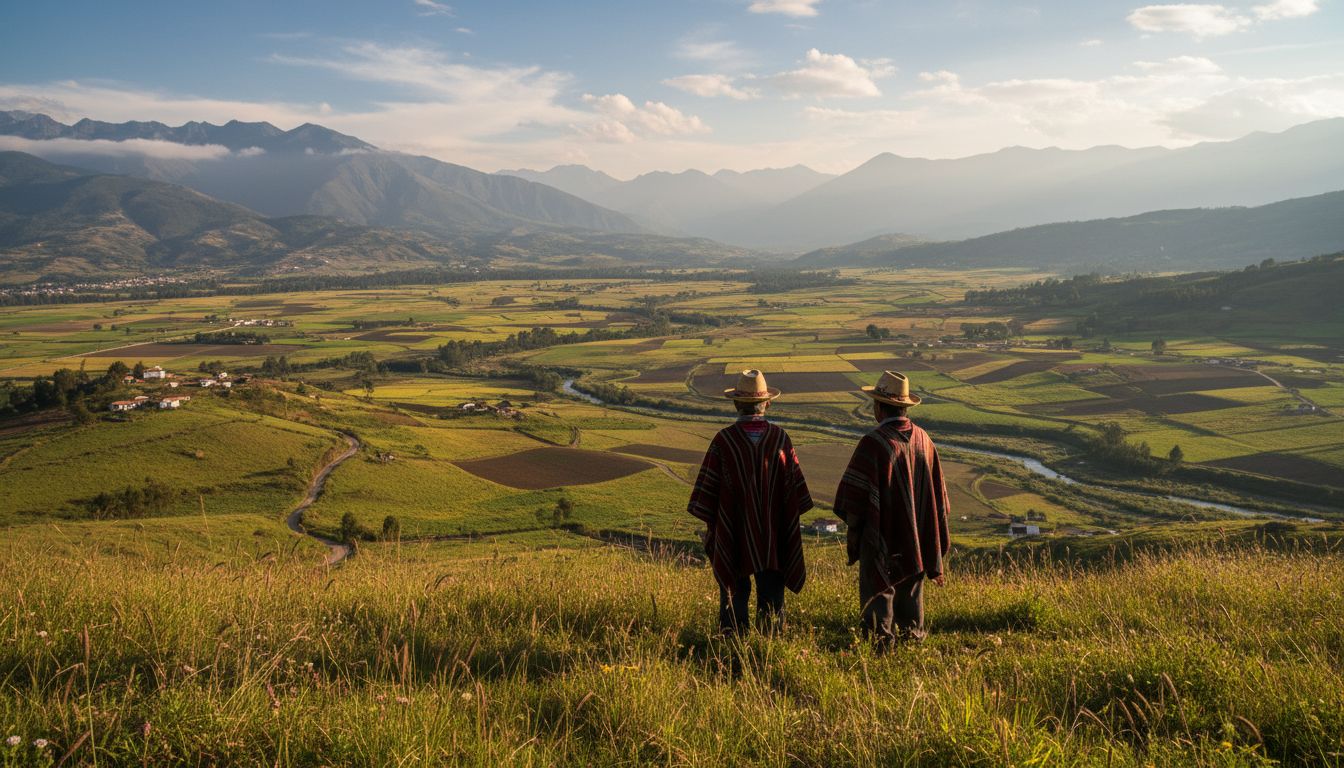
Driving the winding roads between Cuenca and Biblián, it would be easy to pass a certain hillside without a second glance. Farmland rolls across the terrain, cattle graze on modest slopes, and daily life continues much as it has for generations. Yet many local accounts hold that this quiet corner of Cañar province, known as Verdeloma, was the setting for a battle that reshaped the early history of Cuenca's fight for independence.
For expats and long-term residents who regularly pass through or near this region, Verdeloma offers a reminder that Ecuador's landscape is layered with histories that rarely make it into guidebooks or everyday conversation. According to the historical narrative widely repeated in regional accounts, a battle fought here on December 20, 1820 played a decisive role in ending Cuenca's short-lived attempt at self-governance. It's worth noting upfront that many of the specific details below—troop numbers, exact commanders, and precise figures—are presented as commonly reported tradition rather than confirmed historical fact, and readers seeking certainty should consult specialized historical sources.
Cuenca's First Republic: A Brief, Bold Experiment
The early nineteenth century was a turbulent period across the Audiencia de Quito, as various cities and regions grappled with questions of loyalty to the Spanish crown versus the growing pull toward independence. Movements for self-rule rose and fell throughout the territory that would eventually become Ecuador, often shaped by local initiative as much as by any coordinated continental strategy.
Cuenca was part of this broader pattern. Earlier in 1820, the city reportedly declared a republican government, asserting a measure of autonomy from royalist authority. This first republic, as it's often called in regional retellings, was by most accounts a fragile undertaking. It depended heavily on local militias rather than a professional military force, and its resources were limited compared to the royalist forces operating in the wider region. Understanding this fragility is essential context for appreciating what unfolded at Verdeloma weeks later.
The Battle of Verdeloma, December 20, 1820
As royalist forces moved to reassert control over Cuenca and its surrounding territory, the high ground near present-day Biblián is said to have become a focal point. Verdeloma's elevated terrain would have offered a natural defensive or offensive advantage, and many historical accounts describe it as the site where royalist troops confronted the forces defending Cuenca's fledgling republic.
The general narrative, as it has been passed down through regional memory and local historical tradition, describes republican forces as outmatched or outmaneuvered in the engagement. Some accounts reference specific troop movements or command structures, but these details should be treated with caution, as they are not independently verified here. Similarly, any particular casualty figures or named commanders that circulate in popular retellings are best understood as commonly cited tradition rather than confirmed historical record, pending verification through dedicated historical research.
Why the Defeat Mattered: The Republic's Collapse
Whatever the precise details of the engagement, the outcome at Verdeloma is consistently described as a turning point. The defeat is said to have led directly to the collapse of Cuenca's first republican government, with royalist authority restored across the region in the short term. This setback marked a pause rather than an end to the broader independence movement.
Ecuador's path to independence would ultimately be completed later in the 1820s, through a series of military and political developments elsewhere in the territory. Seen in that longer arc, Verdeloma represents an early and largely overlooked chapter—a reminder that the eventual success of independence was neither quick nor guaranteed. The symbolic weight of the site arguably outweighs its brief military significance, standing as a marker of the uncertainty and setbacks that preceded eventual independence.
Visiting Verdeloma Today
Today, the area near Biblián retains a largely rural and agricultural character. Small farms, pastureland, and the quiet rhythms of Andean highland life define the landscape far more than any visible trace of its role in regional history. Local place names and community memory in the area are sometimes said to carry echoes of the battle, though specific memorials or formal historical markers tied directly to the events of December 1820 are not something this article can confirm with certainty.
For expats interested in exploring Ecuador's lesser-known historical sites, Verdeloma offers a different kind of destination—not a polished monument, but a landscape that invites reflection. Those traveling through Cañar province or visiting Biblián itself might consider a brief stop near this hillside as an opportunity to connect with a deeper, often unspoken layer of Cuenca's regional history.
A Quiet Reminder of a Turbulent Era
Small, overlooked sites like Verdeloma often anchor the larger narratives of national history, even when their specific details remain uncertain or lightly documented. The story of Cuenca's first republic and its defeat at Verdeloma is one such thread—significant in outline, but deserving of careful verification in its particulars. Readers seeking precise historical certainty are encouraged to consult specialized Ecuadorian historical sources and regional archives for more rigorously documented accounts.
For many who build a life in Cuenca or its surrounding valleys, moments like this—a quiet hillside, a half-remembered battle, a republic that rose and fell within a single year—are part of what makes expat life here feel layered. These are not the headline stories told to tourists, but the quieter corners of history that reward curiosity and patience, for those willing to look a little closer.