Tulcán's Cemetery of Sculpted Cypresses: Where Carchi Families Visit Their Dead Among Hundreds of Green Figures
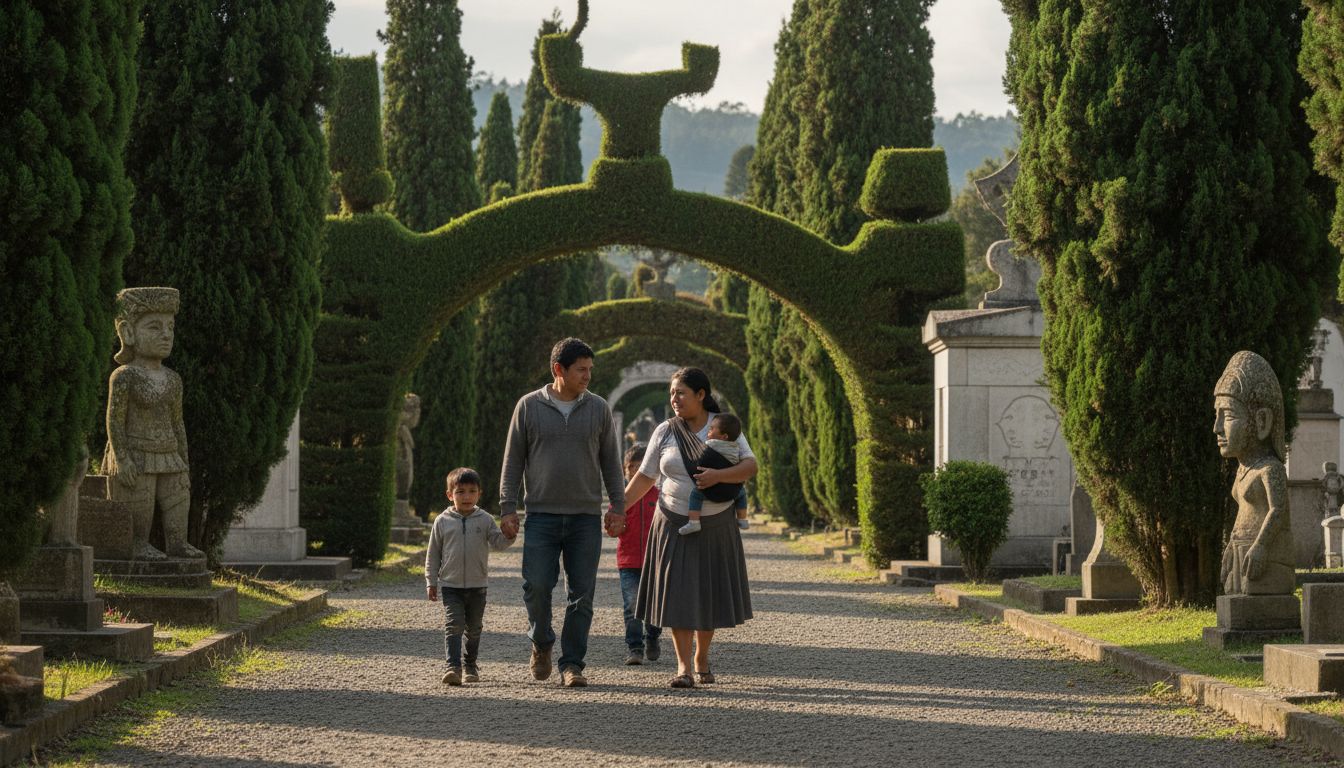
Tulcán's Cemetery of Sculpted Cypresses: Where Carchi Families Visit Their Dead Among Hundreds of Green Figures
A Cemetery Unlike Any Other
High in the Andean province of Carchi, near Ecuador's border with Colombia, sits a cemetery that defies expectation. The Cementerio Municipal Jardín de Tulcán isn't defined by rows of stone markers or somber gray monuments. Instead, visitors encounter something closer to a living gallery: towering cypress hedges carved into geometric patterns, animal forms, and abstract figures, stretching across the grounds in disciplined green lines.
For many who walk through its pathways for the first time, the effect is disorienting in the best sense. This is, after all, a place of burial and grief. Yet the atmosphere feels less like mourning and more like wandering through an open-air sculpture park. That tension, between a space built to honor the dead and one that functions as a living work of art, is central to what makes Tulcán's cemetery so distinctive.
The Gardener Behind the Green Figures
Local tradition commonly credits a gardener named José María Azael Franco with originating the cemetery's topiary artistry. According to stories passed down in Tulcán, the practice is said to have taken root sometime in the early-to-mid 20th century, though exact dates and details vary depending on who tells the story. Much of what circulates locally should be understood as tradition and oral history rather than documented fact.
What does seem clear, based on the cemetery's present-day appearance, is that whoever began this practice set in motion something that outgrew a single gardener's vision. Over time, the topiary work expanded and matured, eventually transforming a routine municipal cemetery into something recognized well beyond the borders of Carchi Province.
How Carchi Families Experience the Space
For families in Tulcán, visiting the cemetery carries a dual weight. There's the grief that accompanies any visit to a loved one's grave, but there's also something that might be described as quiet pride: the awareness that their dead rest in a place considered remarkable, even beautiful, by outsiders. A recurring theme among those who speak of the cemetery is this blending of mourning and admiration, where sorrow and aesthetic appreciation coexist rather than compete.
The cemetery also appears to function as more than a strictly private space for grief. It draws a steady stream of visitors, curious travelers, and community members, making it as much a gathering point as a burial ground. This stands in notable contrast to the hushed, strictly solemn character typically associated with cemeteries elsewhere, where visitors tend to come only for private mourning and quickly depart.
Art, Horticulture, and Memory Intertwined
Maintaining hundreds of sculpted cypress forms is no small undertaking. The craftsmanship involved, shaping, trimming, and preserving living plants into precise and often intricate figures, requires sustained skill and attention across seasons and years. Unlike stone or metal memorials, these are living materials, meaning the forms require ongoing care to retain their shape and character.
That living quality introduces something unusual into the relationship between the cemetery and those who visit it. A gravestone remains static, but a sculpted hedge grows, requires pruning, and subtly changes with the seasons. Some observers have suggested that this creates an evolving relationship with loss itself, one where memory is tended rather than simply marked. The cemetery's reputation has also made it a point of fascination for visitors from outside Carchi, many of whom report that the sight of so many carefully shaped green figures is unlike anything they've encountered in other cemeteries.
A Living Tradition in Carchi
Many who are familiar with Tulcán describe the cemetery as something that speaks to regional identity, a tradition maintained and passed down that reflects the character of Carchi Province itself. Whether that continuity has been formally documented or simply sustained through community practice and oral history is less certain. Absent verified historical sources, specific dates, named contributors beyond the commonly cited gardener, and direct quotations from those involved in the cemetery's upkeep cannot be confirmed here and should be treated as background color rather than established fact.
What does seem evident, even without definitive documentation, is the broader resonance of the place. In Tulcán's cemetery, death, artistry, and the rhythms of daily life appear to coexist in a way that few other places manage, offering a distinctive window into how a community can shape grief, memory, and beauty into a single, living tradition.