Treasure Flames and a Duende: The Legend of Quito's Narrowest Colonial House in San Blas
Treasure Flames and a Duende: The Legend of Quito's Narrowest Colonial House in San Blas
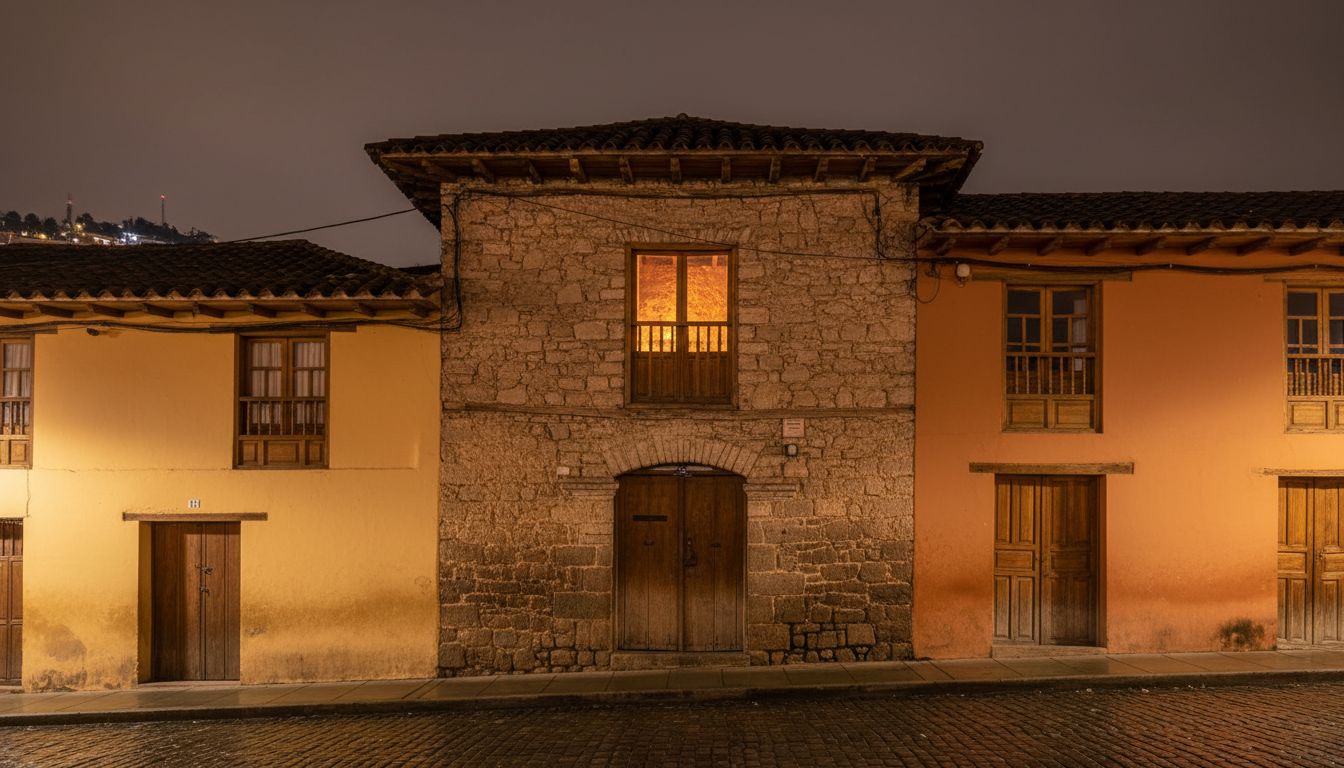
Tucked into the dense grid of Quito's San Blas neighborhood is a house so narrow that newcomers often do a double take walking past it. Locals point to it as a landmark, not because of any plaque or official recognition, but because of a story that has circulated through the neighborhood for generations. It is a tale about buried treasure, flickering flames in the night, and a duende said to guard it all.
San Blas sits just outside Quito's grand colonial center, a working-class neighborhood of narrow streets, old stone-and-adobe facades, and lots so tight that builders centuries ago had to get creative. Houses here were often squeezed into whatever space was available, resulting in architecture that feels almost improvisational by today's standards. It is exactly this kind of cramped, idiosyncratic building that seems to invite stories.
It's worth being upfront: what follows is a retelling of local legend and oral tradition, not a documented historical account. No municipal records, heritage surveys, or published folklore collections were consulted in preparing this piece. The story is presented here as it circulates among residents and lore-tellers rather than as verified history. That said, the absence of paperwork doesn't make the story any less real to the people who tell it.
The Legend of the Treasure Flames
The core of the story goes like this: somewhere within or beneath the narrow house, colonial-era treasure is said to lie buried. According to the legend, this hidden wealth doesn't stay silent. On certain nights, residents and passersby claim to see flickering flames or ghostly lights emanating from the house, marking the spot where the treasure supposedly waits.
This kind of story is far from unique to San Blas. Treasure-flame legends appear across former Spanish colonial cities throughout Latin America, often tied to old houses, churches, or family estates. The pattern tends to follow similar contours: wealth hidden during times of upheaval, family secrets never passed down properly, or riches buried in haste and never reclaimed.
Colonial houses, in particular, seem to lend themselves to these stories. Thick walls, hidden compartments, and centuries of ownership changes make it easy to imagine forgotten riches sealed away by a family that fled, died out, or simply never told anyone where they'd stashed their valuables. In a neighborhood like San Blas, where buildings have passed through many hands over hundreds of years, the idea that something might still be hidden inside one of them has obvious appeal.
Over time, generations of San Blas residents have passed the story down, each adding small details or embellishments. That kind of evolution is typical of oral tradition, where a story's core stays recognizable even as the specifics shift depending on who is telling it.
Enter the Duende
No treasure-flame legend in this part of the world would be complete without a guardian spirit, and in San Blas, that role belongs to a duende. The duende is a familiar figure in Andean and broader Latin American folklore, typically described as a small, mischievous household or nature spirit that occupies an ambiguous moral space.
The duende's character tends to be dual-natured: part trickster, part protector. In many traditions, duendes are known for playing pranks, hiding objects, or startling people who wander where they shouldn't. But they're also frequently cast as guardians of hidden or forbidden things, including buried treasure, which makes them a natural fit for a story like this one.
According to the local telling, the duende associated with this house is said to interact directly with anyone who gets too close to the treasure flames, whether by frightening them off, leading them astray, or simply making its presence unmistakably known. The exact nature of these encounters varies depending on who's telling the story, which is itself part of the legend's charm.
This figure isn't isolated to San Blas. Duende lore appears throughout Ecuador and much of Latin America, often tied to specific houses, caves, or rural landscapes. That broader tradition helps show just how culturally rooted the duende is: less a one-off invention and more a recognizable archetype reshaped to fit a particular house and a particular neighborhood.
Why the Story Persists in San Blas
Part of why this legend has stuck around likely has to do with the house itself. Narrow, old buildings in dense historic neighborhoods seem to naturally attract ghost and treasure stories. Their unusual proportions, dark corners, and age alone invite speculation, and a story like this one gives passersby a reason to look twice at a building they might otherwise overlook.
Oral tradition plays a significant role in how the legend has survived. Without a written record anchoring the story to a fixed version, it has been free to shift and adapt as it's passed from person to person, which is both why it feels alive and why it resists easy verification.
Expats and newcomers to Quito often first encounter tales like this one not through guidebooks or museums, but through neighbors, informal walking guides, or longtime residents who enjoy sharing local color with new arrivals. That word-of-mouth transmission is, in many ways, the whole point of oral tradition: the story exists because people keep telling it, not because it's been formally preserved.
It's worth acknowledging, too, that the absence of documented sources doesn't diminish the story's cultural value. Legends like this one matter precisely because they're unverifiable, functioning less as historical claims and more as a shared cultural inheritance that shapes how a neighborhood understands itself.
Encountering the Legend as an Outsider
For an expat living in or visiting Quito, hearing this story secondhand, maybe from a landlord, a neighbor, or someone met at a corner store, has a particular texture to it. It's the kind of story that arrives without footnotes, carried entirely by the person telling it, and that informality is part of what makes it memorable.
Legends like this one can shape how an outsider experiences a place. Knowing that a narrow, unremarkable-looking house supposedly harbors buried treasure and a mischievous spirit adds a layer of depth to a walk through San Blas that a guidebook entry never could. It's a small reminder that neighborhoods carry stories alongside their architecture.
In old colonial neighborhoods like this one, the line between history and legend tends to blur. Nobody expects a tale about treasure flames and a duende to hold up as documented fact, and that's not really the point. The story persists because it adds color, mystery, and a sense of continuity to a place that has seen centuries of change.
For anyone curious enough to see it for themselves, San Blas's narrow streets are worth a visit. Walk past the slim colonial house, listen to how the story is told by whoever happens to be nearby, and decide for yourself what you believe.