The Town That Appears on No Tourist Map: Finding Hidden Ecuador
The bus was supposed to turn left at the church with the blue doors. At least, that's what the driver in Cuenca had told me in rapid Spanish, gesturing vaguely toward the mountains. But when we reached what I thought was the landmark, there was no blue church—just a weathered chapel with faded green paint and a hand-carved wooden cross.
I should have gotten off then, retraced my steps, found the correct route. Instead, I stayed on as the bus wound deeper into valleys that seemed to exist in a different century altogether. When we finally stopped, the driver turned to me with a knowing smile. "Aquí," he said simply. Here.
The Accidental Discovery
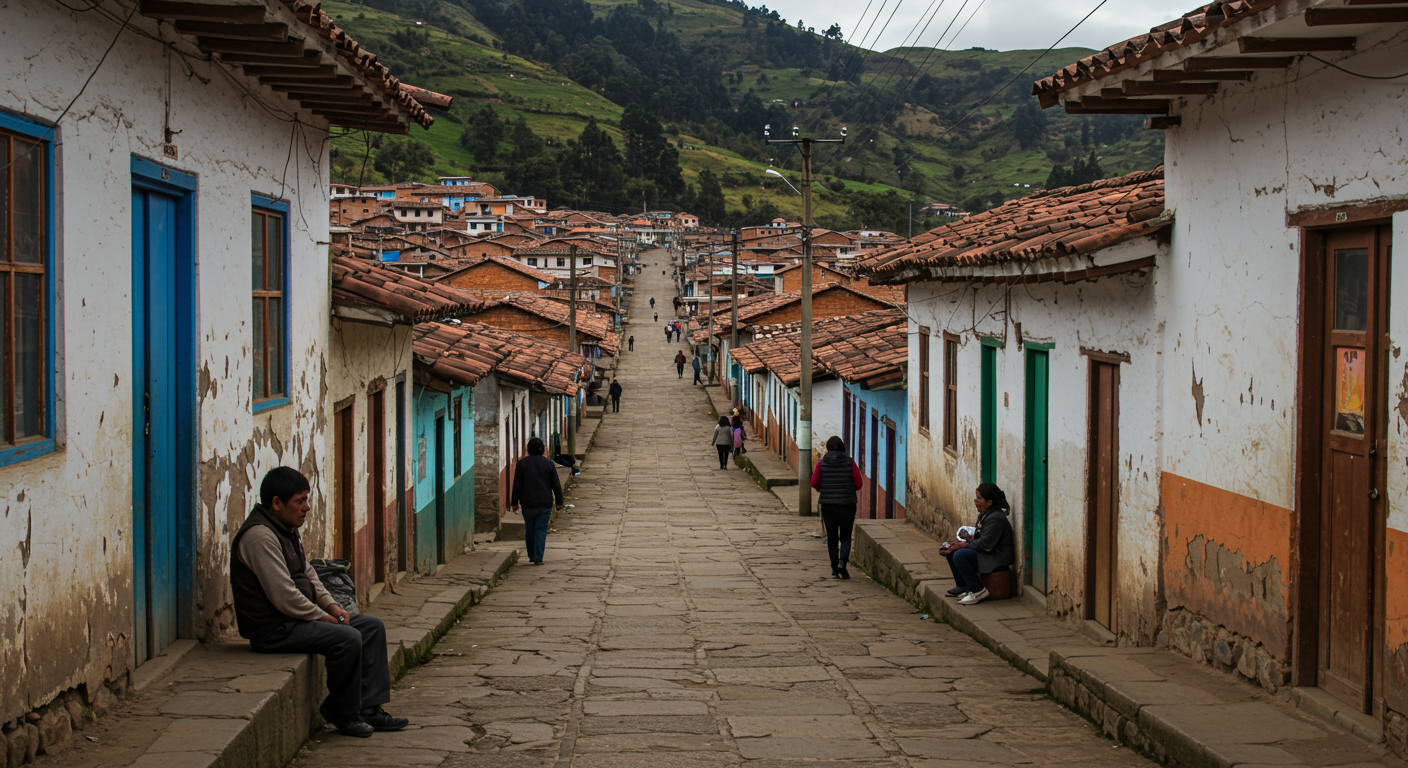
The town that greeted me had no name I could find on any map, digital or otherwise. No road signs announced its existence, no tourism board had claimed it, and certainly no travel blogger had "discovered" it yet. The main street—if you could call the dirt path that—was lined with adobe houses whose walls seemed to grow directly from the earth itself.
Children playing with wooden hoops paused to stare at my backpack, not with the practiced curiosity of kids accustomed to tourists, but with genuine wonder at this unexpected visitor. An elderly woman sweeping her doorstep looked up and offered the kind of smile that transcends language barriers. In that moment, I realized I had stumbled onto something extraordinary: a place that existed entirely for itself.
The feeling was disorienting. After months of navigating Ecuador's established expat communities and tourist circuits, I found myself somewhere that operated by completely different rules—or perhaps, by much older ones.
A Place Time Seemed to Forget
Walking through the town felt like stepping through a portal. The air carried sounds I hadn't heard in modern Ecuador: the rhythmic thud of grain being ground by hand, conversations conducted entirely in Kichwa, the distant bleating of goats being herded down mountainside paths their ancestors had carved generations ago.
The architecture told stories that no guidebook could capture. Houses built with techniques passed down through families, their walls thick enough to keep the mountain cold at bay, their courtyards designed around daily rhythms that had nothing to do with tourist seasons or business hours. Smoke rose from chimneys in patterns that spoke of meals prepared the same way for decades.
There was a central plaza, of course—every Ecuadorian town has one—but this wasn't a space designed for visitors to admire. It was clearly the heart of community life, with worn benches positioned for conversations, not photo opportunities. The church that anchored it bore no historical markers or visiting hours, just the quiet dignity of a place where faith is lived rather than displayed.
The People Who Call It Home
My first real conversation happened over necessity. I needed water, and the woman running the tiny tienda seemed as surprised to see me as I was to find myself there. She spoke slowly, patiently, switching between Spanish and Kichwa as she tried to understand what had brought me to her doorstep.
When I explained my accidental journey, her expression shifted from puzzlement to something approaching delight. She called to her husband, and soon half the neighborhood had gathered to hear the story of the lost gringo who had somehow found their town. Not to gawk or to calculate profit margins, but out of genuine human curiosity.
Over the next few hours, stories emerged. The town had been founded by families fleeing political upheaval decades ago. They had chosen this remote valley precisely because it offered isolation, the chance to preserve their way of life without interference from outside forces—whether government, commercial, or cultural.
"We know about the tourists," one man told me in careful Spanish. "They go to Otavalo, to Baños, to the places with hotels and restaurants. We are happy for them to find what they seek there."
Learning the Unwritten Rules
Staying overnight meant navigating customs no travel guide could have prepared me for. The concept of payment for hospitality seemed to puzzle my hosts more than it reassured them. Eventually, we settled on my contributing to the evening meal and helping with morning chores—arrangements that made sense within their framework of reciprocal community support.
I learned quickly that questions about "attractions" or "things to do" missed the point entirely. Life here wasn't organized around entertainment or consumption. The rhythm was work, family, community, seasons, weather. People gathered in the evening not because there was nothing else to do, but because being together was what they chose to do.
My biggest mistake came from trying to photograph everything, treating the town like a museum exhibit rather than a living community. It took gentle but firm guidance from my hosts to understand that some experiences aren't meant to be documented and shared, but simply lived and remembered.
The Weight of Secrets
As news of my presence spread through the small community, conversations began to touch on topics that revealed the complexity of their isolation. Some residents worried about eventual discovery, about the changes that would inevitably follow if their town became another stop on Ecuador's growing tourism circuit.
Others spoke of practical challenges—young people leaving for cities with more opportunities, difficulty accessing healthcare and education, the constant balance between preserving tradition and adapting to an evolving world.
"We are not against progress," an elderly community leader explained. "But we have seen what happens to places that become famous. They stop belonging to the people who built them." His words carried the weight of observation, of watching neighboring communities transform under tourism pressure.
I found myself grappling with an unexpected ethical dilemma. Part of me wanted to shout about this incredible place, to write detailed directions and encourage others to seek out this authentic experience. But another part understood that doing so would fundamentally change what made the place special.
What Maps Can't Capture
Leaving required the same improvised transportation that had brought me—waiting for the bus that might come, trusting in the informal network of drivers and schedules that connected this hidden community to the wider world. As I watched the town disappear behind mountain curves, I realized I was carrying something more valuable than photographs or souvenirs: a completely different understanding of what travel could mean.
The experience challenged everything I thought I knew about authentic travel. Most of us seek authenticity as consumers, looking for experiences that feel real compared to obviously manufactured tourist attractions. But true authenticity isn't something that can be packaged or marketed—it exists in places and communities that function entirely outside those frameworks.
This town that appears on no tourist map taught me that some of the world's most meaningful places remain hidden not because they're hard to reach, but because they choose to exist on their own terms. They offer not entertainment or easily digestible culture, but the rare opportunity to witness life organized around completely different priorities and values.
Months later, I still think about that community tucked away in its mountain valley. I've never mentioned its location to other travelers, never posted those photos I eventually stopped taking. Some discoveries, I learned, are meant to be treasured rather than shared—protected rather than promoted.
The most important places often can't be found on any map, digital or otherwise. They exist in the spaces between destinations, accessible only to those willing to get lost and comfortable with finding something entirely different from what they were seeking. In a world increasingly connected and documented, perhaps the greatest luxury is discovering there are still corners of it that remain beautifully, intentionally unknown.