The Silver Horseman of Santa Elena: Midnight Legend of Manglaralto's Pact Debts
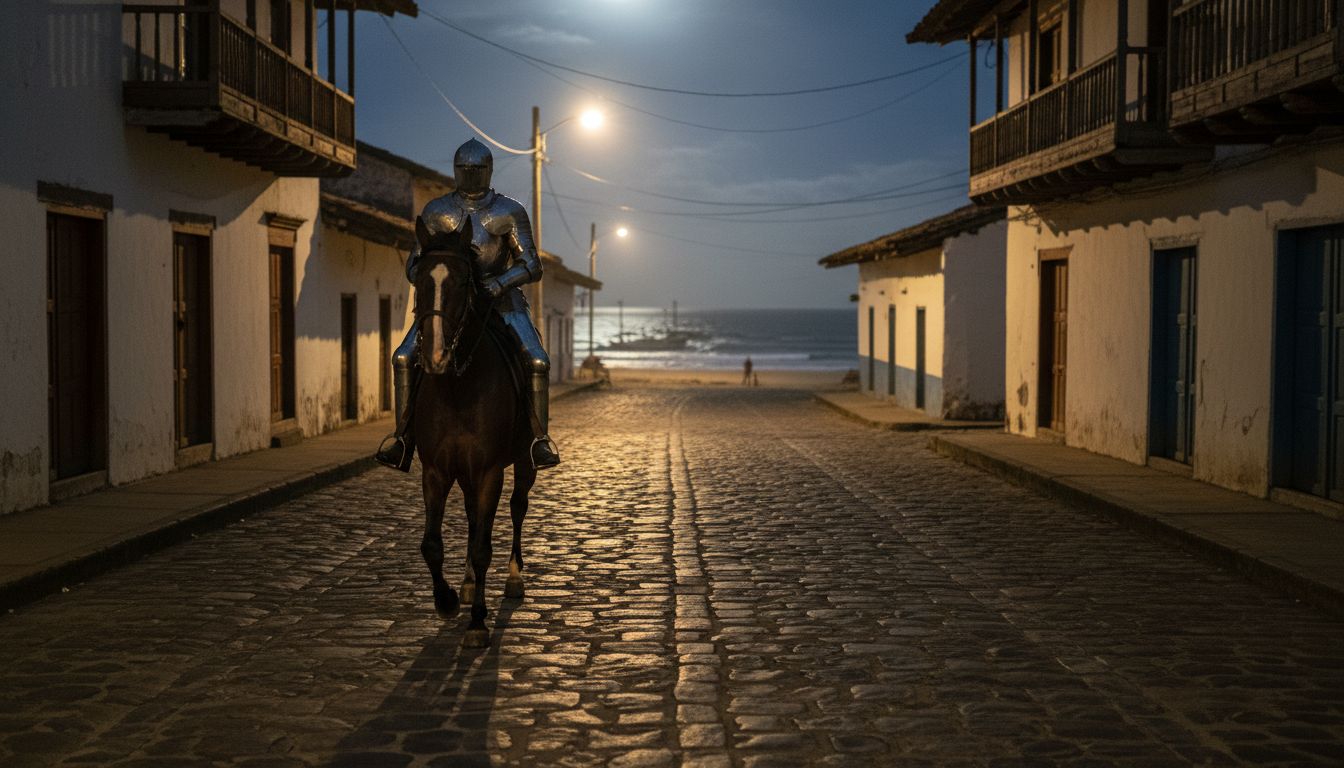
The dirt road out of Manglaralto grows quiet after dark. The dry forest presses close on either side, and somewhere beyond the tree line, the Pacific keeps its steady rhythm against the shore. It's along this stretch of coastline, locals say, that late-night travelers have long reported an unsettling sound: the unmistakable clatter of hooves, approaching from nowhere, accompanied by a flash of silver catching moonlight before anything else comes into view.
What follows, according to those who tell the story, is the appearance of a lone rider — the Silver Horseman of Santa Elena. Many in the region describe him not as a ghost in the traditional sense, but as something closer to a collector, a figure who arrives precisely when he is owed something. This piece presents that legend as it has circulated through generations of oral storytelling along the Santa Elena coast. It should be read as folklore and cultural narrative, not as a documented historical account.
Who Is the Silver Horseman?
Descriptions of the Horseman vary slightly from one telling to the next, but certain details recur. He rides a dark horse, often said to move without sound until it is nearly upon its witness. His clothing or tack gleams with silver — a detail some storytellers link to wealth gained through forbidden means, others to the metal's old reputation as ward and warning both. The dread he inspires, listeners note, comes less from his appearance than from what his arrival is believed to signify: someone's debt has come due.
In the stories, the Horseman functions as a collector of what might be called pact debts — obligations incurred by those who, in moments of desperation, are said to have bargained with dark forces for wealth, love, or survival. This figure fits within a much broader pattern found across Latin American folklore, where midnight riders and devil figures serve as enforcers of supernatural contracts. Echoes of this archetype appear in tales like La Caja Ronca and other regional devil-pact legends found throughout the continent.
Scholars of folk religion in the Americas have long observed how Catholic imagery of the devil blended with indigenous and local belief systems during centuries of cultural contact. The Silver Horseman likely reflects this same syncretism — a figure shaped by Catholic notions of damnation and contract, filtered through Montubio coastal sensibilities and the particular landscape of Santa Elena.
The Pact and Its Price
The archetypal story beneath the legend follows a familiar shape: a person facing ruin, illness, or poverty strikes a bargain with a supernatural entity, trading their soul or future for fortune, land, or simply survival. For a time, the arrangement seems to work in their favor. Then, inevitably, the day of reckoning arrives — and so does the Horseman.
Storytellers emphasize that he appears exactly when the debt is due, never early, never late. Silver recurs throughout these tellings as both the currency of the bargain and a kind of warning sign — wealth that glitters but carries a cost. Midnight, too, holds symbolic weight as the threshold hour, the moment when the ordinary world grows thin and older, darker arrangements can be settled.
Within Montubio culture, tales like this one are understood to serve a moral function beyond simple entertainment. They caution against desperation-driven bargains and remind listeners that shortcuts to fortune often carry hidden prices — a lesson as relevant in hard economic times as in any supernatural sense.
Why Manglaralto? Place, Memory, and Belief
It's worth asking why this particular stretch of Santa Elena coastline became so closely tied to the legend. Manglaralto and its surrounding communities have historically existed somewhat apart from Ecuador's urban centers, preserving oral traditions shaped by generations of fishing families, small farmers, and coastal life. Isolation, in this sense, has acted as a kind of preservation — stories pass from grandparent to grandchild largely outside the reach of mass media or formal documentation.
In these communities, storytelling often blends fear, entertainment, and a sense of shared identity. A tale like the Silver Horseman becomes something residents hold in common, a piece of local culture as much as a ghost story. It's important to note, however, that no documented historical source for this specific legend has been identified. What exists is primarily word-of-mouth transmission — a reality common to much regional folklore, and one that doesn't diminish the story's cultural significance even as it limits verifiable detail.
Living With the Legend Today
For those living in or visiting the Manglaralto area, the story tends to surface in informal moments — a grandparent's warning on a late walk home, a fisherman's aside while mending nets at dusk, or a half-joking comment shared among friends during a night drive along the coastal road. Expats settling into the region sometimes encounter the tale this way too, treated by neighbors as a piece of local color worth knowing.
Many observers note that legends like this persist not because of any consensus about their literal truth, but because of what they continue to offer a community: a shared cautionary framework, a sense of place, and occasionally, a bit of local intrigue that draws curious visitors. The endurance of the Silver Horseman likely says less about the supernatural itself and more about what Santa Elena's coastal communities value — caution against greed, respect for the unknown, and the pleasure of a well-told story passed down through the dark.
So for those who find themselves on the roads near Manglaralto after midnight, local tradition offers a simple suggestion: listen. Somewhere out past the dry forest, past the sound of the sea, silver-shod hooves might just be making their way toward a debt long overdue.