The Road Everyone Says Not to Take
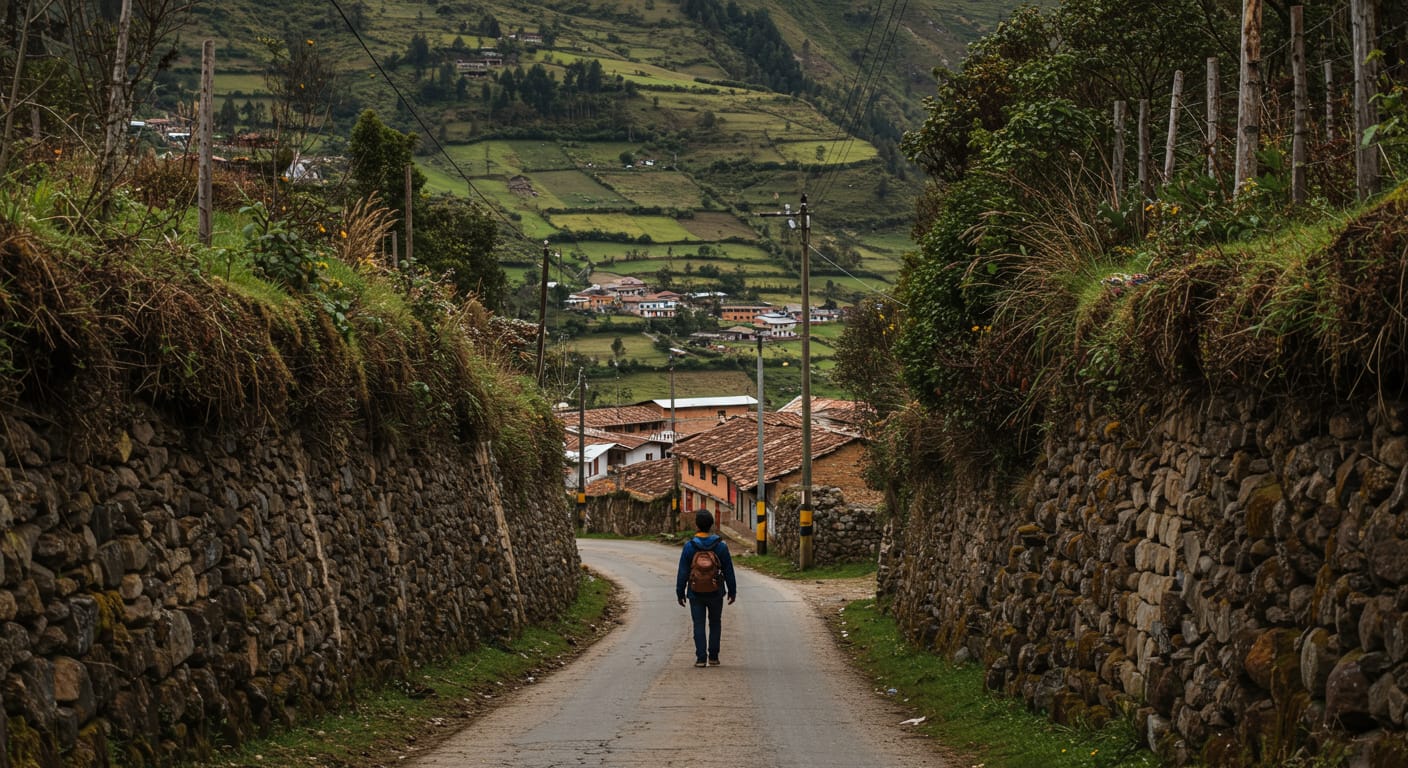
The first time someone told me not to take that road, they did not say it casually. They said it the way people talk about fire, bad water, or a person who cannot be trusted.
Never go that way, they said. Not alone. Not if you can help it. Better to add twenty minutes. Better to spend the extra taxi fare. Better almost anything than that road.
In Cuenca, I learned quickly that directions often came bundled with judgment. One neighborhood was called inconvenient when people meant poor. One bus line was described as dangerous when what they really meant was crowded, noisy, and full of people unlike themselves. Advice could be practical, loving, exaggerated, outdated, or shaped by the invisible borders of class and habit. I knew that. At least, I thought I did.
The Warning Before the Journey
The road in question was literal enough: a steep stretch curling away from the center, skirting the edge of neighborhoods I did not yet know well, then dropping toward a part of town people mentioned with lowered voices and vague expressions. But it was also, in the way these things often become for expats, something larger than pavement. It was a test of who I trusted. It was a shortcut through other people's certainty. It was a route into the parts of the city not curated for me.
The warnings came from different kinds of people. A longtime foreign resident spoke with theatrical certainty, as if local knowledge increased in value when delivered as a commandment. A shopkeeper looked genuinely concerned and told me I would be better off on the main avenue. A neighbor shrugged and said the road was fine in daylight, but said it with enough hesitation to leave a shadow behind the words. Each caution carried its own flavor: fear, protectiveness, old rumor, social sorting. I collected them all without knowing how to separate one from another.
What I Thought They Meant
Before I ever set foot on it, I had built the road in my mind. I imagined broken pavement, men watching too closely, the feeling of being visibly foreign in the wrong place. I imagined the particular vulnerability of being new somewhere and not yet knowing the difference between intuition and prejudice. I imagined danger with cinematic lighting, because secondhand warnings are generous with atmosphere and stingy with detail.
This is one of the quieter failures of expat life: we inherit local advice before we inherit local context. We repeat what we have heard because we want to be wise, or safe, or accepted as people who understand the place we live. But understanding is not transferable so easily. Sometimes what sounds like survival knowledge is just someone else's map of discomfort.
My own motives were not noble. Curiosity was part of it, yes, but so was arrogance. So was loneliness. So was the stubborn desire not to be managed by a city I had not yet learned how to belong to. Every warning sharpened the road into a challenge, and I am embarrassed to admit how much I wanted to prove myself immune to fear I had borrowed from others.
Why I Took It Anyway
I took it on an ordinary afternoon, which is the least heroic setting for a private act of defiance. I had missed a bus, my phone battery was nearly dead, and I was carrying a reusable shopping bag with avocados, coffee, and a loaf of bread going soft at the corners. I could have taken the longer route back to my apartment, but the sky had begun that highland trick of darkening all at once, and I wanted to get home before the rain.
That was all. No grand experiment. No manifesto about independence. Just fatigue, impatience, and the practical math of a downhill road that would save me time.
I stood at the turnoff longer than I needed to, as if the road itself might issue a final warning. Nothing happened. A dog slept beside a wall in a patch of sun. A pickup rattled past. Somewhere farther down, I heard music distorted by distance and cheap speakers. Then I started walking.
On the Road
The first surprise was how open it felt. Not safe in any absolute sense, not magical, not transformed into a lesson designed for me, but open. The air smelled faintly of damp earth and exhaust. Eucalyptus moved in the wind above cinderblock walls. A woman in an apron was sweeping dust away from her doorway in patient strokes that only rearranged it. Two boys rolled a flat soccer ball across a patch of gravel and argued over whether it had crossed an imaginary line.
I kept waiting for the moment when the warnings would become visible. Every motorcycle made me glance up too quickly. Every group of men standing together looked, at first, like the beginning of a story I did not want to be in. My body was primed for regret. That was the strongest thing on the road: not danger itself, but anticipation.
A bus groaned uphill, packed enough that faces pressed near the windows. A woman selling mandarins had arranged them in perfect pyramids on a blue tarp. A teenage couple sat on a low wall, sharing a plastic cup with two straws. Somewhere nearby, someone was frying something in oil, and the smell followed me for half a block. The clouds finally opened in a light, cold rain that darkened the dust and released the mineral scent of wet concrete.
There were uncomfortable moments. A stretch without much foot traffic. A car slowing for reasons I could not read. The awkward fact of being visibly out of place, which is not the same as being threatened but is never entirely neutral. I did not relax so much as recalibrate. The road was not empty of risk. It was simply not the myth I had been handed.
What Was Really There
What was really there was life. Uneven sidewalks, barking dogs, improvised storefronts, laundry strung under corrugated roofs, puddles the color of slate. There was poverty in plain view, which some people confuse with danger because it allows them to feel perceptive while remaining incurious. There was also weariness, routine, family, boredom, commerce, and beauty in fragments too ordinary to earn a warning.
I began to understand that the road had probably been many things to many people. Maybe it had once been less safe. Maybe certain hours did matter. Maybe the warnings were rooted in a time, or an incident, or a pattern I had no right to dismiss just because my one walk contradicted the drama of the story. But maybe the warning had also become socially useful. Maybe saying never go that way helped people announce who they were, where they belonged, and which parts of the city they could afford not to know.
The road was neither innocent nor condemned. It was specific. More than anything, that was what I had failed to imagine.
What the Warning Said About Belonging
After living abroad long enough, you realize that warnings are one of the currencies of expat life. We trade them constantly. Which office to avoid. Which driver to trust. Which district is changing. Which market charges foreigners more. Some warnings are generous and hard-earned. Some are gossip wearing the clothes of wisdom. Some are repeated so many times that no one remembers the original reason.
What unsettled me about that road was not that other people had been wrong. It was that I had been so ready to let borrowed certainty become my own. I had wanted local knowledge without the slow responsibility of learning a place on its own terms. I had wanted to be careful without asking careful questions.
Belonging, I am learning, is not built by rejecting every warning or obeying every warning. It is built somewhere more humble: by listening closely, by noticing who is speaking and why, by accepting that caution can be both sincere and incomplete. A city does not reveal itself through declarations. It reveals itself through repetition, contradiction, weather, errands, and the long correction of first impressions.
The Road After That
I took the road again after that, though not blindly and not at every hour. I took it when it made sense. I avoided it when instinct, timing, or simple prudence suggested another way. The difference was that I no longer heard the warning as a law. I heard it as one voice in a larger conversation, shaped by experience but not exempt from distortion.
Now when someone says, with absolute confidence, never go that way, I pay attention. But I also listen for the hidden meaning behind the sentence. Are they telling me about risk, or about reputation? About memory, or class, or habit, or fear? About the road, or about themselves?
Sometimes, walking home in the late afternoon, I still reach that turn and hear the echo of the original warning: never go that way. Then I look down the hill at the buses, the corner store, the wet pavement shining after rain, and I understand the sentence differently now. It was never only about the road.