The Night the Dead Emptied Junín Cemetery: A Manabí Legend from Día de Difuntos, 1982
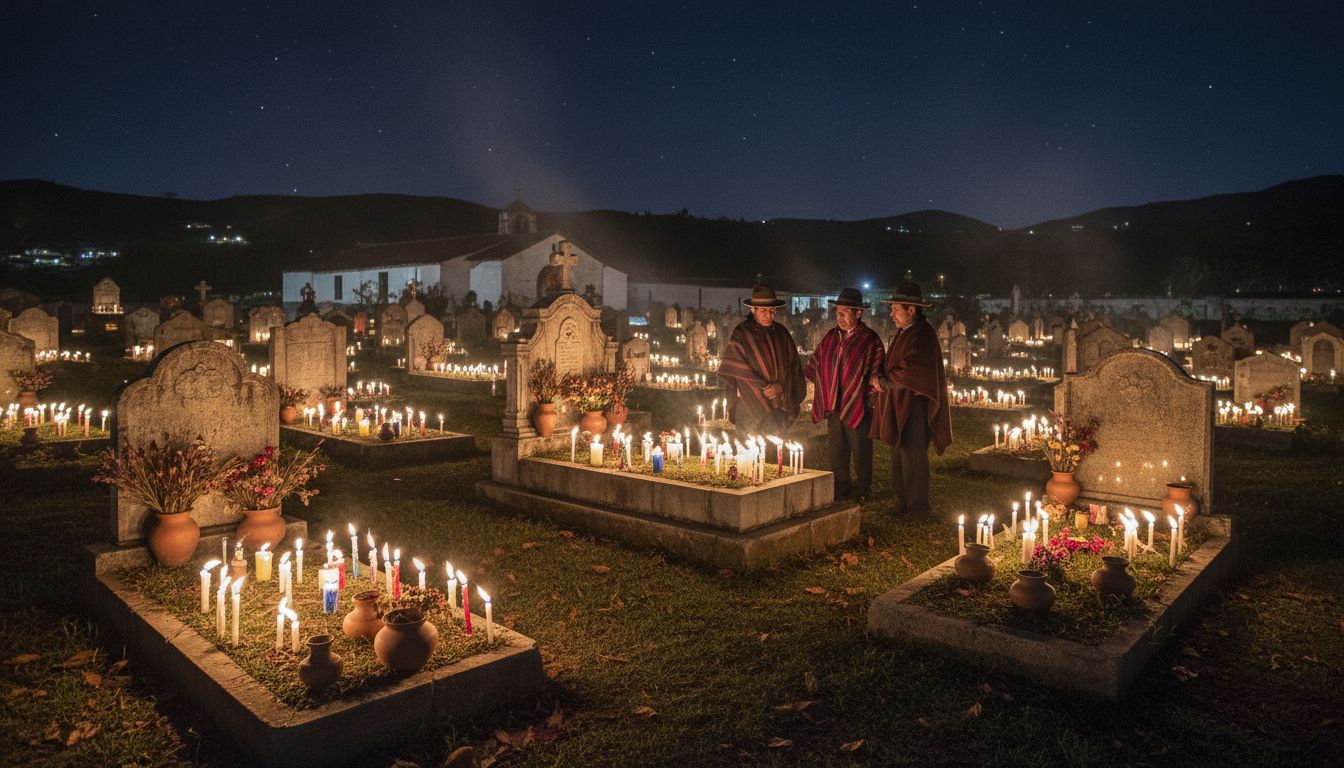
The Night the Dead Emptied Junín Cemetery: A Manabí Legend from Día de Difuntos, 1982
Some stories are not history, but they are still true in another sense — true to the people who tell them, true to the fears and rhythms of a place. What follows is one such story, passed along in and around Junín, a small town in Manabí province, Ecuador. There is no newspaper clipping to point to, no official record, no named witness willing to put their account on paper. Instead, there is a tale that circulates quietly among residents: that on the night of November 2, 1982, during Día de Difuntos, something happened at the local cemetery that sent mourners fleeing and left the grounds eerily empty before dawn.
Readers should approach this piece as they would a piece of regional folklore, because that is what it is being presented as. Junín is a modest agricultural town, and like much of rural Ecuador, its residents have historically marked Día de Difuntos with overnight vigils at the cemetery: candles, flowers, shared food, and long hours spent near the graves of relatives. It is exactly the kind of setting — dark, crowded, emotionally charged, steeped in ritual around death — where a legend like this could take root and never let go.
The Night of November 2, 1982
As the story is commonly told, families had gathered at the Junín cemetery as they did every year, settling in for the long night of remembrance that Día de Difuntos calls for. Candles lit the rows of graves. Conversation and prayer moved through the crowd in the usual way. Then, according to the legend, something shifted — an unexplained sound, a sighting, a wave of fear moving from one small group to the next — and within a short time the cemetery had emptied entirely, mourners streaming out into the dark streets of the town.
What exactly triggered the panic depends on who is telling the story. Some versions point to a strange noise from among the tombs. Others describe a figure glimpsed between the headstones that no one could identify. A few tellings lean toward something closer to mass hysteria — one person's fright becoming everyone's fright within minutes, the way panic can move through a crowd faster than any explanation for it. None of these versions can be confirmed as the "original" account, and it's worth being direct about that: this is oral tradition doing what oral tradition does, reshaping itself slightly with each retelling.
Why the Legend Took Hold
Mass panic events, real and rumored alike, tend to share certain ingredients: a crowd, low visibility, heightened emotion, and a cultural backdrop that already primes people to expect the uncanny. Día de Difuntos gatherings check every one of those boxes. A nighttime cemetery vigil is, by its nature, a setting where imagination and grief sit close together, and where a single startled reaction can ripple outward into something larger.
Scholars of Latin American folklore note that stories like this one fit into a much broader tradition — tales of restless spirits, cemetery hauntings, and strange occurrences tied to the Day of the Dead and its related observances across the region. Communities from Mexico to the Andes carry their own versions of similar narratives: a graveyard scare, a night no one wants to repeat, a story that gets handed to the next generation with a knowing nod. Junín's tale of 1982 appears to sit comfortably within that lineage, whether or not a specific triggering incident ever actually occurred.
In small towns without local newspapers or formal historical societies, stories like this persist through conversation rather than documentation — told at family gatherings, referenced in passing by older residents, occasionally debated over who remembers it "correctly." That absence of a paper trail doesn't necessarily mean nothing happened; it simply means nothing was recorded in a form that outlives memory.
What Can't Be Verified
In the interest of transparency: no newspaper archives, provincial records, or named eyewitness accounts were available in preparing this piece. The research behind this article turned up no documented source, Ecuadorian or otherwise, describing a specific panic event at the Junín cemetery on November 2, 1982. That does not mean the event is false. It means it currently exists only as a story told and retold, without the kind of paper trail that would let an outside researcher confirm it.
Proper verification would likely require several things that go beyond the scope of this piece: access to Manabí provincial archives from the early 1980s, a search through national Ecuadorian newspaper morgues of the period for any mention of unusual incidents in Junín around that date, and — perhaps most valuably — direct interviews with older residents of the town who might have been present that night or who heard the story firsthand from someone who was. Short of that kind of work, the honest position is to present this as what local tradition says happened, not as an established fact.
The Legend's Place in Manabí Today
Whether or not a precise, verifiable event sits behind it, a story like this does real work in a community. It shapes how Día de Difuntos is talked about in Junín, adds a layer of caution or reverence to cemetery visits, and gives residents something distinctive to share with outsiders — including the expats and travelers who increasingly pass through or settle in small Manabí towns and ask about local history. A recurring pattern in places like this is that the unverifiable tale often outlives the verifiable record; it survives precisely because it is retold at kitchen tables and front porches rather than filed away in an archive no one visits.
What a story like this reveals, more than any single factual claim it makes, is how communities hold onto memory — collectively, imperfectly, and often more durably than the historical record itself. If you have heard a version of this story, grew up in or near Junín, or know of family accounts that touch on Día de Difuntos traditions in Manabí, your perspective would add real value here. And if other towns in Ecuador carry similar legends about a single unforgettable night, those stories are worth telling too.