The Neighbor Who Only Spoke in Riddles
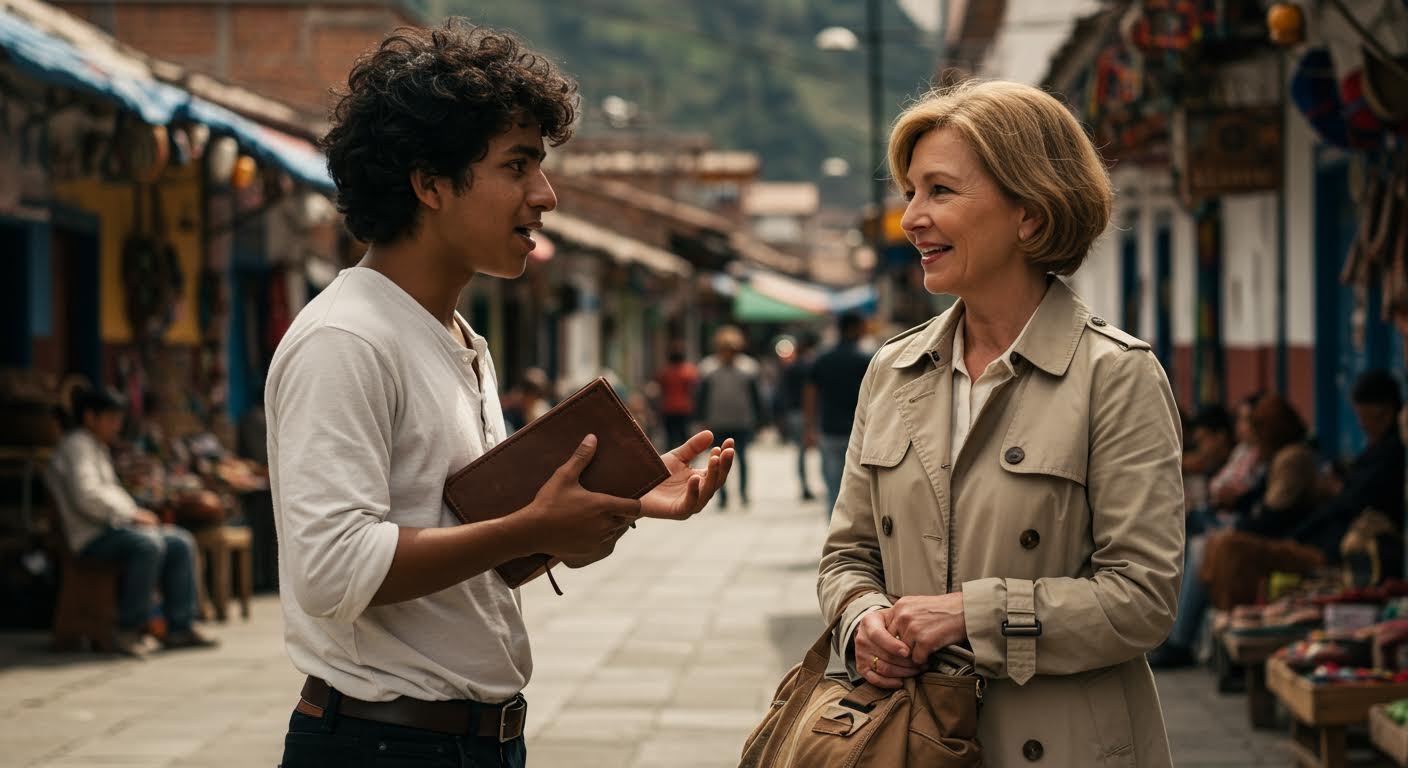
Moving to a new country brings countless adjustments, but nothing prepared me for Don Eduardo, my next-door neighbor who seemed incapable of speaking in anything but riddles. What began as bewildering encounters eventually became one of the most enriching relationships of my expat journey.
First Encounters: When Normal Introductions Don't Apply
Our first meeting should have been simple neighborly pleasantries. I knocked on his door with a plate of cookies, ready to practice my Spanish and make a good impression. Instead, Eduardo opened the door and said, "What sweetness travels from one nest to another, carried by wings that never fly?"
I stood there, cookies in hand, completely baffled. Was this a language barrier? A cultural reference I missed? When I tried a straightforward introduction—"Hola, soy tu nueva vecina"—he smiled warmly and replied, "Ah, the puzzle-solver arrives before the puzzles are given. Welcome, weaver of new threads in old fabric."
Every interaction followed this pattern. Asking about trash day earned me: "When the sun visits three times, the hungry metal beasts come to feast on our discarded treasures." A simple "good morning" was met with: "The golden eye opens, and shadows retreat to their secret places. How does the transplanted seed greet the light today?"
At first, I wondered if Eduardo had some condition or was playing an elaborate joke on the foreigner. Gradually, I realized this was simply how he communicated—and he expected me to engage with his riddles, not dismiss them.
Decoding Daily Life: Riddles for Everything
Once I accepted riddle-based conversation as our norm, I began studying Eduardo's patterns. His weather observations were poetic puzzles: "The sky wears gray blankets today, and the earth prepares to drink" meant rain was coming. Time became mathematical: "When the clock's arms embrace twice and the small hand points to the earth" meant 6 o'clock.
Mundane topics transformed into creative challenges. When my internet died, Eduardo's diagnosis came as: "The invisible rivers that carry knowledge have dried up in your dwelling. The cure lives in the green box that blinks like a confused firefly." He meant resetting the router.
I started carrying a notebook to record his complex riddles, working them out like crossword puzzles. Some took days to solve. When he asked, "What grows stronger when shared but dies when hoarded, needs no soil but blooms in seasons?" I pondered for a week before realizing he was asking about trading garden vegetables.
Each interaction required mental preparation that was exhausting at first. I'd rehearse responses to anticipated riddles, trying to match his creativity. Simple errands became intellectual exercises, and casual chats demanded chess-match focus.
The Learning Curve: From Frustration to Fascination
My initial reaction was impatience. Coming from a culture valuing direct communication, Eduardo's approach seemed unnecessarily complicated. I found myself avoiding him, taking alternate routes to bypass potential riddle encounters. The whole thing felt like an exhausting performance I'd never auditioned for.
But isolation in a new country makes you appreciate any human connection, even challenging ones. Gradually, I began anticipating the mental exercise. Eduardo's riddles were never mean-spirited—they showed genuine creativity and often contained layers revealing his thoughtful observation of our world.
My thinking patterns shifted. Walking the neighborhood, I'd unconsciously compose riddles about my surroundings: "What stretches thin legs across the path but never walks, offers shade but grows no leaves?" (Power lines.) Eduardo's influence was rewiring my brain to see metaphorical connections everywhere.
The breakthrough came when I crafted my first successful response riddle about weekend plans: "The one who left her homeland will visit the place where stories sleep in rows, guarded by quiet sentinels with numbered spines." His delighted laughter when he guessed "library" felt like passing an important test.
Breakthrough Moments: When Understanding Clicked
The riddle that changed everything came on a particularly difficult day when homesickness overwhelmed me. Eduardo found me sitting dejectedly on my front steps and said, "I see the seed that questions its planting, wondering if foreign soil can ever feel like home. But tell me, does the morning glory ask the fence's permission before deciding to bloom?"
Something in his tone made me truly listen—not just to decode the riddle, but to hear the empathy beneath it. He was acknowledging my struggle while gently suggesting that belonging was a choice I could make rather than a condition to wait for. It was the most comforting thing anyone had said in months, delivered with typical Eduardo flair.
Our afternoon conversation revealed glimpses of his background. Through carefully crafted riddles, I learned he was a retired literature teacher fascinated by language's puzzle-like nature. He spoke in riddles not to confuse or show off, but because he genuinely found metaphorical thinking more interesting than literal communication.
"Why speak in gray when the world offers every color?" he explained—the closest to a direct statement I'd heard from him. "Riddles make both speaker and listener more awake, more present. They transform small talk into real thought."
I began understanding that his communication style was a gift—an invitation to engage more deeply with language, ideas, and each other. Where others offered superficial neighborly pleasantries, Eduardo offered mental stimulation and genuine connection disguised as puzzles.
What the Riddles Taught Me About Connection
Living next to Eduardo transformed my understanding of communication barriers. What I initially saw as an obstacle became a bridge to richer interaction. His riddles required patience, active listening, and creative thinking—skills valuable far beyond our conversations.
The experience taught me to question assumptions about "normal" social interaction. Eduardo's unconventional approach created unique intimacy between neighbors. We knew each other's thoughts in ways typical small talk never achieves. His riddles often revealed his attentiveness to my daily life, concern for my wellbeing, and respect for my intelligence.
I also learned that meaningful connection doesn't require shared language conventions. Eduardo and I developed our own communication rhythm—a collaborative puzzle-solving relationship more engaging than any surface-level neighborly chat I'd experienced. Our interactions became daily highlights rather than obligatory social maintenance.
Most importantly, Eduardo showed me that patience with different communication styles can unlock unexpected friendships. His riddle-speak initially frustrated me because I focused on efficiency over experience. Once I embraced the journey of understanding rather than rushing to conclusions, our conversations became sources of joy and mental stimulation.
When I eventually moved neighborhoods, Eduardo's farewell riddle was his most transparent: "What takes memories when it travels but leaves friendship planted in permanent soil?" Even his goodbye reminded me that some connections transcend physical proximity.
Years later, I still craft mental riddles, Eduardo's linguistic gift continuing to color my everyday observations. He taught me that communication isn't just about exchanging information—it's about creating shared experiences, challenging each other's minds, and finding beauty in the ordinary through extraordinary expression.