The Missing Stone in Quito's San Francisco Atrium Still Marks Cantuña's Legendary Pact With the Devil
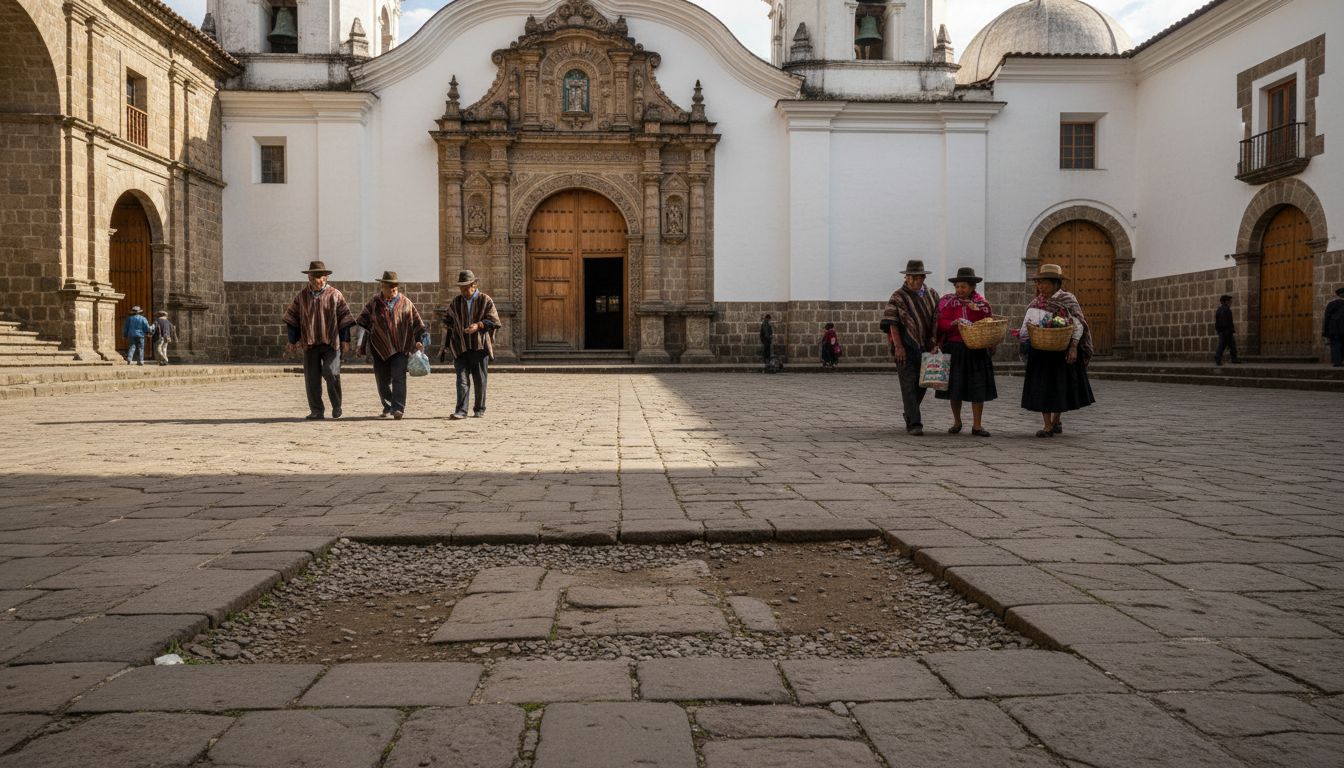
The Missing Stone in Quito's San Francisco Atrium Still Marks Cantuña's Legendary Pact With the Devil
Stand in San Francisco Plaza in Quito long enough on any given morning, and you will likely see it: a tour guide crouching near the base of the church's atrium wall, tracing a small gap in the stonework with a finger, and lowering their voice for dramatic effect. Many visitors assume they are about to hear a footnote of construction history. What they get instead is one of Quito's most enduring legends.
Locals will tell you, with a mix of pride and mischief, that the missing stone is proof of a deal made with the devil centuries ago. It is a story told and retold across generations, a fixture of walking tours, taxi conversations, and family lore. This is not a historical claim to be verified but a legend woven into the daily texture of life in Ecuador's capital, and that is precisely what makes it worth telling.
Setting the Scene: The Church and Convent of San Francisco
The Church and Convent of San Francisco is widely regarded as the oldest religious complex in Quito, anchoring the western edge of the plaza that bears its name. It sits within the historic center of Quito, a UNESCO World Heritage site prized for its concentration of colonial-era architecture and layered cultural history.
The atrium itself is expansive, a broad stone platform leading up to the church's facade, built during the Spanish colonial period with labor drawn heavily from the indigenous population. The sheer scale of the stonework, and the labor it represented, made this site fertile ground for stories about impossible deadlines, exploitation, and the kind of desperate bargains that populate colonial-era folklore across Latin America.
The Legend of Cantuña's Pact
According to the legend, an indigenous laborer named Cantuña was tasked with completing the atrium's stonework by a deadline that bordered on impossible. Facing ruin, public shame, or worse if he failed, Cantuña is said to have turned to a desperate solution: a pact with the devil himself.
The story goes that the devil agreed to finish the work overnight in exchange for Cantuña's soul. Through that single night, as the tale is told, a crew of demonic workers labored at supernatural speed, laying stone after stone in a race against the coming dawn, determined to complete the atrium and claim their prize before sunrise.
The Missing Stone and the Escape Clause
Here is where the legend takes its clever turn. As the story is most often told, Cantuña, or in some versions, a helper acting on his behalf, secretly hides or removes a single stone from the nearly finished atrium before the devil's crew can lay it.
The logic of the tale is simple and satisfying: because the work is not technically complete, the terms of the pact are never fulfilled. The devil, bound by his own bargain, has no claim on Cantuña's soul. It is a story that rewards cunning over brute strength, and it taps into a familiar folkloric pleasure: the underdog who outsmarts a far more powerful adversary through a loophole rather than a fight.
Where Legend Meets Stone: Seeing It Today
What sets this legend apart from many others is its physical anchor. Tour guides and locals alike still point to a specific gap in the atrium stonework as the missing stone, offered as tangible "evidence" that the story is more than mere invention.
For visitors and expats exploring Quito's historic center, a stop at this spot has become something of a ritual on walking tours through the old town. There is a particular texture to the experience: the worn stones underfoot, the imposing facade of the church rising above the plaza, and the practiced cadence of a guide's retelling, often delivered with a knowing smile that acknowledges the story's theatrical flourish even while insisting on its importance.
Why the Story Endures: Faith, Folklore, and Identity
Part of what makes the Cantuña legend so durable is the way it blends distinct storytelling traditions. Catholic morality themes, sin, temptation, and redemption through cleverness rather than repentance, sit alongside patterns more common to indigenous oral storytelling, where a clever underdog outmaneuvers a powerful trickster figure.
Many observers note that the tale also carries a quieter subtext about the immense, often uncredited labor that indigenous workers contributed to Quito's colonial architecture. Whether or not that reading was intended by the story's earliest tellers, it has become part of how some contemporary Ecuadorians and cultural commentators discuss the legend's deeper resonance.
The story has also found a robust second life in expat and travel writing about Quito, frequently cited as shorthand for the city's rich, layered history. It offers travel bloggers and newcomers alike an accessible entry point into the deeper folklore of the historic center, a compact narrative that captures something of the city's character in a way that longer histories cannot.
A Legend Worth Retelling
Centuries after the supposed events, visitors and residents of Quito continue to share the story of Cantuña's pact, a testament to how effectively a good legend can outlast the historical record it claims to explain. It is worth restating plainly: this is a legend, not verified history, and it should be understood and enjoyed as a meaningful piece of Quito's living culture rather than a factual account.
Still, meaning does not require verification. The next time you find yourself in San Francisco Plaza, take a moment to look closely at the atrium wall. Somewhere in that stonework is the gap that locals will tell you saved a man's soul, and the story that comes with it remains very much worth hearing for yourself.