The Legend of the Chordeleg Gold Crown: A Cañari Treasure Said to Rest in Britain's Royal Collection
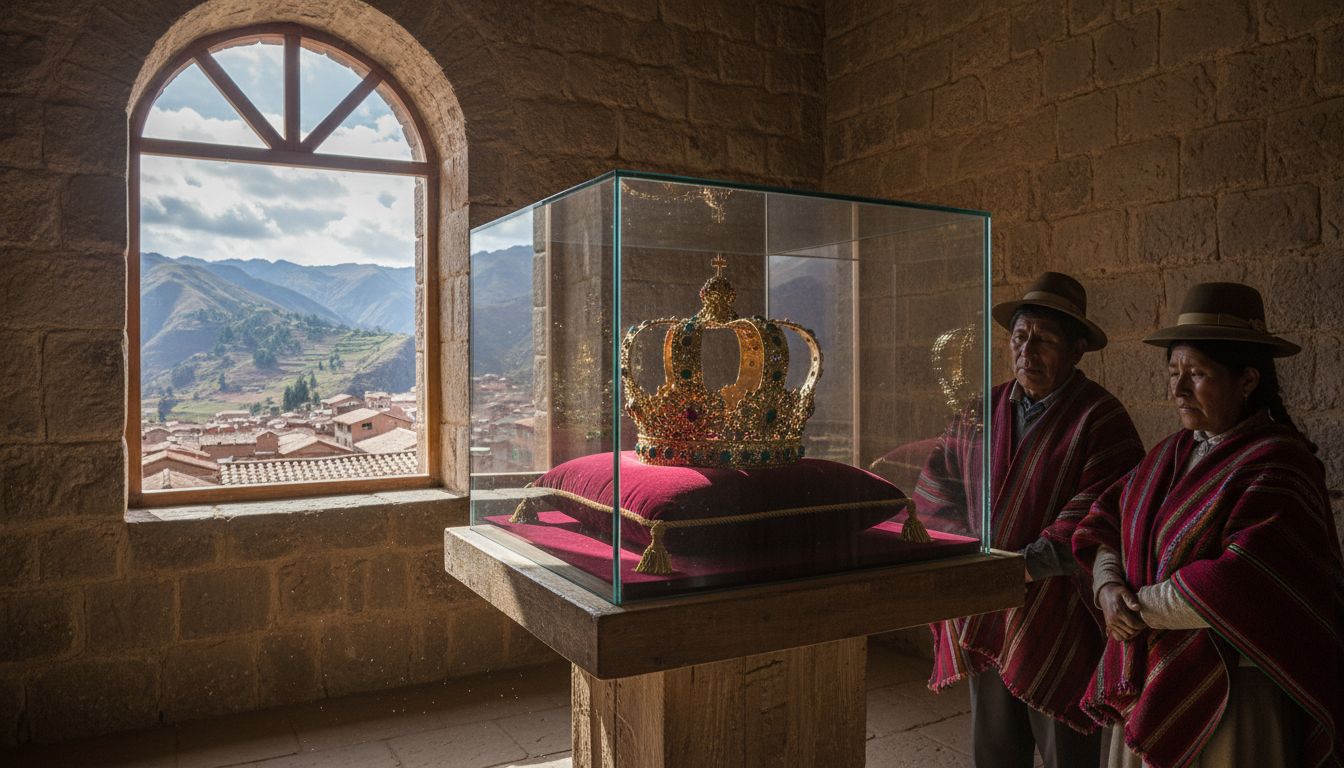
Some stories about Ecuador's indigenous past circulate for generations without ever settling into verified fact. One such story concerns a gold crown said to have been unearthed near Chordeleg in 1854, an object that, according to the tale, eventually found its way into Britain's Royal Collection. Many who have traced this account note that it carries the texture of local legend as much as documented history, and it is in that spirit that this piece approaches the subject: not as a confirmed museum record, but as a story worth examining for what it reveals about Cañari heritage and the broader questions it raises.
A Story Passed Down: The Chordeleg Discovery of 1854
Chordeleg, a small town in Ecuador's Azuay province, has long carried a reputation as a center of pre-Columbian goldsmithing, first under the Cañari and later within Inca territory following conquest. It is against this backdrop that the story of the 1854 discovery is typically told: a gold crown, reportedly unearthed from the ground near the town, the kind of find that would fit naturally into a region already known for its metallurgical riches.
What is harder to pin down are the specifics. Who found the crown, the precise location of the excavation, and whatever documentation may have accompanied it are details that could not be independently verified here. No archaeological record, catalog entry, or historical account was available to confirm these particulars. Readers should understand this piece as an exploration of a persistent story and its cultural resonance, rather than an assertion of settled provenance.
The Cañari Legacy of Goldwork
Whatever the truth of this particular crown, the broader context is well established. The Cañari people, who inhabited the highlands of what is now southern Ecuador before Inca and later Spanish conquest, were skilled metallurgists known for producing ceremonial gold and silver objects of considerable sophistication. Crowns, masks, pectorals, and other ornaments held deep spiritual and political meaning for Cañari elites, often signifying rank, religious authority, or connection to ancestral and cosmological forces.
This tradition of craftsmanship is part of why an artifact like the one described in the Chordeleg story would carry such historical and cultural weight. A gold crown attributed to Cañari goldsmiths would not simply be a valuable object; it would represent a tangible link to a worldview and social order that predates European contact, making claims about its discovery and whereabouts matter well beyond their monetary value.
The Claim of a Royal Collection Connection
According to the story being examined here, the crown eventually entered Britain's Royal Collection. This is the part of the account that invites the most caution. No verifying documentation, catalog entry, or institutional source could be located to confirm that such an item resides there, or that it ever did. The claim, as it circulates, remains an assertion rather than an established fact.
It is worth noting that there are plausible historical pathways by which Latin American antiquities moved into European private or royal collections during the 19th century. Diplomatic gifts, private acquisitions by travelers and collectors, and the broader colonial-era trade in antiquities all offered routes by which indigenous artifacts crossed the Atlantic, sometimes with little formal documentation. This history makes the Chordeleg story plausible in a general sense, even as the specific claim remains unconfirmed. Throughout this discussion, the custodial claim should be understood as "reportedly" true, or "according to the story," rather than as a documented institutional fact.
Why Provenance and Repatriation Questions Matter
This story touches on a theme that recurs across Ecuador and much of Latin America: the presence of indigenous artifacts in foreign institutions, often without clear or publicly accessible provenance records. A recurring concern in these discussions is the question of rightful ownership and the recognition of an object's true origin.
Questions of repatriation and cultural ownership are sensitive, and they deserve care rather than assumption. Without verified sourcing for the Chordeleg crown specifically, any claims about its current custodianship, including the suggestion that it sits in Britain's Royal Collection, should be treated as unconfirmed. That caution does not diminish the importance of the broader conversation about indigenous heritage and where it resides today; if anything, it underscores why documentation and transparency matter so much in these cases.
What Expats and Travelers Can Learn from Chordeleg Today
Whatever the fate of the crown in this particular story, Chordeleg itself remains very much alive as a center of silver and goldsmithing. Visitors and expats exploring Ecuador's southern highlands can still find working artisan shops in the town, where techniques passed down through generations continue to produce filigree jewelry and other metalwork.
Encountering a legend like this one locally, whether from a shopkeeper, a guide, or a casual conversation in the town square, can deepen an outsider's appreciation for Ecuador's indigenous heritage in a way that reading about it secondhand cannot. For those genuinely curious about the history behind stories like the Chordeleg crown, seeking out local historians, long-established artisan families, or regional museums offers a better path toward understanding than relying solely on oral lore or unverified claims. The legend endures because it speaks to something real about Cañari ingenuity and loss, even if the specific crown it describes may never be definitively traced.