The Legend of Culebrillas Lagoon: Cañar's Serpent Tale of a Stolen Wife and the Mysterious Espíndola
The Legend of Culebrillas Lagoon: Cañar's Serpent Tale of a Stolen Wife and the Mysterious Espíndola
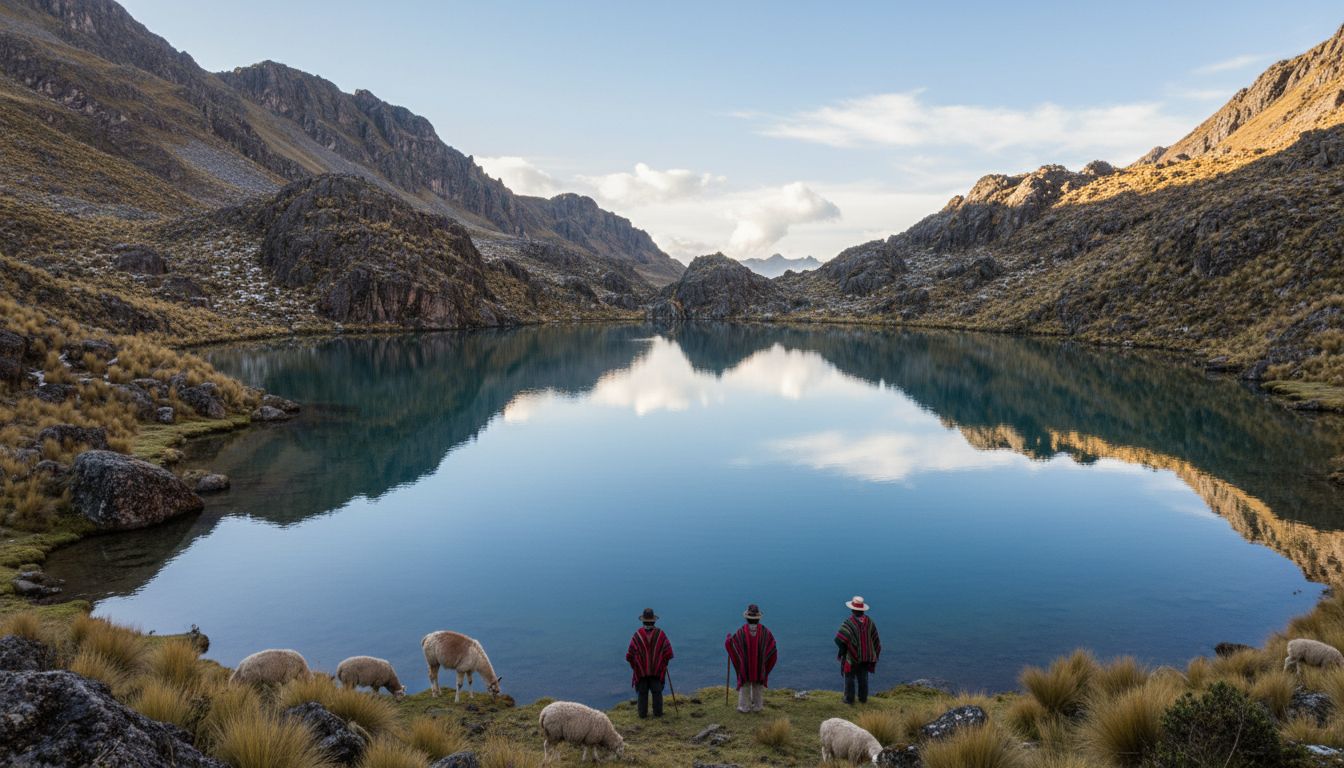
Tucked into the high páramo near Cañar, Ecuador, Culebrillas Lagoon has long held a special place in the oral traditions of the Cañari people. Surrounded by windswept grasslands and ancient stone ruins, the lagoon's remote, almost otherworldly setting has made it a natural gathering point for stories passed down through generations.
The lagoon's reputation extends well beyond its scenic appeal. Locals often describe it as a place of mystery, ritual significance, and lingering spiritual presence. What follows is an exploration of one such legend—a story rooted firmly in oral tradition rather than verified historical record. It should be read and enjoyed as folklore, offering a window into Cañari cultural imagination rather than a documented account of events.
A Sacred Lagoon in Cañari Territory
Culebrillas Lagoon sits within territory long associated with the Cañari people, an indigenous group whose history in the region predates Inca and Spanish colonial influence. The lagoon's name and setting have made it a recurring subject of local storytelling, often tied to ideas of sacredness, danger, and the boundary between the human and spirit worlds.
Travelers and residents alike sometimes describe a sense of unease or reverence when visiting the site, a feeling frequently attributed in local narratives to the lagoon's association with ancient legend. It is this reputation—as a place where myth and landscape intertwine—that frames the story at the center of this piece.
The Legend of the Serpent and the Stolen Wife
At the heart of the Culebrillas tradition is a tale recounted in varying forms by local storytellers: a serpent, sometimes described as a spirit or guardian of the lagoon's waters, abducted a Cañari woman and took her to live beneath or beside the lake.
This motif is not unique to Culebrillas. Serpent figures and water guardians appear throughout Andean and broader indigenous folklore, often symbolizing the power, unpredictability, and sacredness of natural water sources. Such stories commonly serve as a cultural shorthand for respecting bodies of water seen as powerful or dangerous, and for marking certain landscapes as spiritually significant.
It's worth emphasizing that specific details often attached to this story—names, exact timeframes, or precise locations—are part of an oral tradition that has evolved over time through retelling. No independent historical documentation confirms these specifics, and the legend should be understood as a piece of living folklore rather than a factual record.
Espíndola: Offspring of Myth and Menace
According to the legend, the union between the serpent and the Cañari woman produced a figure known in local storytelling as Espíndola. Some versions of the tale describe Espíndola as a menacing presence tied to the lagoon, with stories circulating that visitors to the site met harm at this figure's hands.
A recurring theme in local storytelling is caution: warnings that those who disturb or disrespect the lagoon may face consequences. However, there is no independent corroboration—historical, journalistic, or otherwise—for claims that Espíndola caused deaths at the lagoon. These accounts remain within the realm of oral tradition, and readers should treat them as folkloric narrative rather than verified incident.
Scholars of indigenous storytelling traditions suggest that figures like Espíndola may carry symbolic weight beyond a literal reading. Such characters are sometimes interpreted as embodiments of warnings to outsiders, reminders to respect sacred or dangerous landscapes, or symbolic guardians tasked with protecting a site considered spiritually important to the Cañari people.
Why This Legend Endures
Legends like that of Culebrillas Lagoon play an important role in preserving cultural identity, particularly for indigenous communities whose histories have often been underrepresented in official records. Oral storytelling serves as a vessel for transmitting values, cautionary wisdom, and a sense of connection to ancestral land across generations.
Similar serpent and water-spirit narratives recur throughout Andean indigenous cultures, suggesting shared symbolic frameworks for understanding the power of natural landscapes. Lagoons, lakes, and other secluded water sources frequently become settings for such tales, perhaps because their remoteness and stillness naturally invite a sense of mystery and reflection.
The enduring fascination with these stories also reflects a broader human interest in how communities make sense of dramatic or isolated natural features through narrative—turning landscape into a repository of cultural memory.
Visiting Culebrillas Lagoon Today
For travelers and expats drawn to Ecuador's highlands, Culebrillas Lagoon offers a striking destination combining natural beauty with cultural depth. Visitors interested in the region's indigenous heritage may find it rewarding to approach the site with curiosity and respect, mindful that local legends carry real cultural and spiritual weight for the Cañari community.
Those planning a visit are encouraged to engage thoughtfully with local guides or community members, who can offer context and perspective on the lagoon's significance that goes beyond the legend itself.
Ultimately, the story of the serpent, the stolen wife, and Espíndola is best appreciated as a piece of living folklore—an evocative expression of Cañari cultural heritage rather than a literal historical account. Enjoyed in that spirit, it adds a rich layer of meaning to a visit to one of Ecuador's most atmospheric highland sites.