The Lantern-Bearing Viuda Alegre of El Vado: A Ghost Story in Cuenca’s Old Quarter
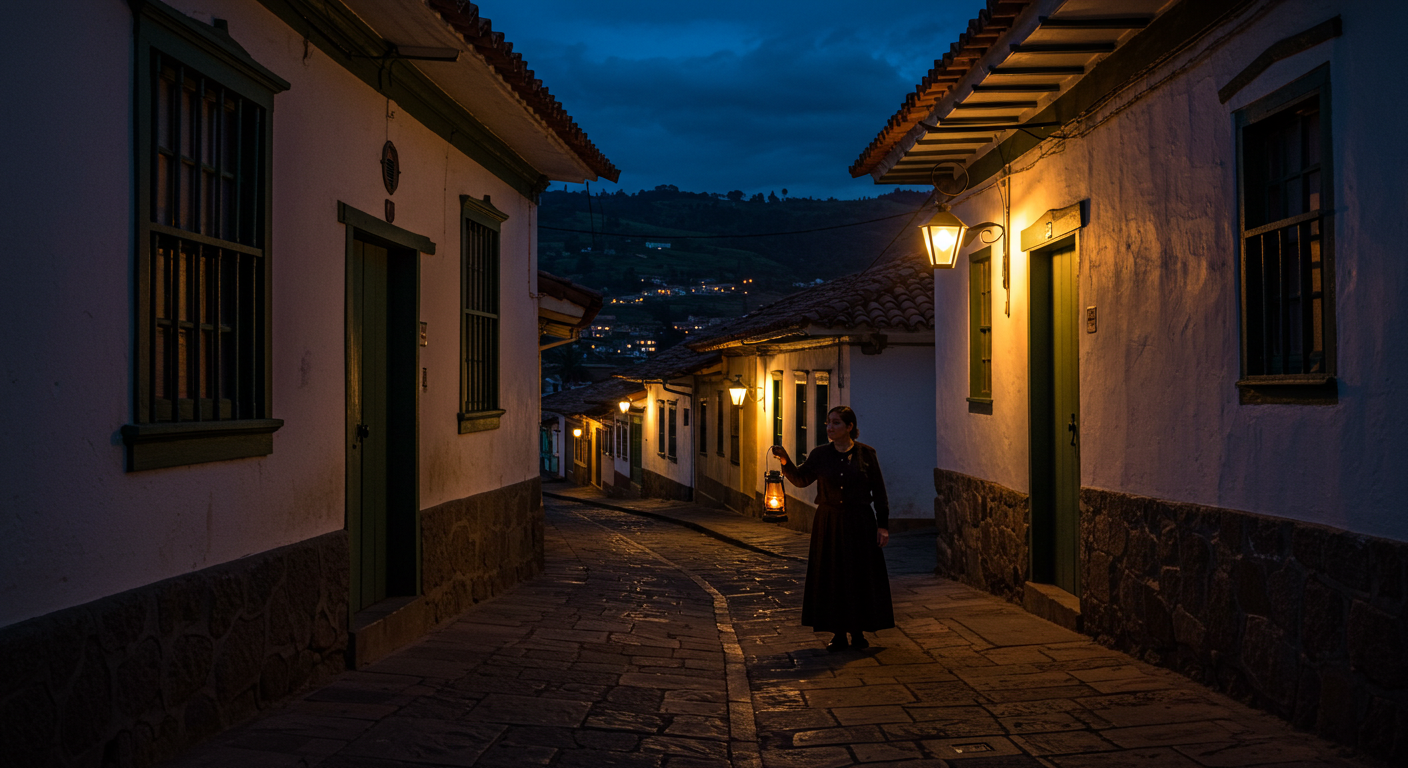
Walk through El Vado after dark, and it is easy to understand why stories linger there. The streets dip and rise, old facades catch the last light unevenly, and doorways seem to hold onto older moods than the rest of the city. In a neighborhood like this, where Cuenca’s past still feels close to the surface, ghost stories do not feel out of place. One of the most memorable local tales is that of the Viuda Alegre, a lantern-bearing figure said to haunt the district’s old houses and shadowed corners.
This story is best understood as folklore, not verified history. Like many neighborhood legends, it survives through retelling, atmosphere, and memory rather than documentation. That may be exactly why it endures.
Who Is the Lantern-Bearing Viuda Alegre?
As the story is usually told, the Viuda Alegre appears as a widow-like woman moving through El Vado with a lantern in hand. She is not always described the same way. In some versions, she is elegant and unsettling. In others, she is solemn, distant, and almost theatrical, as if she belongs to another century. The lantern is the detail that fixes her in the imagination: a small moving light in old streets where silence does much of the storytelling.
Her name adds to the mystery. Viuda Alegre, or “the cheerful widow,” carries an almost ironic tension. It suggests grief and brightness at once, mourning mixed with performance, sorrow edged by intrigue. As with many figures in oral tradition, the power of the character lies less in a fixed biography than in the image she leaves behind.
No single origin story can be stated with certainty here. The Viuda Alegre belongs more to local storytelling than to any confirmed historical record, and that ambiguity is part of what gives the legend its life.
Why El Vado Is the Perfect Home for a Ghost Legend
El Vado has the kind of setting that seems to invite apparitions. It is one of Cuenca’s most atmospheric historic areas, known for steep streets, traditional architecture, and a sense that daily life unfolds in close conversation with the past. In neighborhoods shaped by age and memory, every balcony, corridor, and worn threshold can feel like a stage for older stories.
Ghost legends tend to gather in places with layered histories, and El Vado offers all the right ingredients. Heritage houses hold shadows differently than modern buildings. Narrow passages encourage whispers. Uneven streets and dim corners give the imagination room to work. Even for skeptics, the district has a mood that makes folklore feel plausible, or at least perfectly suited to the place.
That does not mean every old house hides a spirit. It does mean that places rich in texture and memory naturally attract tales of warnings, visitations, and restless presences. The Viuda Alegre fits easily into that landscape.
How the Story Is Told: Rumor, Memory, and Nighttime Imagination
Legends like this usually travel from person to person. A longtime resident mentions a woman with a lantern. A neighbor adds that she appears near an old house. A guide tells the story to visitors. A newcomer hears it over coffee, then repeats it after an evening walk through the district. With each retelling, details may sharpen, fade, or shift.
That is not a weakness in the story. It is how folklore lives. Ghost stories are rarely preserved because everyone agrees on every fact. They survive because certain images are too memorable to disappear. In this case, the lantern, the widow, and the old neighborhood do most of the work.
The setting matters as much as the figure herself. Told in daylight, the Viuda Alegre may sound charming or theatrical. Told at night, with El Vado quiet and the streets half lit, the same story becomes more intimate. The imagination does the rest.
What the Viuda Alegre May Represent
Like many enduring apparitions, the Viuda Alegre can be read in more than one way. She may represent loneliness or mourning, a woman forever tied to loss. She may also suggest warning, desire, memory, or the uneasy persistence of the past in places that refuse to become anonymous.
There are broader Latin American traditions of female ghost figures and nighttime apparitions, and the Viuda Alegre can be appreciated within that larger cultural atmosphere without forcing her into a single category. Local legends often echo familiar themes while still remaining distinct to the neighborhoods that keep them alive.
What makes this figure compelling is the balance of fear and fascination. She is not only frightening. She is also evocative. She turns a historic street into a story and an old house into a mystery.
Why Expats and Locals Keep Stories Like This Alive
In Cuenca, history is not locked away in museums. It is built into streets, facades, plazas, and daily routines. That makes neighborhood folklore especially powerful. Stories like that of the Viuda Alegre help residents and visitors experience place as something more than geography.
For locals, such legends can carry pieces of neighborhood identity, inherited mood, and shared imagination. For expats, they often offer a doorway into the city’s emotional texture. A ghost story may not explain a district in any literal sense, but it can reveal how people feel about it: with affection, curiosity, caution, and wonder.
That is one reason these tales last. They make historic places feel intimate and alive. They remind people that a neighborhood is made not only of buildings, but also of the stories attached to them.
A Legend Best Carried by Lantern Light
Whether anyone believes in her literally is almost beside the point. The image remains: a widow-like figure, a small lantern, an old street in El Vado, and the sense that Cuenca’s past still walks quietly beside the present. The Viuda Alegre endures because she belongs to the neighborhood’s living imagination.
Ghost stories preserve more than fear. They preserve atmosphere. In a city like Cuenca, where memory often feels close at hand, that may be their deepest role. Somewhere in the darkened character of El Vado, the lantern still moves.