The Headless Gringa of Baltra: The Ghost Said to Haunt the Old US Barracks in Galápagos
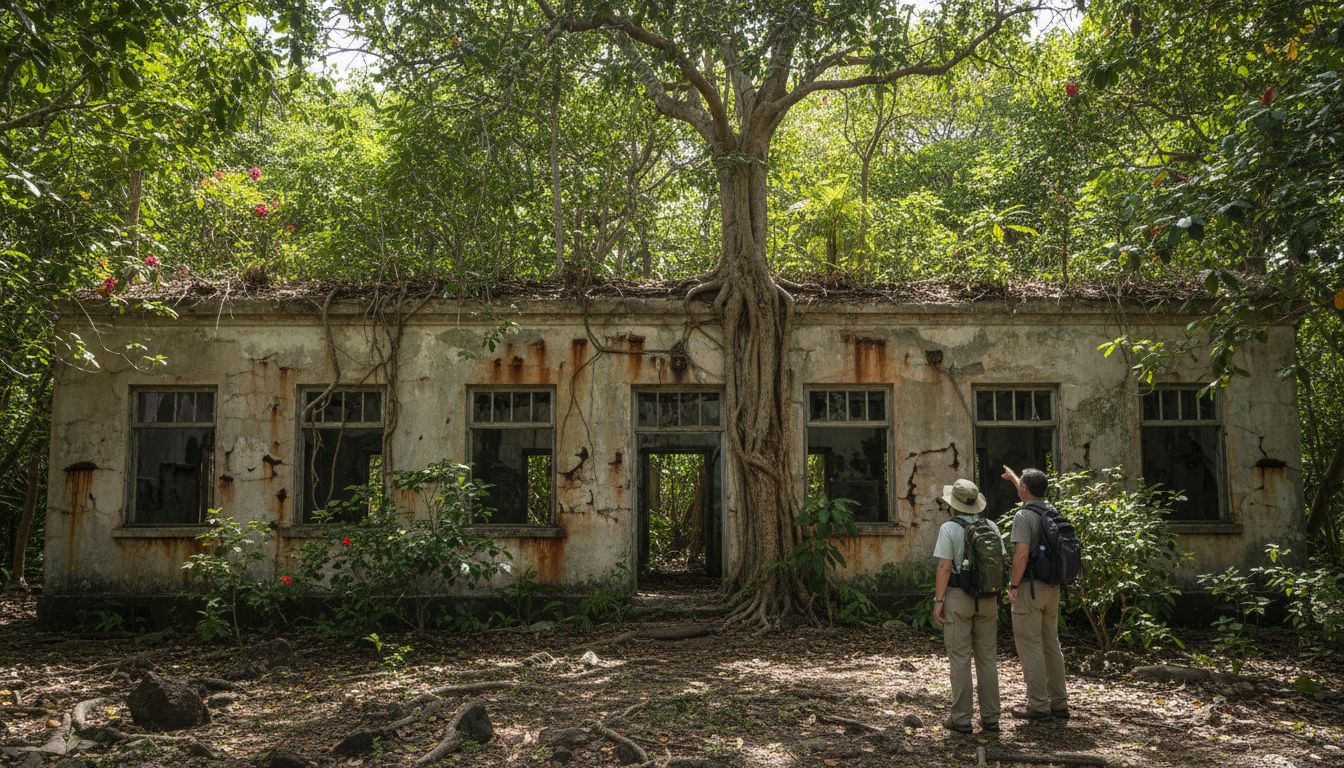
Most travelers who pass through Baltra's small airport are thinking about iguanas, blue-footed boobies, or the boat transfer to their cruise ship. Few realize they are walking across an island with a buried military history—or that, according to a story told among expats, guides, and longtime residents, something from that history never quite left.
The tale is known locally as the Headless Gringa of Baltra: a ghost said to wander the ruins of the old barracks that once housed American servicemen stationed on the island. What follows is not a verified historical account, but an exploration of the legend itself—where it may have come from, why it persists, and what it says about the strange, layered past of this small Galápagos airstrip.
Baltra's Forgotten Military Past
During the Second World War, Baltra is generally understood to have served as a United States military installation, part of a broader strategic effort to protect the Panama Canal and monitor the Pacific approaches to South America. Many longtime residents and guides describe the island's flat, arid terrain as having made it a practical site for an airstrip and support buildings during that period.
In the decades after the war, the base is commonly said to have transitioned into civilian use, eventually becoming the primary airport serving the Galápagos Islands today. Travelers flying into Baltra now rarely notice the scattered concrete foundations, rusted fixtures, and half-collapsed structures that some say are remnants of this earlier chapter.
It's worth noting that specific dates, unit designations, and the formal details of the base's handover are best treated as general background rather than confirmed historical fact in this piece. Local accounts vary, and a full academic history of Baltra's wartime role is not something this article attempts to settle. What's clear is that the physical remnants—real or rumored—are enough to fuel imagination among those who live and work nearby.
The Legend of the Headless Gringa
The core of the story, as it's typically told, involves the ghostly apparition of a foreign woman—a "gringa"—seen without a head, drifting near or through the old barracks ruins on Baltra. Accounts of when she appears, what she wears, or why she is headless differ widely depending on who is telling the story.
Some versions describe her as a nurse or officer's wife who never left the island. Others frame her more vaguely, as simply "the American woman" tied to the base's operational years. Guides and residents often embellish the tale depending on their audience, adding details about cold spots, sudden silences, or unexplained sounds near the ruins after dark.
Many observers note that the figure's foreignness seems central to the story itself. The "gringa" label ties her explicitly to the foreign military presence that once occupied the island, and some have speculated that the legend may symbolically reflect local memory of that outside presence, though this interpretation is speculative rather than documented.
Importantly, there is no known named historical figure, documented death, or recorded incident that the legend is confirmed to be based on. As far as this research could determine, the Headless Gringa exists purely as oral tradition, without a verifiable origin story.
Why These Stories Take Root in Isolated Places
Ghost stories tied to former military installations and remote expat communities are hardly unique to Baltra. Abandoned barracks, decommissioned bases, and isolated outposts seem to generate this kind of folklore around the world, from former Cold War installations in Europe to remote Pacific islands with their own wartime histories.
A recurring pattern in these stories is the combination of isolation, abandoned infrastructure, and a transient foreign population—people who passed through briefly, left little record of themselves, and then vanished from the landscape entirely. That combination seems to invite speculation and storytelling, especially in places where formal documentation is thin and oral history fills the gaps.
Galápagos itself, with its relative isolation and the churn of visiting scientists, military personnel, and now tourists, may be a particularly fertile setting for this kind of legend to take hold and persist.
Encountering the Legend Today
Today, the story of the Headless Gringa survives mainly through word of mouth—tour guides mentioning it to curious visitors waiting for transfers, expats swapping versions of the tale over drinks, and residents passing it along as a piece of local color rather than settled history.
There appears to be no formal documentation, academic study, or archival record confirming the legend's origins, and readers should treat it accordingly: as oral tradition and folklore, not historical fact. Attempts to verify a specific source incident behind the story did not turn up supporting documentation.
Still, the persistence of stories like this one says something about how places absorb memory. Long after the servicemen left and the barracks crumbled, Baltra kept a piece of that era alive—not in official records, but in the stories travelers and locals tell each other while waiting for the next flight out.