The Ghost Stories Travelers Hear After Midnight
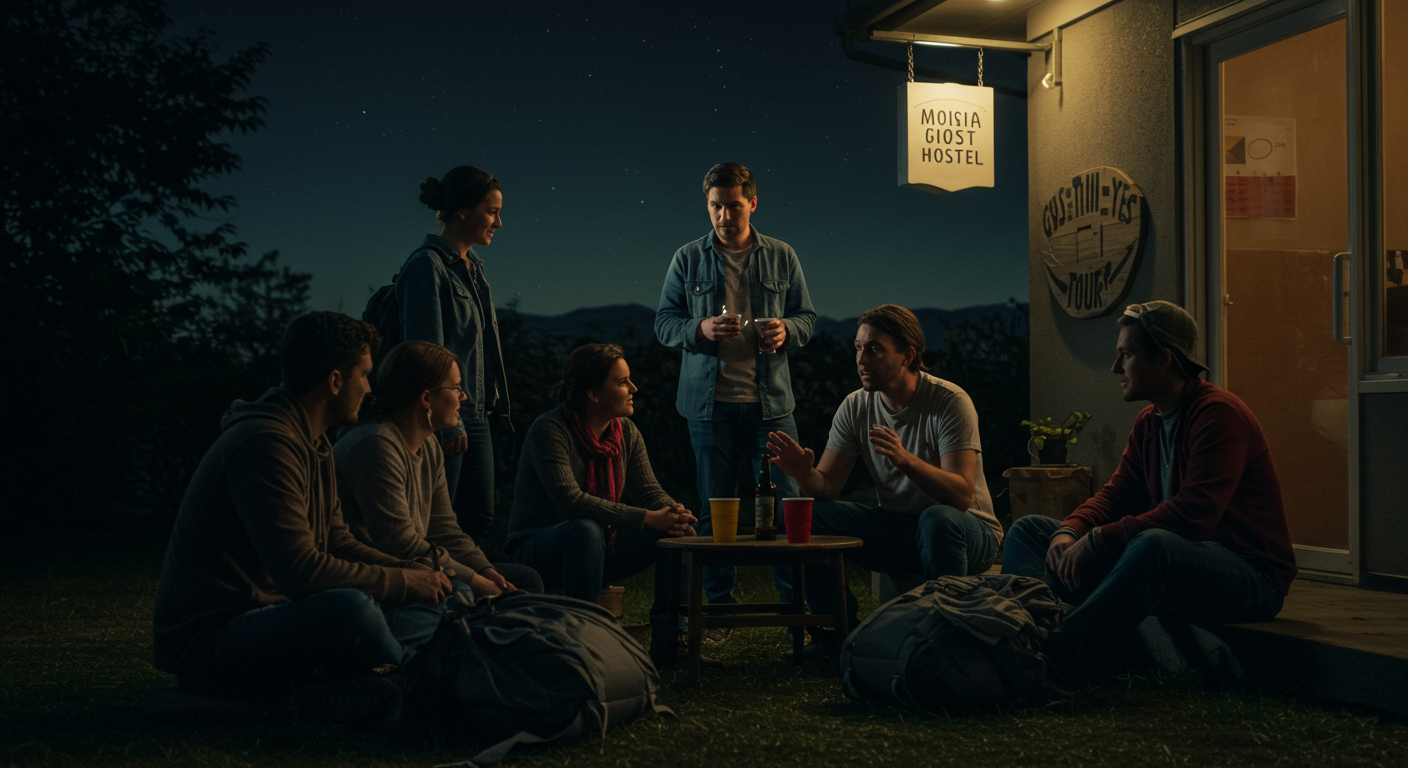
There is a particular hour in travel when the world feels less stable than it did at dinner. The street outside has gone quiet. The bunk room has settled into whispers, zippers, and the occasional cough. A hallway light flickers. Pipes knock somewhere behind the wall. A dog barks in the distance, then stops. If you are still awake after midnight in an unfamiliar place, even ordinary sounds can start to feel charged with meaning.
That is often when the ghost stories begin.
Not necessarily as proof of anything supernatural, but as a kind of ritual among people far from home. Travelers tell these stories because darkness, fatigue, and unfamiliar surroundings make suspense easier to feel. The late hour loosens conversation. A room full of strangers becomes, briefly, confessional. Someone mentions a guesthouse with a locked room, a road where drivers see a figure in white, or a ferry crossing where a passenger slipped into local legend. Soon everyone is listening more closely than they were a few minutes earlier.
Why Ghost Stories Seem to Arrive After Midnight
Midnight changes the emotional texture of travel. In daylight, an old building looks charming. At 12:30 a.m., the same building can seem to have motives. Tiredness plays its part. So does the simple fact of being in a place where you do not know every sound, every shadow, every routine. At home, a creak in the floorboards belongs to the house. On the road, it belongs to the imagination.
Ghost stories fit this mood perfectly because they ask for very little. They do not require evidence in the moment. They require atmosphere, a willing audience, and just enough uncertainty to let the mind do the rest. Among travelers, the point is often less about belief than participation. To tell a story late at night is to offer a small thrill and invite others into it.
That is part of why these stories linger. They are shared when people are already slightly unguarded—jet-lagged, overstimulated, homesick, exhilarated, lonely, or all of the above. The story enters through that emotional opening.
The Perfect Setting: Hostels, Night Buses, Empty Roads, and Old Guesthouses
Some places seem built for eerie storytelling. A hostel bunk room is one of them. So is a mountain lodge when the weather turns. So is an overnight bus where no one can quite sleep, or an old guesthouse where the plumbing complains all night. Desert camps, roadside diners, ferries, stations after the last departure—travel is full of temporary spaces that make people feel suspended between one life and another.
Those places create a strange kind of intimacy. Travelers may know almost nothing about one another, yet they will confess things in transit that they might never mention at home. The temporary nature of the encounter helps. You can tell a chilling story to people you may never see again. You can be dramatic. You can admit that something frightened you. You can laugh about it afterward without losing face.
And then there is the setting itself. Thin walls. Flickering bulbs. Old locks. A ceiling fan clicking in uneven rhythm. Footsteps in a hallway that should be empty. In many cases, these details have ordinary explanations. But travel heightens awareness of them. An unfamiliar noise is more powerful than a familiar one because it arrives without context.
The Stories Travelers Keep Repeating
Across countries and languages, certain kinds of stories return again and again. There is the haunted lodging, where someone swears they heard furniture move in an empty room or woke to find a door open that had been latched. There is the vanished guest, who checked in, left a trace, and was later said never to have existed at all. There is the phantom hitchhiker on a lonely road, the silent figure glimpsed at the edge of the headlights, the warning tied to an accident, a bridge, a curve in the road, or a local tragedy.
These tales survive because they are portable. They can be carried from one place to another and adapted with only a few changes. The road becomes a different road. The old inn becomes a different old inn. The details shift, but the structure remains: a vulnerable traveler, an isolated place, a moment of uncertainty, and something that does not fit ordinary logic.
In that sense, ghost stories travel almost as efficiently as backpackers do. They are easy to remember and easy to retell. They also carry emotional truth even when the facts are fuzzy. What matters in the moment is not always whether every detail can be verified. It is whether the story captures the feeling of being somewhere strange and suddenly aware of how small you are inside it.
What Changes When Folklore Crosses Borders
Travelers rarely hear local legends in perfect form. Most receive them in fragments—through translation, through another traveler, through a guide with limited time, through a bartender summarizing a story that locals already know in far greater depth. Something is usually lost in the crossing.
A tale that has specific cultural meaning in one place may become, in backpacker circulation, simply a ghost story. Ritual, history, religion, and social memory can be flattened into mood. A story tied to mourning, injustice, or a sacred landscape may end up retold elsewhere as a spooky anecdote for a late-night audience.
That does not mean travelers should not listen to local folklore. It means they should listen more carefully. Many legends carry meanings beyond fear. Some explain a landscape. Some preserve memory. Some warn against arrogance, greed, or disrespect. Some reflect historical trauma. What sounds to an outsider like a generic haunting may, in local context, be a story about ancestry, colonial violence, family duty, or the moral order of a place.
By the time that tale is repeated in another country weeks later, around another hostel table, it may have become something else entirely: cleaner, shorter, scarier, and less rooted in where it came from.
Why Travel Makes People Easier to Frighten
Travel alters perception. It disrupts routine, sleep, appetite, language, and the comforting predictability of home. Even positive travel can leave people slightly unmoored. When you are jet-lagged, overstimulated, or lonely, your mind becomes more suggestible. The imagination works harder in unfamiliar environments because it has fewer stable reference points.
That is one reason eerie experiences can feel more intense on the road. A sound that would barely register at home becomes memorable in a rented room. A brief misunderstanding becomes a story. A shadow at the end of a corridor becomes an image that sticks for years. Travel places people in states of heightened attention, and fear thrives in heightened attention.
There is also the fact of distance. Far from home, familiar explanations do not come as easily. You may not know the building materials, the local animals, the weather patterns, the customs of the neighborhood, or when people normally move about. Without that frame, the strange can expand very quickly.
And yet this vulnerability is part of what many travelers seek, even if they would not phrase it that way. To travel is to become more permeable to a place. That openness allows wonder in, but it also lets in dread. The same sensitivity that makes a sunset unforgettable can make a hallway at 1 a.m. feel uncanny.
The Line Between Atmosphere, Anecdote, and Belief
Most travelers tell ghost stories with a mixture of seriousness and play. They lean in, lower their voice, smile at the right moments, and leave strategic pauses. The performance matters. So does the ambiguity. A good travel ghost story often works best when nobody insists too hard on what is true.
That distinction matters. A personal experience is not the same as inherited legend. A local rumor is not the same as documented history. An old building may have a tragic past without being haunted. A traveler may sincerely describe something they cannot explain without that becoming proof of the supernatural.
Respecting that difference does not make the stories less meaningful. If anything, it makes them more interesting. They reveal how people process uncertainty. They show how memory behaves in strange places. They expose the way mood can shape interpretation. They also leave room for belief, skepticism, humor, and awe to coexist in the same conversation.
That may be the real genius of midnight travel folklore: it asks listeners to inhabit uncertainty together for a while.
What Travelers Are Really Sharing in the Dark
Beneath the suspense, travelers are often sharing something more personal than a ghost story. They are sharing vulnerability. A fear of being alone. A moment when they did not understand what was happening around them. A sense that a place was larger, older, or stranger than they were prepared for.
That is why these stories bond people so quickly. Ordinary conversation takes time. Telling someone what frightened you collapses distance. It turns strangers into witnesses. For a few minutes, everyone in the room is listening to the same silence between words.
Long after the itinerary blurs, many travelers remember these moments with surprising clarity. Not necessarily because they came to believe in ghosts, but because they remember the mood: the late hour, the dim light, the unfamiliar walls, the sudden stillness after the final sentence. They remember the feeling that the room itself had started listening.
And that may be what midnight ghost stories are really for. They give shape to the unnerving side of travel—the part where wonder shades into fear and strangers become companions for exactly one unforgettable night.