The Ghost Stories Travelers Hear After Midnight
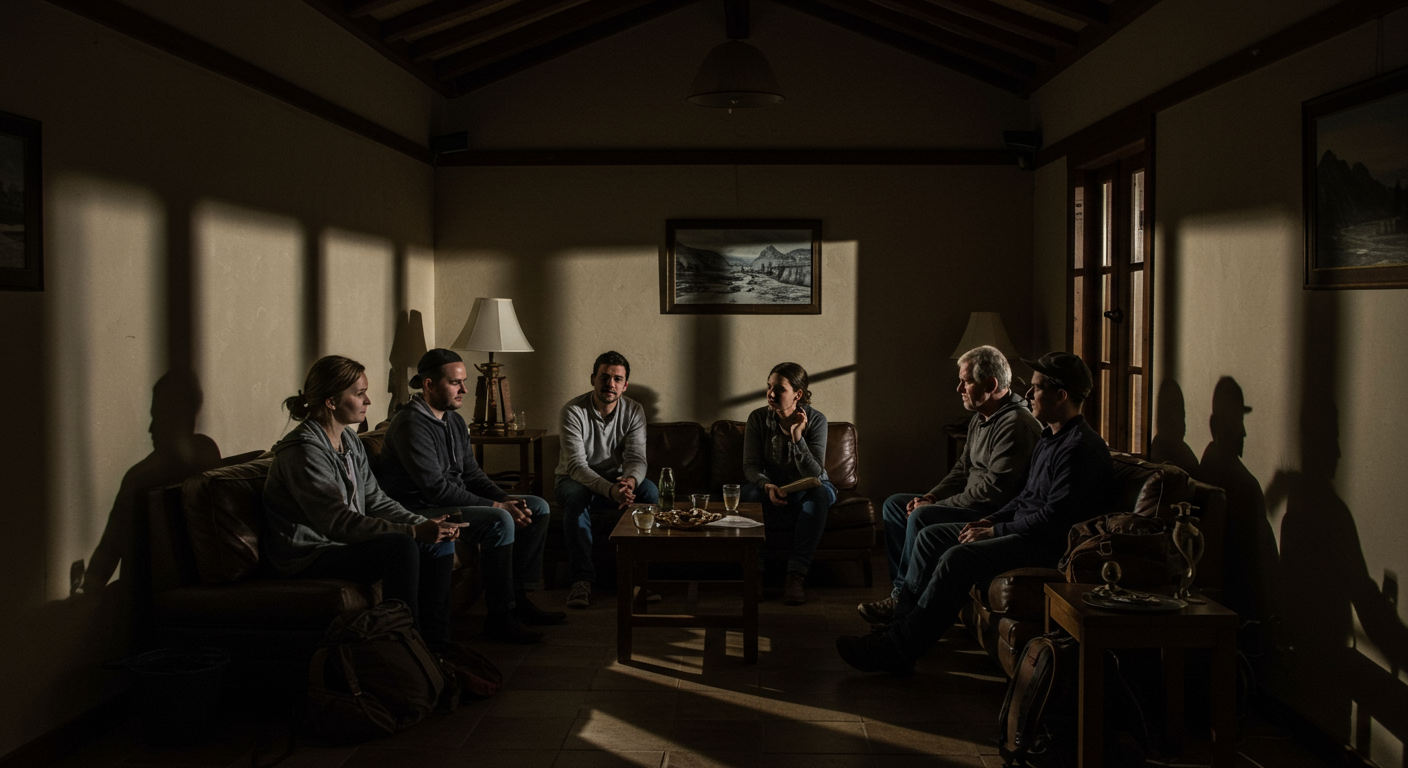
There's something about midnight that transforms even the most rational traveler into a believer. Maybe it's the jet lag, the unfamiliar surroundings, or simply being so far from home—but ask any seasoned wanderer, and they'll have a story that still makes their skin crawl.
The Witching Hour on the Road
Midnight doesn't just mark the transition between days; for travelers, it marks the threshold between the familiar and the otherworldly. When you're sleeping in strange beds and navigating foreign corridors, your senses become hypertuned to every creak, shadow, and whisper.
Sure, psychologists might explain this as a natural response to unfamiliar environments. Our brains go into overdrive when detecting potential threats in unknown territory. But try telling that to the backpacker who swears they saw a figure in Victorian dress gliding down the hostel hallway at 3 AM.
Travel creates the perfect storm for supernatural encounters. We're physically exhausted, culturally disoriented, and emotionally vulnerable. In this state, the boundary between imagination and reality becomes remarkably thin.
Haunted Accommodations: Where Travelers Rest Uneasily
Hotels seem to be magnets for ghostly encounters. Historic properties carry the weight of countless stories, and some guests insist that not all previous occupants have properly checked out.
In Edinburgh, staff at a centuries-old hotel whisper about the "Gray Lady" who appears in the mirror of Room 217, always between midnight and dawn. Guests report feeling watched while they sleep, finding their belongings mysteriously rearranged, and hearing the rustle of fabric in empty corners.
Hostels generate their own brand of supernatural folklore. Travelers share stories of bunk beds that creak without occupants, phantom snoring from empty rooms, and the unsettling feeling of being watched during vulnerable moments. The communal atmosphere seems to amplify these experiences—when one person reports something unusual, others begin noticing the unexplained.
Traditional accommodations worldwide often come with their own spiritual residents. Japanese ryokans might harbor spirits from centuries past, while colonial-era guest houses in former trading posts seem to attract the restless souls of merchants who never made it home.
Night desk clerks become reluctant collectors of these tales, listening to wide-eyed guests who stumble down to the lobby seeking human company after midnight encounters they can't explain.
Transit Terrors: Ghosts in Motion
If accommodations are where travelers meet the supernatural, transit hubs are where these encounters become truly surreal. Airports in the dead of night transform into liminal spaces where exhausted passengers report seeing figures that vanish upon second glance.
The overnight train from Prague to Krakow has generated dozens of reports over the years: passengers describe sharing compartments with well-dressed individuals who never speak, never move, and are gone by morning. Conductors admit, off the record, that certain car numbers are avoided during late-night seat assignments.
Bus stations—those way-stations of human migration—seem to collect the spirits of those who never reached their destinations. Travelers waiting for connections report conversations with fellow passengers who simply aren't there when they turn around.
Highway encounters form perhaps the most chilling category. Drivers describe phantom hitchhikers who provide directions to locations that no longer exist, or warn fellow travelers about accidents that haven't happened yet.
Cultural Ghost Encounters Around the World
Every culture brings its own supernatural flavor to the traveler's experience. In Asia, hotel spirits are often treated as permanent residents rather than unwelcome visitors. Guests learn unspoken protocols: leaving small offerings, avoiding certain rooms during particular moon phases, and showing proper respect to unseen inhabitants.
European castle hotels embrace their ghostly reputations, with aristocratic spirits who seem particular about their former domains. Guests report phantom chamber music, the scent of long-extinct perfumes, and occasional glimpses of figures in period dress observing modern visitors with bemused curiosity.
Latin American posadas often acknowledge indigenous spiritual presences that predate colonial architecture. Travelers describe encounters with guardians who seem to evaluate their intentions, granting peaceful rest to respectful visitors while unsettling those who show disregard for local customs.
Middle Eastern caravanserai—those ancient traveler's rest stops—carry stories of djinn encounters that blur the line between Islamic tradition and personal experience. Modern travelers report negotiations with unseen entities over sleeping spaces and protection during desert crossings.
African lodges near sacred sites generate encounters with ancestral spirits who seem to function as land protectors. Visitors describe feeling observed and evaluated, with the quality of their stay seemingly dependent on passing some invisible spiritual assessment.
The Storytellers: Who Shares These Tales
Ghost stories don't tell themselves—they need human vessels to carry them forward. Local guides often serve as the primary conduits for supernatural folklore, weaving historical fact with legendary encounters to create narratives that both inform and unsettle their audiences.
Fellow travelers become midnight confessors, sharing experiences in darkened common rooms and during long transport delays. There's something about the temporary intimacy of travel that encourages people to reveal encounters they might never discuss at home.
Hotel staff occupy a unique position in this supernatural ecosystem. While officially maintaining skeptical professionalism, many privately acknowledge patterns of unexplained incidents. They develop their own folklore around certain rooms, particular times of year, and types of guests who seem to attract unusual experiences.
Online forums have become digital campfires where travelers gather to share supernatural encounters. These platforms provide validation for experiences that might be dismissed elsewhere, creating communities of believers who trade stories across continents.
When Reality Blurs: Understanding the Experience
The question isn't necessarily whether these encounters are "real" in an objective sense, but rather why they feel so vivid to those who experience them. Jet lag creates chronic sleep deprivation that can generate hallucinations and altered perceptions. Exhaustion from extended travel makes our minds more susceptible to suggestion and pattern recognition errors.
Cultural displacement adds another layer of psychological vulnerability. When we're struggling to decode unfamiliar social cues and navigate foreign environments, our brains work overtime to process information. In this heightened state, ambiguous sensory input can be interpreted as supernatural phenomena.
The role of suggestion can't be understated. Once we've heard about the "haunted" room or "phantom passenger," we're primed to interpret ordinary occurrences through a supernatural lens. Collective belief can transform creaky floorboards into footsteps and air conditioning fluctuations into ghostly presence.
Yet for all the rational explanations, something compelling persists in these stories. Perhaps it's the recognition that travel itself is a kind of haunting—we carry the ghosts of places we've been, people we've met, and versions of ourselves we've left behind. In hotel rooms and train compartments around the world, we encounter not just local spirits, but the phantoms of our own journeys.
Some travelers actively seek these supernatural encounters, viewing them as authentic cultural experiences that can't be found in guidebooks. Others flee from the unexplained, preferring modern accommodations and well-lit spaces. But whether welcomed or feared, the ghost stories persist, passed from traveler to traveler like supernatural currency that transcends cultural boundaries.
The next time you find yourself in an unfamiliar place as midnight approaches, pay attention to the stories locals tell. Listen to the building settling around you, notice shadows that don't quite behave as expected, and remember—sometimes the best travel stories are the ones that make you question what you thought you knew about the world.