The Dog That Stayed Behind When I Left
The email arrived on a Tuesday morning, buried between spam and subscription newsletters. A job offer that would change everything—a position I'd dreamed about for years, in a city I'd always wanted to call home. But as I read through the details, my excitement began to mix with a growing knot in my stomach. I looked over at Max, my eight-year-old golden retriever, sprawled across his favorite spot on the living room rug, completely unaware that our world was about to shift.
The Decision That Haunted My Dreams
The opportunity was everything I'd worked toward—a senior position at an international firm, a substantial salary increase, and the chance to live in a country I'd visited only in dreams. But as the reality set in, one question dominated every conversation with friends and family: "What about Max?"
My first instinct was denial. Of course Max would come with me. I'd seen plenty of expats with their pets; surely it was just a matter of paperwork and planning. I spent the next three days researching pet relocation services, international shipping requirements, and veterinary certifications. Each search result felt like another door closing.
The more I learned, the more impossible it seemed. But I wasn't ready to accept that yet.
The Impossible Math of Pet Immigration
The numbers were staggering. Six months in quarantine—half a year in a foreign kennel facility where I could visit maybe once a week. For a dog who had never spent more than a weekend away from me, the stress alone seemed cruel.
Then came the financial reality: $8,000 for the full process. Vaccinations, health certificates, transport permits, shipping costs, and quarantine fees. It was money I technically had, but it represented nearly my entire emergency fund. Starting over in a new country with no financial safety net felt reckless.
The timeline was equally brutal. My visa required me to start work within six weeks, but the pet immigration process would take at least four months before Max could even begin his quarantine period. The math simply didn't work.
But perhaps most heartbreaking was my veterinarian's gentle observation: "Max is getting older. The stress of such a long journey and extended quarantine... well, you know him best." I did know him. Max had always been anxious around strangers, sensitive to changes in routine. The thought of him confused and alone in a concrete kennel for months made me physically sick.
Searching for Alternatives
Desperation makes you creative. I called my sister first, who reminded me gently that her toddler was allergic to dogs. My brother lived in a tiny apartment with a no-pets policy. My parents, bless them, offered immediately, but they were in their seventies and had been clear for years that they were done with the responsibility of pets.
Friends were kind but honest about their limitations. "Maybe for a week or two, but permanently..." The conversation always trailed off the same way. I understood. Taking on someone else's dog is a decade-plus commitment, not a favor you can reasonably ask.
That's when Sarah reached out. We'd met at a dog park months earlier—she and her husband Tom were the couple who always seemed to know every dog's name, who carried extra treats for four-legged friends. They'd heard about my situation through a mutual friend.
"We've been thinking about getting a dog," Sarah said over coffee. "Would you consider letting us meet Max? Maybe we could help each other."
When I brought Max to their house that first time, something clicked immediately. Tom got down on the floor to Max's level, speaking in the gentle tone that Max responded to best. Sarah had researched his favorite treats. Watching them interact, I felt something I hadn't expected: hope.
The Last Month Together
Once I knew Max would have a loving home, every moment became precious in a way that was almost unbearable. Our morning walks stretched longer as I memorized his habits—the way he always sniffed the same three trees, how he'd look back to make sure I was still following when he got too far ahead.
Sarah and Tom were incredibly gracious about the transition. They came over several evenings a week, learning Max's dinner routine, his favorite sleeping spots, the specific way he liked his ears scratched. They took notes. They asked thoughtful questions. They were falling in love with him, and he with them.
We did a few trial runs—overnight stays that became weekend visits. Each time I picked Max up, he seemed a little more comfortable, a little more at home. Sarah would update me on how he'd slept, what he'd eaten, funny things he'd done. These reports were both comforting and heartbreaking.
By the third week, I knew with painful certainty that this was the right choice. Max had found people who could offer him things I couldn't: a house with a yard, Tom's work-from-home schedule that meant constant companionship, Sarah's patience with his anxious moments. They could give him stability. I was about to give him the opposite.
Leaving Day
I've tried to write about that final goodbye a dozen times, and the words never feel adequate. Max seemed to sense something different about that morning. He followed me from room to room as I did final packing, his eyes more attentive than usual.
Sarah and Tom came over early, as we'd planned. The idea was to keep things normal, routine. But there was nothing normal about loading my entire life into suitcases while my best friend watched, confused by the sudden change in energy.
I knelt down and held Max's face in my hands, trying to memorize the feeling of his soft ears, the pattern of gray that had started appearing around his muzzle. I told him he was a good boy, that I loved him, that Sarah and Tom were going to take such good care of him. He tilted his head the way he always did when I used my serious voice, like he was trying to understand something just beyond his grasp.
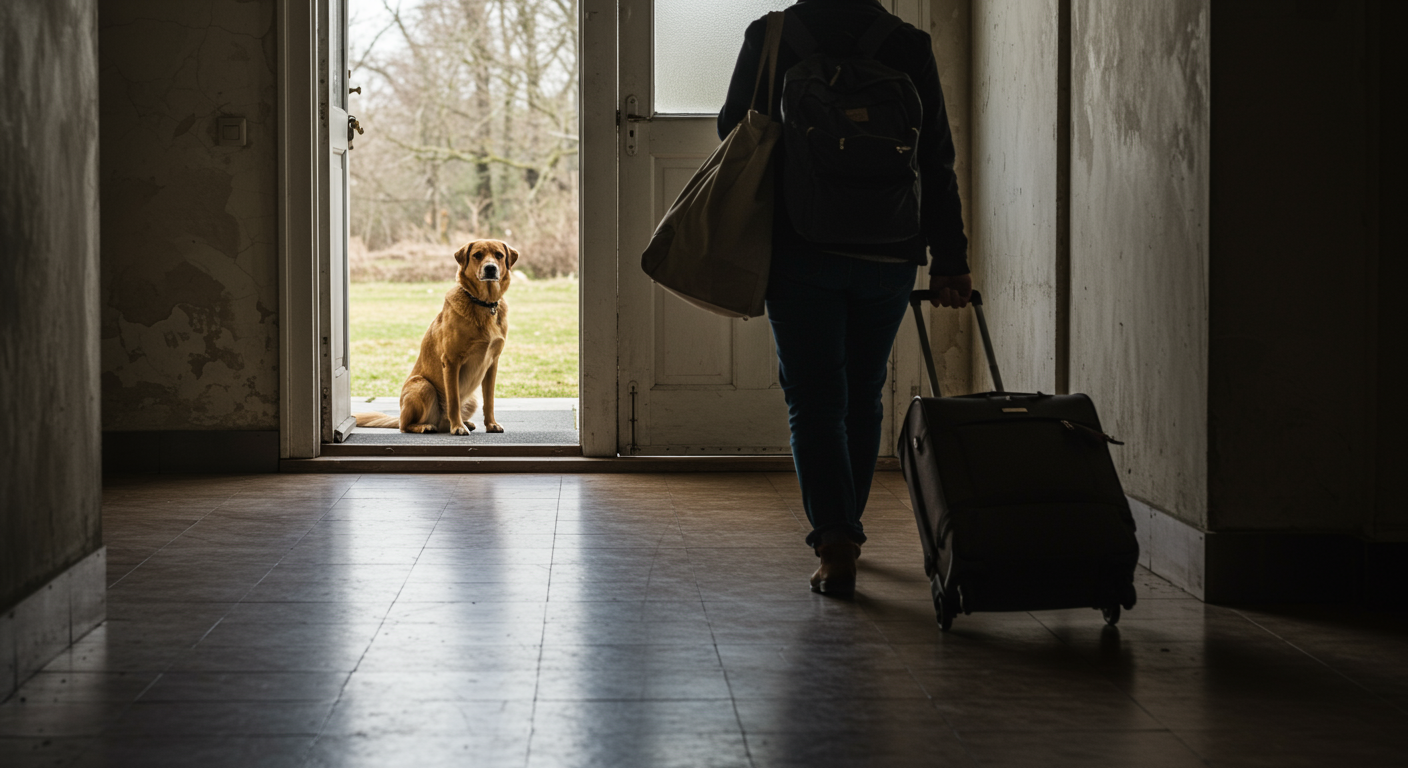
The cab arrived too soon. As I loaded my bags, Max tried to follow me outside, but Tom gently held his collar. Through the rear window, I watched him sitting in the doorway, Sarah's hand on his head, both of them getting smaller until the car turned the corner.
I cried for the entire forty-minute ride to the airport. The driver pretended not to notice.
Love Across Time Zones
Sarah kept her promise about updates. Those first few weeks, photos arrived almost daily: Max exploring his new backyard, napping in a sunny spot by Tom's home office, playing with a new toy they'd bought him. In the pictures, he looked... settled. Content in a way that eased some of my guilt.
The video calls were harder. At first, Max would get excited hearing my voice through the phone speaker, looking around the room trying to find me. Sarah would hold the phone so we could "see" each other, but I could tell Max was confused by the whole interaction. Gradually, he seemed to accept these disembodied conversations as a normal part of life with his new family.
Watching him adapt was bittersweet. Each photo showed him thriving—gaining weight (Sarah was clearly a more generous treat-giver than I'd been), his coat shinier, his expression more relaxed. Tom sent videos of Max learning new tricks, something I'd never had the patience to teach him properly.
The updates became a lifeline to the life I'd left behind, but they also told a story I was still learning to accept: Max was better off without me.
What I've Learned About Letting Go
It's been two years since I left Max with Sarah and Tom, and I'm still learning to live with the complexity of that decision. Some days I'm certain it was the most selfless thing I've ever done. Other days, I wonder if I gave up too easily, if there was some option I failed to explore.
What I've come to understand is that being a responsible pet parent sometimes means admitting your limitations. I loved Max enough to stay with him, but I also loved him enough to let him go when staying meant potentially compromising his wellbeing. Love, it turns out, doesn't always look like what we expect it to look like.
Max taught me something else, too: that families can form in unexpected ways. Sarah and Tom didn't just take in my dog—they absorbed him into their lives so completely that he's become their dog, their family member, their responsibility and joy. They send me Father's Day messages with pictures of Max, acknowledging the role I played in his life while celebrating the role they play now.
This experience has changed how I approach major life decisions. I'm more realistic about trade-offs, more honest about what I can and can't handle. When I'm ready for another pet—and I will be, someday—I'll do so with the wisdom that love sometimes requires letting go, and that family can take many different forms.
Max is ten now, grayer around the muzzle but still chasing tennis balls in Sarah and Tom's backyard. In their latest video, he's learned to ring a bell when he wants to go outside. He looks happy. He looks home.
That has to be enough.