The Dog That Stayed Behind When I Left
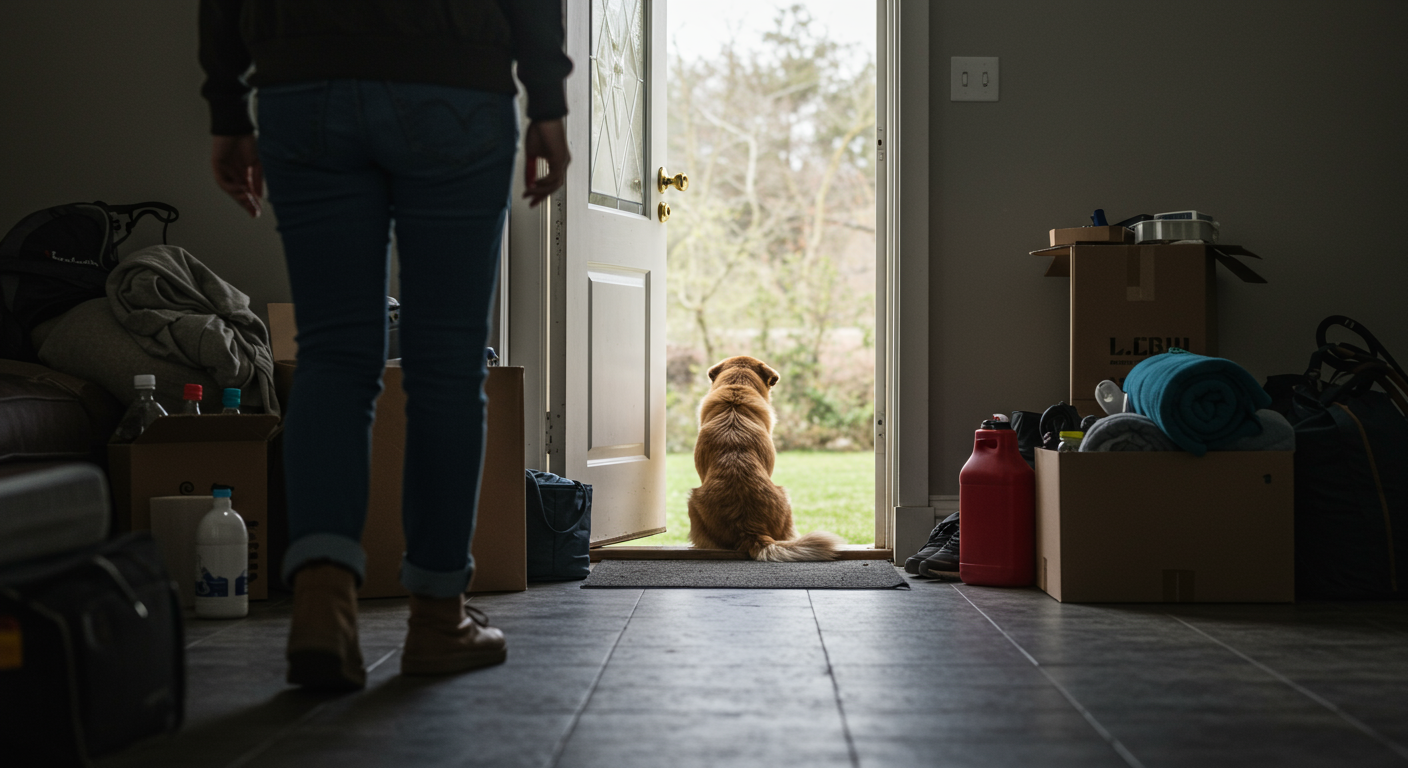
Some decisions carve themselves so deeply into your memory that you can recall not just what happened, but the exact quality of light in the room, the temperature of the air, even the sound your coffee mug made when you set it down too hard on the kitchen table. For me, that moment came on a Tuesday morning in Prague, when the moving company email landed in my inbox with a subject line that might as well have read "Choose your heartbreak."
The timeline was non-negotiable: six weeks to pack up three years of life and relocate to Singapore for work. Six weeks that suddenly felt both endless and impossibly short when I looked down at Maya, my golden retriever mix, sprawled across the sunny patch of our small apartment's living room floor, completely oblivious to the storm gathering around our little world.
How She Came Into My Life
Maya hadn't been part of the plan when I'd first arrived in Prague, young and ambitious and convinced that expat life meant travel light, form no attachments, keep your options open. But six months into my assignment, walking home through Vinohrady after another long day at the office, I'd heard whimpering from a cardboard box near the tram stop.
She was maybe eight weeks old then, all oversized paws and uncertain golden fur, abandoned with two siblings who had already been claimed by passersby with kinder hearts than I thought I possessed. I told myself I was just bringing her home temporarily, just until I could find her a proper family. That was on a Friday evening in October.
By Monday morning, she had claimed the spot beside my bed, learned her name, and somehow managed to make my sterile corporate apartment feel like the first real home I'd had since leaving university. She became my Prague tour guide, leading me down cobblestone streets I never would have explored alone, creating a routine of morning walks along the Vltava that turned a foreign city into something familiar and beloved.
The Logistics That Broke My Heart
I spent the first week after receiving that email in a frenzy of research, convinced that determination and enough Google searches could solve any problem. International pet transport companies. Veterinary requirements. Singapore's quarantine regulations. Import permits and health certificates and airline policies that seemed designed by people who had never loved anything with four legs and unconditional loyalty.
The numbers were brutal. Between transport costs, veterinary requirements, quarantine fees, and the maze of paperwork, I was looking at nearly $8,000—assuming everything went perfectly. The timeline was worse. Singapore required a minimum four-month quarantine for dogs from Czech Republic, with no guarantee of the exact start date. Maya could potentially be locked away for months while I settled into a new job, a new city, a new life without her.
But it was the phone call with the transport company that finally broke my resolve. "We can't guarantee her emotional well-being during the journey," the coordinator explained in professional, compassionate tones. "Some animals handle international relocation well. Others don't. And at her age, with her attachment to you, the stress could be significant."
Finding Her New Family
The search for Maya's new family became an obsession. I created detailed profiles on pet adoption websites, crafted heartfelt social media posts, and reached out to every expat network and local contact I'd built over three years in Prague. The responses ranged from genuinely interested families to well-meaning friends who clearly had no idea what dog ownership actually entailed.
I developed an interview process that would have impressed corporate HR departments. Potential adopters had to meet Maya multiple times, demonstrate they understood her routines, prove they had secure living situations and stable incomes. I needed references. I needed to see their homes. I needed them to love her almost as much as I did, which I knew was impossible but demanded anyway.
The Novák family found me through a friend of a friend, a Czech couple in their forties with two teenage children and a fenced yard in a Prague suburb. Tomáš worked as an engineer, spoke excellent English, and had grown up with dogs. Jana was a teacher who worked from home part-time and immediately sat on the floor to let Maya sniff her hands. Their daughter Tereza, sixteen and dog-obsessed, was already planning Maya's integration into their family before I'd finished explaining the situation.
They were perfect, which somehow made everything worse.
Our Last Days Together
I had two weeks to say goodbye, which felt simultaneously like a gift and a special kind of torture. Every routine became heavy with significance. Our morning walks stretched longer, taking routes through every neighborhood where we'd built memories. I caught myself photographing mundane moments: Maya sleeping in her favorite sunny spot, the way she tilted her head when I asked if she wanted dinner, her precise ritual of circling three times before settling onto the couch.
The hardest part was her complete trust. She sensed my emotional upheaval—dogs always do—but responded the way she always had, with increased affection and loyalty. She followed me more closely around the apartment, rested her head on my lap during my anxious late-night packing sessions, and seemed determined to provide comfort for a distress she couldn't possibly understand.
I tried to explain it to her in the way you do with animals you love, talking through the decision as if she might suddenly develop human speech and tell me she understood. "You're going to love the Nováks," I whispered into her fur during our last night together. "Tereza will spoil you even more than I do. And Tomáš promised to take you hiking in Šumava on weekends."
She just pressed closer, warm and solid and utterly present in the way that made leaving her feel like the worst kind of betrayal.
Living With the Choice
The first month in Singapore passed in a haze of new job intensity and deliberate distraction. I threw myself into work, explored the city with determined energy, and carefully avoided pet-friendly areas that might trigger the grief I was trying to postpone. The Nováks sent updates regularly: photos of Maya in their garden, videos of her playing with Tereza, reports of her adjustment progress that were meant to be reassuring but instead highlighted how well she was thriving without me.
The guilt was overwhelming. Not just the obvious guilt of leaving a loyal companion, but the more complex guilt of wondering if I'd made the decision too quickly, taken the easy path, chosen career advancement over the harder work of finding a way to bring her along. Late-night searches about Singapore's pet policies became a form of self-torture, especially when I discovered other expats who had successfully navigated the bureaucratic maze I'd found so daunting.
But six months later, Tereza sent a video of Maya racing through their garden with their neighbor's puppy, her tail helicopter-wagging in pure joy, and I realized something had shifted in my understanding of the choice I'd made. This wasn't a story about abandonment—it was a story about love taking different forms than we expect.
Maya had given me three years of companionship that made expat life not just bearable but rich with daily joy. I had given her a family who could offer stability, consistency, and the kind of rooted life that my internationally mobile career simply couldn't provide. Sometimes love means holding on. Sometimes it means letting go. And sometimes, if you're very lucky, it means finding the wisdom to know which choice will serve the one you love best.
I still miss her. I probably always will. But I've learned to carry that missing as proof of something beautiful rather than evidence of something broken—a reminder that home isn't always a place you can pack into a suitcase, but sometimes it's a connection that transcends geography, a love that remains even when circumstances require you to choose differently than your heart initially demands.