The Abandoned Place Everyone Avoids After Sunset
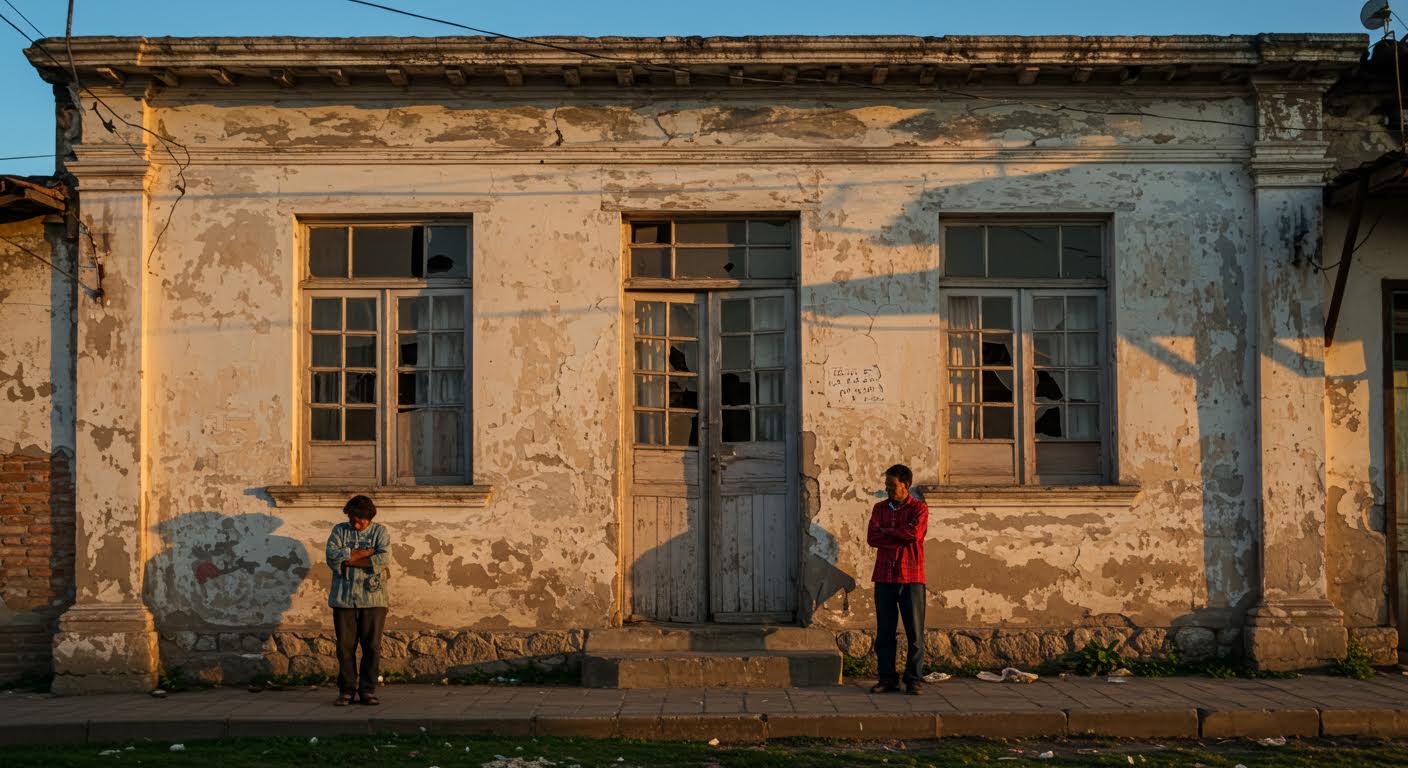
Every neighborhood has one—that place where weeds grow wild through cracked concrete, where windows stare blindly at the street, and where locals quicken their pace as shadows lengthen. As an expat, stumbling upon such places often becomes an unexpected introduction to the deeper currents of your new community.
The Discovery
I first noticed it on a lazy Sunday afternoon walk, when the Cuenca sun cast everything in warm, forgiving light. The building stood three stories tall, its colonial architecture still elegant despite the peeling paint and missing tiles. Wrought-iron balconies hung slightly askew, and bougainvillea had claimed the entrance, creating a natural barrier that seemed almost deliberate.
The structure dominated the corner lot, impossible to ignore yet somehow overlooked in the daily rhythm of the neighborhood. During daylight hours, it appeared merely neglected—another casualty of time and economics. Children played soccer in the adjacent lot, their laughter echoing off its weathered walls without concern.
It was only when I mentioned the building to my neighbor, Señora Carmen, that I learned about the unspoken rules surrounding it. Her expression shifted immediately, and she crossed herself before explaining that nobody—absolutely nobody—went near that place after the sun went down.
The History Behind the Abandonment
Like many stories in Ecuador, this one layered indigenous beliefs with colonial history and modern tragedy. The building had once been a grand family home, constructed in the 1920s by a wealthy merchant family who made their fortune in Panama hats. For decades, it served as the neighborhood's social hub, hosting elaborate parties that spilled into the courtyard and drew guests from across the city.
The family's decline came gradually, then suddenly. Economic hardship in the 1980s forced them to sell portions of their land. Family disputes over the inheritance grew bitter, and one by one, relatives moved away or passed on. The last occupant, an elderly aunt, lived alone in the sprawling house until her death fifteen years ago.
Since then, legal complications have kept the property in limbo. Multiple heirs claim ownership, but none want the responsibility—or expense—of maintenance. The house began its slow surrender to gravity and weather, transforming from neighborhood landmark to neighborhood burden.
Local Folklore and Warnings
The stories began innocently enough. Señora Carmen spoke of strange lights flickering in the upper windows long after the electricity had been cut. Don Miguel, who ran the corner tienda, mentioned that his dog refused to walk past the building after dark, whimpering and pulling toward the opposite side of the street.
Deeper folklore emerged through conversations with long-time residents. Some whispered about the merchant family's connection to pre-Columbian artifacts, suggesting they had disturbed sacred ground when building their home. Others pointed to more recent tragedies—a young man who had fallen from the third-floor balcony decades earlier, though whether by accident, suicide, or other means remained unclear.
The most consistent warning involved the hours between sunset and sunrise. Locals described an oppressive feeling that settled over the property as darkness fell, a heaviness in the air that made breathing difficult. Several people mentioned hearing sounds—not quite music, not quite voices—drifting from the empty rooms on still nights.
The Atmosphere After Dark
Curiosity eventually overcame caution, and I found myself walking past the building one evening just as twilight began to deepen. The transformation was remarkable and unsettling. Shadows that seemed merely dramatic in daylight now appeared to move independently, shifting across broken windows in patterns that defied the steady breeze.
The neighborhood's ambient sounds—traffic, television programs, distant conversations—seemed muffled near the building, as if the structure absorbed sound rather than reflecting it. Even Cuenca's ever-present wind felt different here, carrying scents of decay and dampness that had no obvious source.
What struck me most was the profound silence that emanated from the building itself. Unlike other abandoned places, which often echo with settling wood or scurrying animals, this one felt utterly still, as if holding its breath. The effect was deeply unnerving, and I understood why the community had developed such strong taboos around nighttime visits.
Why Places Like This Captivate Us
Living as an expat heightens your sensitivity to the mysterious and unexplained. When everything around you is already foreign, when you're constantly interpreting new cultural signals and social norms, abandoned places become particularly charged with meaning. They represent the intersection of the known and unknowable, the documented and whispered.
Such places serve as repositories of collective memory, holding stories that formal histories often overlook. They remind us that every community carries its shadows alongside its celebrations, that the past never truly disappears but instead lingers in empty rooms and overgrown gardens.
For expats, these locations offer a different kind of belonging—not the belonging of birth or long residence, but the belonging of witness. By acknowledging these places and their stories, we participate in the community's ongoing narrative, adding our own layer of interpretation to the accumulated folklore.
The abandoned house on the corner remains empty, its windows dark as sunset approaches each day. Whether the warnings about avoiding it after dark stem from legitimate supernatural activity or simply from the very human need to give meaning to decay and loss hardly matters. What matters is how these places anchor communities in shared experience, reminding us that every neighborhood—no matter how ordinary it might seem—carries its own particular magic and mystery.