The Abandoned Place Everyone Avoids After Sunset
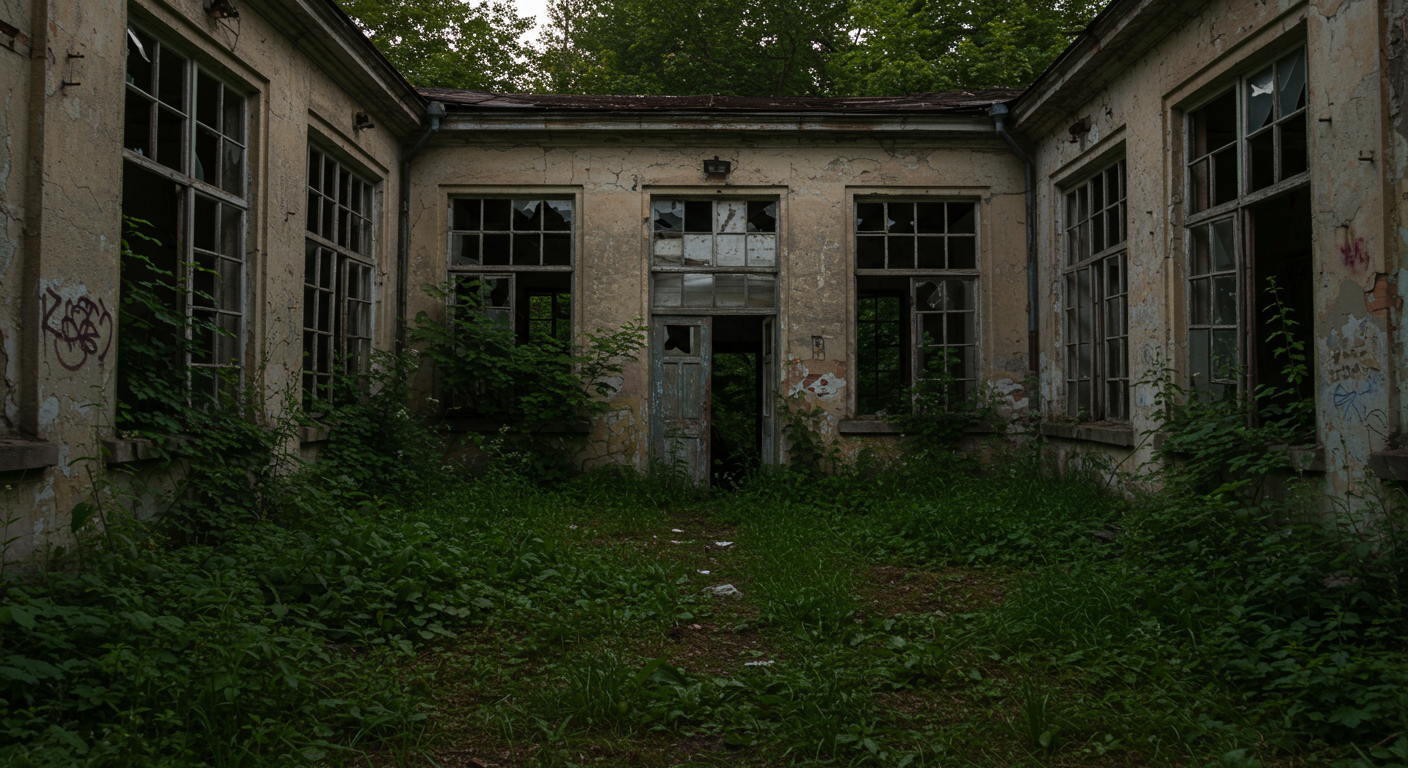
Some discoveries happen by accident. Others feel inevitable, like you were always meant to stumble upon them. The abandoned textile factory on the outskirts of town was both—a crumbling monument to industrial decline that I found during an afternoon walk, completely by chance, yet somehow central to understanding the community I'd joined as an expat.
First Encounters with the Forbidden Zone
In daylight, the place seemed unremarkable enough. Broken windows caught the sun like scattered mirrors, and wild vines had begun their slow work of reclaiming concrete walls. The main building stretched three stories high, its red brick facade weathered but still sturdy. Smaller outbuildings dotted the property, their corrugated metal roofs sagging under years of neglect.
I took photos, walked the perimeter, even peered through gaps in the chain-link fence. It was the kind of urban exploration that felt harmless—documenting decay, imagining the lives that once filled these spaces. But when I mentioned my discovery to neighbors that evening, the conversation died.
"You went there?" my landlord asked, his usual warmth replaced by something harder to read. "During the day, I hope."
The question hung in the air with a weight I couldn't understand. Other neighbors nodded knowingly, as if he'd asked something perfectly reasonable. When I pressed for details, I got variations of the same response: "Just... don't go there after dark. Everyone knows that."
But everyone didn't include me. As an outsider, I existed outside the circle of shared understanding, the unspoken rules that governed daily life here. The abandoned factory had become my introduction to how much I still had to learn.
Piecing Together the Local Lore
Over the following weeks, I collected fragments of the story like pieces of a puzzle. The textile factory had closed fifteen years earlier, taking nearly two hundred jobs with it. That much was documented history. What happened after was where the stories diverged.
María, who ran the corner grocery, mentioned accidents. "People got hurt there at night," she said, restocking shelves with deliberate focus. "Broken floors, exposed wiring. The police stopped patrolling after the third incident."
But Jorge from the café offered a different perspective entirely. "It's not about safety," he insisted, leaning across the counter conspiratorially. "There are things that need to be left alone. Especially after what happened to the night watchman."
The night watchman story had multiple versions. In one, he simply disappeared. In another, he was found days later, unharmed but refusing to speak about what he'd experienced. A third version involved strange lights and sounds that couldn't be explained.
Other expats I spoke with had heard similar warnings but dismissed them as superstition. "These old communities love their ghost stories," one American retiree told me. "It's probably just teenagers using the place to party, and the locals want to keep them away."
Yet the more conversations I had, the more I realized this wasn't about supernatural beliefs. It was about respect—for boundaries, for community wisdom, for the weight of local experience. The sunset rule wasn't superstition; it was social contract.
The Atmosphere Changes Everything
Curiosity eventually overcame caution. One evening, about an hour before sunset, I returned to the factory. I told myself I was being scientific about it—observing, not trespassing. Trying to understand what made this place feel different as darkness approached.
The change was immediate and undeniable. The same broken windows that had sparkled cheerfully in morning sun now gaped like empty eye sockets. Shadows pooled in corners and doorways, creating pockets of impenetrable darkness even while plenty of light remained. The sound of wind through the buildings took on a hollow, echoing quality that hadn't been there during my daytime visit.
But the most striking difference wasn't in the place itself—it was in everything around it. The usual evening foot traffic that flowed along nearby streets seemed to curve away from this area. People walking dogs chose different routes. Even delivery trucks appeared to avoid the road that passed closest to the factory gates.
I realized I was witnessing something remarkable: an entire community seamlessly navigating around a space that had become collectively understood as off-limits. No signs were needed, no official warnings. The knowledge simply existed, passed from person to person through the kind of quiet communication that long-established communities excel at.
As the sun touched the horizon, I felt it too—not fear exactly, but a growing sense that I didn't belong there. Whether that feeling arose from genuine atmospheric change or from absorbing weeks of subtle social cues, I couldn't say. Maybe it didn't matter.
Understanding Through an Outsider's Eyes
Walking back toward the well-lit streets that evening, I understood something fundamental about my place in this community. The abandoned factory wasn't really about ghosts or safety hazards or teenage delinquents. It was about belonging to a social fabric that includes invisible threads—shared knowledge, collective memory, unspoken agreements about how to navigate shared space.
As an expat, I'd been focused on learning the obvious things: language, customs, practical necessities. But every community also runs on subtler protocols, the kind that develop organically over time and rarely need to be articulated. The sunset rule was one of these—a piece of local wisdom that couldn't be found in guidebooks or orientation materials.
My curiosity about the place had been innocent enough, but it had also been culturally tone-deaf. I'd approached the factory as an individual seeking adventure and answers, while the community had long ago reached a collective decision to let it rest. Learning to read those boundaries—to understand when curiosity should yield to local knowledge—became as important as any language lesson.
The abandoned factory still sits there, of course. I pass it sometimes during morning runs, and it looks much the same as it did that first day I discovered it. But I see it differently now—not as a mystery to be solved, but as a reminder of how much there is to learn about any place beyond its surface attractions and obvious landmarks.
Some stories belong to the communities that created them. Some boundaries exist for reasons that outsiders don't need to fully understand in order to respect. And sometimes the most valuable discovery isn't about the abandoned place itself, but about your own position as someone still learning how to read the invisible maps that guide daily life in a community you're working to join.