Standing on the Line: Chasing the Vanishing Shadow at Quitsato's Equator Sundial
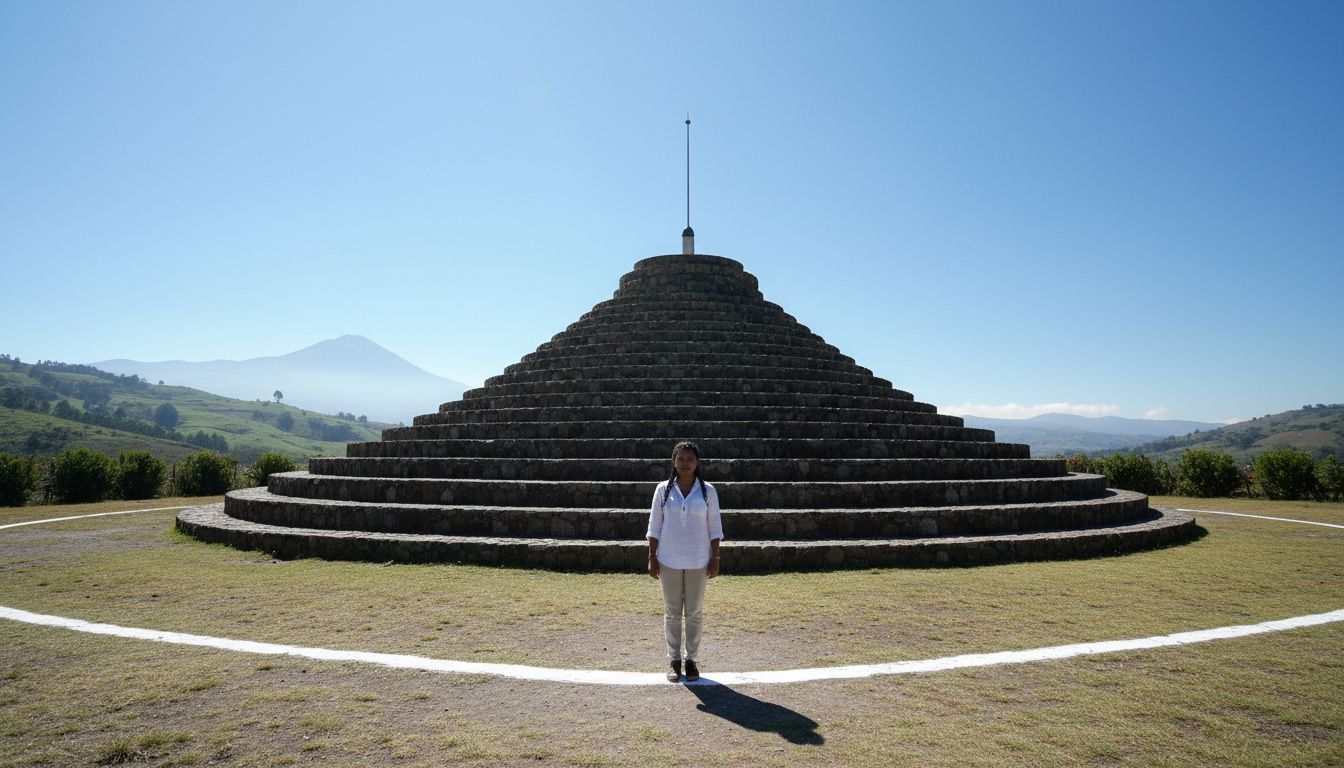
Standing on the Line: Chasing the Vanishing Shadow at Quitsato's Equator Sundial
Living in Ecuador long enough, you eventually hear the same tip from other expats: skip the crowds at Mitad del Mundo and go find Quitsato instead. I'd heard references to it in local forums and casual conversations for months before I finally made the drive toward Cayambe, timing my visit deliberately for the September equinox. There was something appealing about the idea of a monument that wasn't just a photo backdrop but an actual working instrument, a giant sundial etched into the landscape itself, part scientific tool and part land art.
Standing on the Line: My First Encounter with Quitsato
The road out toward Cayambe climbs gradually out of the Quito valley, and by the time the volcano itself comes into view, the sundial's presence on the landscape starts to make sense. Unlike the more commercialized equator attraction closer to the capital, Quitsato sits in open country, its massive circular design radiating outward like a compass rose painted onto the earth. Arriving ahead of solar noon, I could feel the anticipation building among the small cluster of visitors and fellow expats who'd made the same pilgrimage, all of us there for the same reason: to see whether a shadow could really vanish.
Why Quitsato Claims the 'Truer' Equator
Part of what draws people to Quitsato is the story behind its placement. Many visitors note that the well-known Mitad del Mundo monument, built decades earlier, sits somewhat off from the equatorial line, as later, more precise measurements would reveal. As GPS technology matured, the ability to pinpoint zero latitude improved considerably, and Quitsato was positioned with this refined data in mind. I should be upfront that I haven't independently verified the exact survey history or precise coordinates involved here, that's the kind of detail worth checking against the Quitsato Foundation's own materials before treating it as settled fact. But the general narrative, that newer measurements shifted our understanding of where the line truly falls, is part of what gives the site its identity.
The Physics of a Vanishing Shadow
The phenomenon itself rests on fairly approachable astronomy. At the equinoxes, the sun tracks a path that puts it nearly directly overhead at solar noon for locations sitting on the equator. When sunlight arrives almost perfectly vertical, a tall, thin object positioned precisely on that line will cast a shadow that shrinks dramatically, potentially to something barely perceptible, right at that moment. Move even a short distance north or south of the line, though, and the sun's angle is no longer quite so direct, so shadows lengthen again. Quitsato's radiating sundial design seems built specifically to make this contrast visible, letting you watch shadows stretch out along the lines etched away from center while the true equatorial point stays nearly shadow-free.
The Equinox Moment: Watching the Shadow Disappear
As solar noon approached, the mood among the gathered visitors shifted from casual conversation to a kind of collective focus, phones and cameras angled, kids hushed by parents, everyone watching the same patch of ground. The shadow cast by the central gnomon crept shorter by the minute, and there was an audible murmur as it thinned to almost nothing before beginning to lengthen again on the other side. It's a strange thing to feel moved by a shadow, but standing there at what's presented as zero latitude, watching an abstract line on a map become something you could physically see and stand inside, carried an unexpected weight. For a moment, the planet's geometry felt personal rather than theoretical.
Andean Solar Heritage Behind the Monument
Quitsato's framing doesn't stop at astronomy. The site draws connections to older Andean traditions of solar observation, positioning itself as a continuation of indigenous knowledge systems that tracked the sun's movements long before modern instruments existed. I haven't confirmed the specific historical or archaeological claims tied to pre-Columbian calendar use at this exact location, and readers curious about that layer of the story would do well to look for scholarly or historical sourcing rather than take the on-site interpretation at face value. Still, this cultural framing adds texture to the visit, making it feel less like a novelty stop and more like an encounter with a longer, layered relationship between people and sky in this part of the Andes.
Practical Notes for Fellow Expats and Travelers
If you're an expat or traveler hoping to witness the effect yourself, timing matters most. Aiming for the days immediately around the equinox, and specifically solar noon, gives you the best chance of seeing the shadow shrink noticeably. The site sits within a reasonable drive of both Quito and Cayambe, making it feasible as a half-day or full-day trip depending on where you're based, though I'd avoid stating precise drive times or admission details here since those can shift. Your best bet is checking Quitsato's official channels directly for current visiting hours, any guided tour options, and whether they host organized equinox gatherings, since these details are the kind that change year to year.
Why This Small Patch of Ecuador Stays With You
What stayed with me wasn't really the shadow itself, it was how the visit took something I'd always understood only as an abstraction, a line on a map, a number in a textbook, and made it briefly, physically real. That's a recurring gift of expat life, I think: the way ordinary geography, glanced at for years without much thought, can suddenly become vivid when you're standing inside it. If you're living abroad, or even just passing through, it's worth seeking out your own version of that moment, some quiet corner of the map that turns out to hold more wonder than you expected.