Shadow People: My Journey Into the Mystery Between Perception and Reality
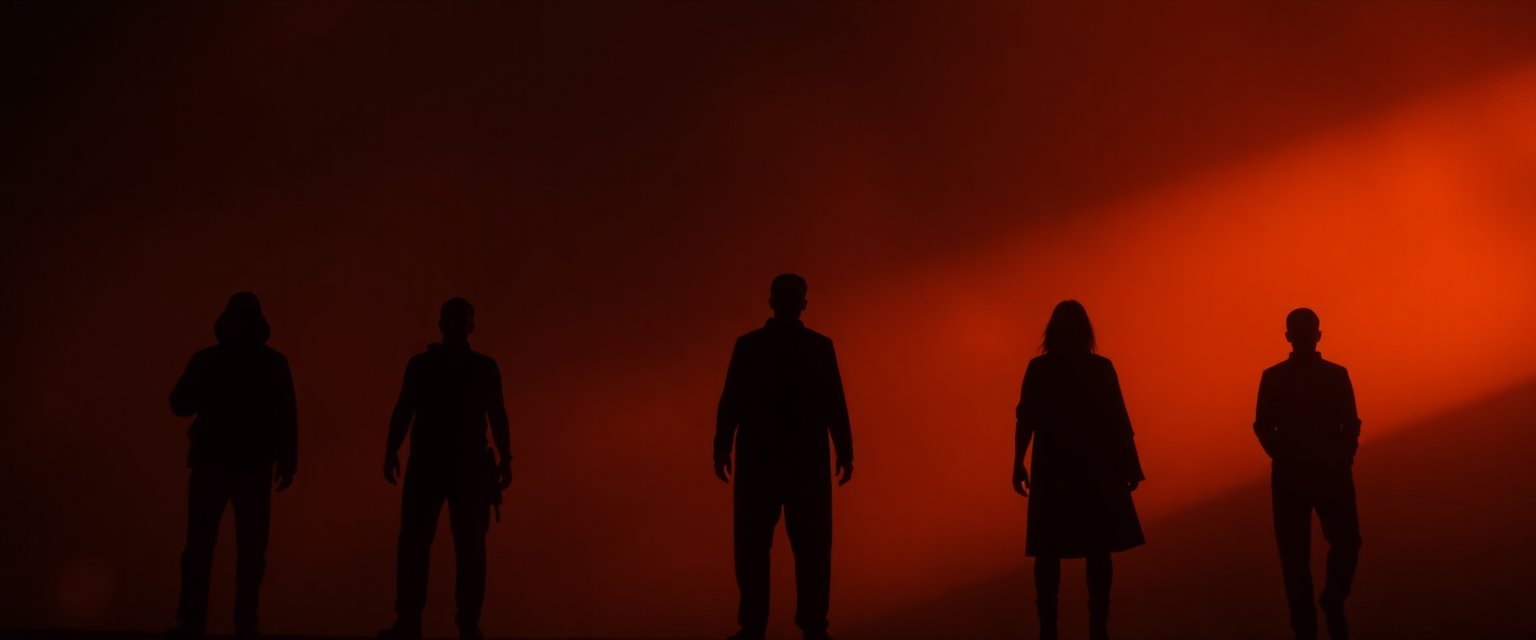
During my travels and conversations with fellow expats, I've encountered countless stories that made my skin crawl. In quiet hotel rooms in Bangkok, cramped apartments in Berlin, or traditional houses in rural Japan, people have shared eerily similar experiences: glimpsing dark, human-like figures moving just beyond the edge of vision. These mysterious entities, known as "shadow people," have both fascinated and terrified me as I've delved deeper into this worldwide phenomenon.
What Exactly Are These Shadow People?
From my research and conversations with witnesses, shadow people are consistently described as dark, human-shaped silhouettes that appear solid yet lack any defining features. Almost everyone I've spoken to mentions the same thing: you see them in your peripheral vision, but when you turn to look directly, they vanish instantly.
The descriptions are remarkably consistent across cultures. These figures typically stand between three and eight feet tall, move with apparent purpose, and sometimes appear to wear hats or flowing cloaks. What struck me most during my research was how people who'd never heard the term "shadow people" would describe almost identical encounters.
These sightings happen most often during twilight hours or in dimly lit spaces—exactly the conditions where natural shadows should feel normal, not threatening. Yet witnesses describe an immediate, overwhelming sense of being watched and a dread that feels distinctly different from ordinary nervousness about darkness.
Real Stories That Gave Me Chills
Through online expat forums and late-night conversations in hostels, I've collected dozens of firsthand accounts that follow an unsettling pattern. Sarah, an English teacher in South Korea, told me about repeatedly seeing a tall figure in her apartment doorway during her first month abroad. "I thought it was stress from the move," she said, "but it happened almost every night for weeks."
Marcus, a digital nomad I met in Prague, described waking up in various accommodations across Eastern Europe to find a dark shape standing at the foot of his bed. "Always the same height, always perfectly still until I'd blink, then gone," he explained. "Started making me dread going to sleep."
What fascinates me is how these experiences affect even the most rational people. Engineers, doctors, teachers—individuals who pride themselves on logical thinking—find themselves genuinely shaken by encounters they can't easily explain away.
The Science That Actually Makes Sense
As much as these stories intrigue me, I had to dig into the scientific explanations, and honestly, they're pretty convincing. Sleep researchers have shown that many shadow people encounters occur during sleep paralysis—a state where your mind wakes up before your body does, often accompanied by vivid and terrifying hallucinations.
There's also something called hypnagogic hallucinations that happen when you're drifting off to sleep, and hypnopompic ones when you're waking up. Both can create incredibly realistic visions of dark figures that feel completely real in the moment.
Our brains also play tricks on us through pareidolia—basically, we're wired to see faces and human forms even in random patterns. In low light, this tendency goes into overdrive, potentially turning ordinary shadows into perceived threats.
Plus, our peripheral vision is terrible at detail but excellent at detecting movement. It's the perfect setup for misinterpreting a curtain's movement or a shadow shift as something much more sinister.
Cultural Threads That Span the Globe
What really got my attention during my travels was discovering how many cultures have their own versions of shadow beings. In Mexico, I learned about "sombras" that appear to people in distress. Japanese folklore describes "kage-onna" or shadow women. Aboriginal Australian cultures speak of shadow spirits that appear as omens.
These aren't modern inventions inspired by horror movies—these are ancient stories passed down through generations. It suggests that seeing shadowy figures might be a fundamental part of human experience, regardless of cultural background.
The internet has definitely shaped how we talk about these experiences today. Online communities have created a shared language around "shadow people" that helps people feel less alone with their encounters, but it might also influence how people interpret and remember their experiences.
What I've Come to Believe
After months of research and countless conversations, I'm convinced that science can explain most shadow people encounters. Sleep disorders, visual processing quirks, stress from travel and cultural adjustment—these factors create perfect conditions for perceiving things that aren't actually there.
But here's what bothers me: dismissing every single account feels just as narrow-minded as accepting them all as supernatural truth. The consistency of these experiences across cultures and throughout history suggests they tell us something important about how our minds work, even if shadow people don't exist as independent entities.
For fellow expats dealing with the stress of new environments, different time zones, and cultural adjustment, these experiences might be more common than we'd like to admit. Our brains are constantly working to make sense of unfamiliar surroundings, and sometimes that process creates shadows where none should be.
Whether shadow people "exist" in any objective sense remains a question each person has to answer for themselves. What I can say with certainty is that the phenomenon represents a fascinating glimpse into how our minds interpret the unknown—especially when we're far from home, surrounded by the unfamiliar, and our guard is down in those vulnerable moments between sleep and waking.