Rum, Potatoes and Five Captive Sailors: The Dark Legend of Patrick Watkins, Floreana's First Settler
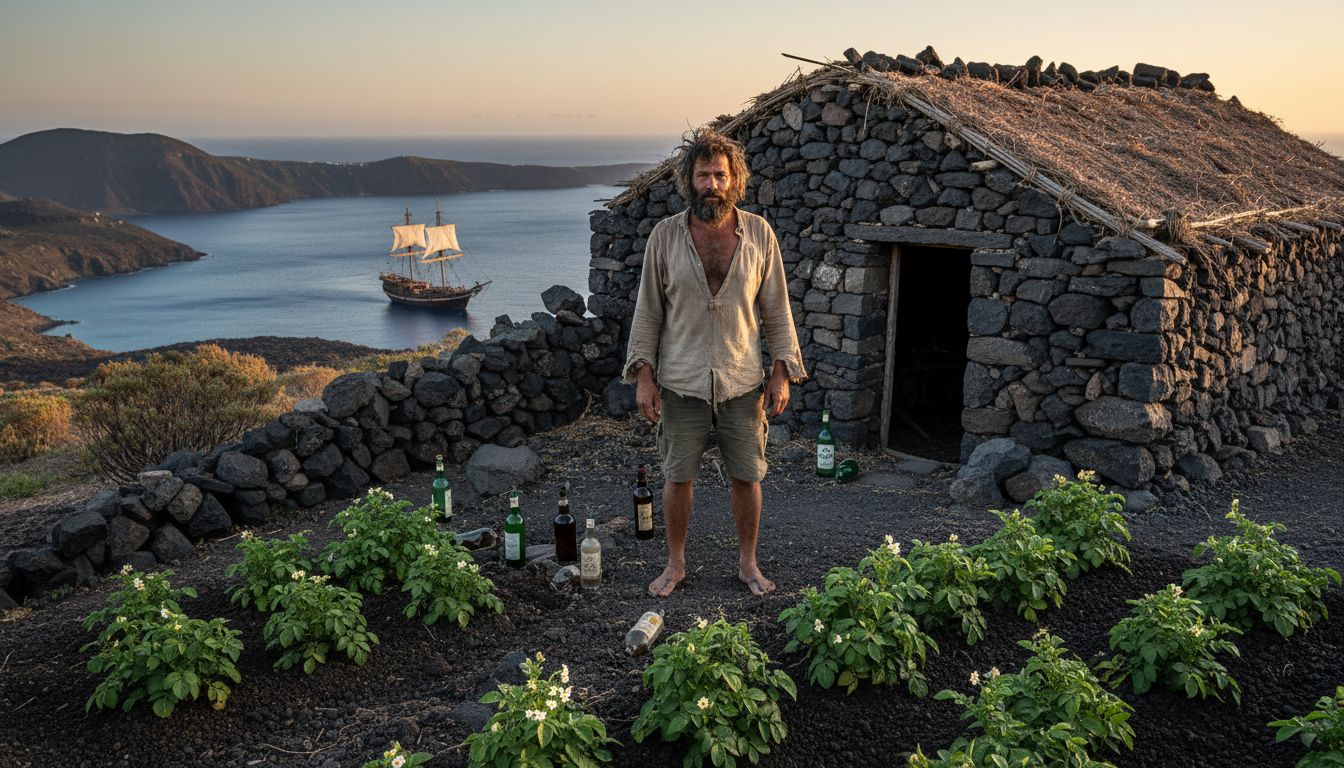
Rum, Potatoes and Five Captive Sailors: Patrick Watkins, the First Settler of Ecuador's Galápagos Island of Floreana
Long before Floreana became known for its tight-knit community of Ecuadorian and international residents, it had a single, solitary inhabitant whose story reads more like a cautionary tale than a settlement history. Patrick Watkins, an Irish sailor by most accounts, is widely described in popular histories as the first known person to live for an extended period on Floreana, arriving sometime around 1807. At the time, the Galápagos Islands were not yet part of Ecuador — they existed as a remote, lawless waypoint for whaling ships crossing the Pacific, centuries before they would be annexed by the young republic.
What follows is part survival feat, part ghost story. Many historians of the Galápagos note that separating fact from maritime legend in Watkins' case is nearly impossible, since so much of what we know comes from the secondhand accounts of sailors rather than any surviving written record he left behind.
A Garden in Volcanic Soil
According to the traditional narrative passed down through whaling-era accounts, Watkins managed to cultivate potatoes and other vegetables in Floreana's relatively fertile highlands, a notable achievement on an island otherwise defined by volcanic rock and scrubland. This small-scale agriculture reportedly became the basis of an informal trade economy: passing whaling ships, eager for fresh produce after months at sea, would exchange rum and other goods for his crops.
This arrangement, as the story goes, made Watkins a known figure among Pacific whalers — a strange but useful fixture on an island otherwise considered uninhabitable. Some historical accounts suggest his garden and trading post became something of a landmark for ships navigating the archipelago.
The Feared Hermit of the Highlands
Over time, the same oral tradition describes Watkins' appearance and demeanor growing increasingly wild. Sailor testimonies, as relayed in later popular histories, often portray him as disheveled, unsettling, and even dangerous to encounter. A recurring theme in these accounts is the psychological toll of prolonged isolation — years alone on a remote volcanic island, with only intermittent contact with passing crews, may plausibly have shaped both his behavior and his reputation.
It's worth noting that these characterizations come entirely from outside observers rather than any self-account, which raises questions about how much reflects genuine transformation versus the kind of mythmaking common among seafarers swapping stories of strange lands.
Captive Labor and Allegations of Cruelty
Among the more troubling elements of the Watkins legend are claims that he captured castaways, deserters, or shipwrecked sailors and forced them to work his plot of land. These allegations, if true, would represent a serious and disturbing chapter in the island's early history. It's important to flag clearly, though, that these accounts rest on secondhand sailor testimony passed down through oral and popular historical tradition, not on verified documentation, court records, or firsthand written testimony from the alleged victims themselves.
Given the absence of primary sources, these claims are best understood as part of the historical narrative surrounding Watkins rather than confirmed fact. Historians studying the Galápagos' early history have raised a recurring concern: how easily such tales could have been exaggerated or embellished in the retelling, particularly given the isolation and lack of oversight in the region at the time.
The Escape to the Mainland
The most dramatic chapter of the Watkins story describes a mutiny-like escape, in which he reportedly overpowered or killed the men he held captive in order to commandeer a boat and leave the island. Some versions of the tale claim he arrived alone on the Ecuadorian mainland some time later, having apparently survived the crossing without his captives.
What happened to Watkins after this point remains genuinely uncertain. Historical tradition offers little reliable detail about his fate once he reached the mainland, and this gap in the record has only added to his legendary status rather than resolving it.
Separating History from Legend
Taken as a whole, the Patrick Watkins story illustrates the challenge of writing history from an era and location with almost no surviving primary documentation. What exists is largely oral and whaler tradition, repeated and likely reshaped across generations of retelling. Many who study this period note that the darker, more sensational details — the captivity, the violence, the escape — may have been embellished over time, whether to entertain, to moralize, or simply because the truth was never fully known even to those who first told the tale.
Rather than treating Watkins as a verified historical biography, it may be more accurate to frame his story as a foundational myth: a narrative that captures something true about the brutal isolation of the early Galápagos while leaving the specific facts open to considerable doubt.
Floreana's First Chapter
Despite — or perhaps because of — its murkiness, the Watkins legend occupies an important place as the opening chapter of Floreana's settlement history, well before Ecuador formally incorporated the islands into its territory. It stands as a kind of dark prologue to the island's later, far better-documented expatriate sagas, including the Wittmer family's homesteading efforts and the strange, still-debated disappearance of the self-proclaimed Baroness von Wagner in the 1930s.
Why does such a dark and fragmentary tale continue to anchor the island's origin story? Perhaps because it captures something essential about the Galápagos itself: a place where human ambition, isolation, and survival have always pushed right up against the edge of legend.