Restoration Workers at Quito's Historic Hospital San Lázaro Reportedly Uncover Two Giant Colonial-Era Jars
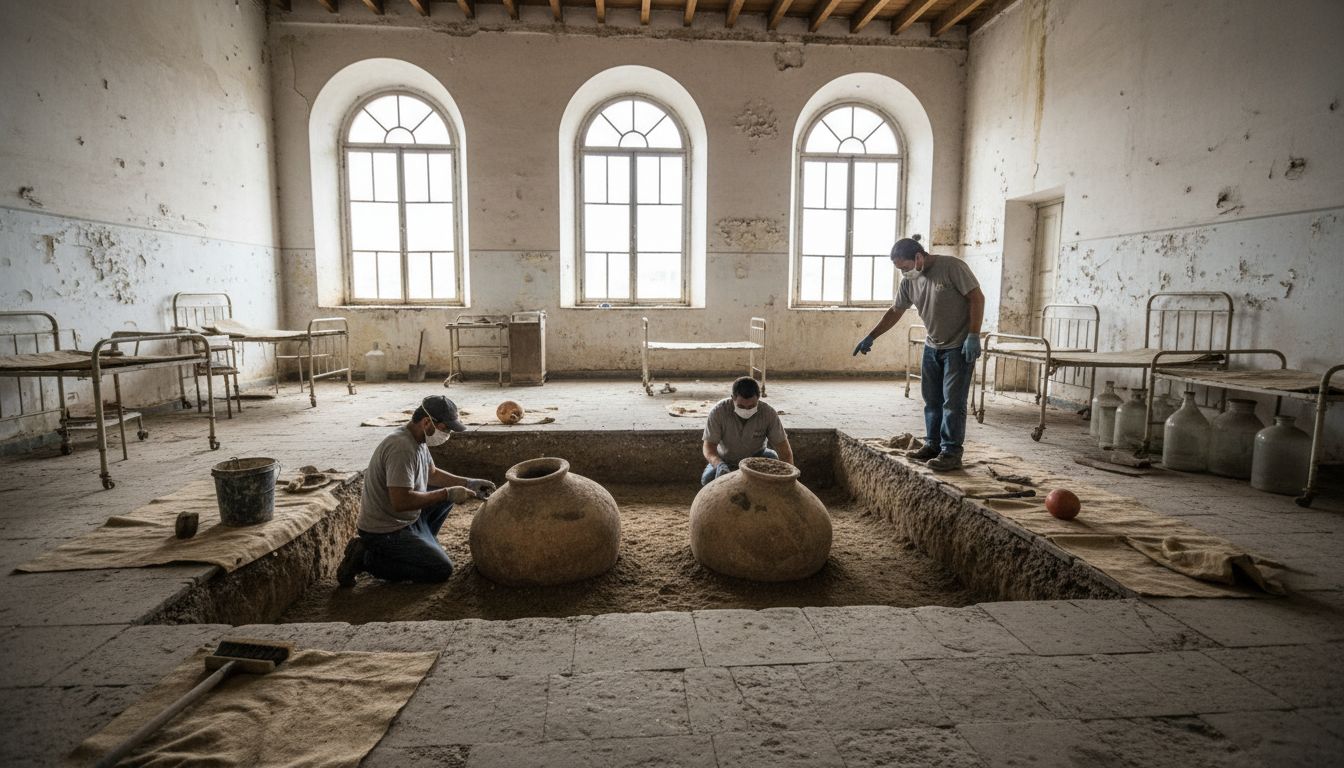
Restoration Workers at Quito's Historic Hospital San Lázaro Reportedly Uncover Two Giant Colonial-Era Jars
In Quito's historic center, routine restoration work at Hospital San Lázaro, a building whose roots trace back to 1785, reportedly took an unexpected turn in recent days. Workers repairing sections of flooring struck something solid beneath the surface, an encounter that would ultimately lead to the reported discovery of two large earthenware jars tucked beneath the hospital's floor, according to accounts from those on site.
As with many such on-the-ground accounts, there is no independent verification available at this time. The story circulating comes primarily from workers present during the restoration, and details should be understood as reported rather than confirmed by archaeological or municipal authorities.
Unearthing the Jars
The two jars are described as large, earthen in composition, and seemingly old, though exact measurements, materials, and their precise placement beneath the structure remain unconfirmed, per the accounts shared. Many of the specifics commonly expected in a verified archaeological find, such as depth, orientation, or surrounding soil context, have not been independently documented, and should be treated as anecdotal elements of the unfolding story.
Workers reportedly expressed surprise and curiosity upon the discovery, with speculation naturally turning to questions of age and original purpose. Some have wondered aloud whether the jars might date to the hospital's earliest years, while others have simply marveled at uncovering something tangible from the past during what began as ordinary renovation work.
Hospital San Lázaro's Colonial-Era Roots
Hospital San Lázaro holds a notable place in Quito's colonial history, with origins dating to the late eighteenth century. Like many institutions from that era, it has long been associated with the city's broader religious, medical, and social history, reflecting the layered development of Quito as a colonial administrative and cultural center.
Given the building's centuries-long history, it is far from implausible that construction, renovation, or everyday use over the generations could have left behind artifacts beneath its floors. Buildings of this vintage in Quito's historic core have, over time, revealed various material traces of past eras, and the broad plausibility of such finds owes much to the sheer age and continuous use of structures like Hospital San Lázaro.
That said, no specific archaeological conclusions can be drawn from the hospital's general history alone, and any connection between the building's past and the reported jars remains speculative until formal analysis, if it occurs, provides further clarity.
What the Jars Might Represent
In the absence of expert examination, explanations for the jars' original purpose remain firmly in the realm of speculation. Workers on site have floated a range of theories, from the jars serving as storage vessels, perhaps for water, grain, or other provisions, to broader guesses about ritual or ceremonial use tied to building-era customs of the period.
It's worth emphasizing that determining the jars' true age, origin, and function would require careful archaeological and material analysis that has not yet been conducted, at least according to currently available accounts. Until such expert evaluation takes place, any claims about what the jars were used for, or how old they truly are, should be understood as informal hypotheses rather than established fact.
A Story That Captures Quito's Layered Past
For many expats and locals alike, stories like this one resonate precisely because they capture something distinctive about living in or near Quito's historic center: the sense that centuries of history remain quite literally underfoot. A recurring theme among those fascinated by the city's colonial heritage is the way ordinary, practical work, like floor restoration, can unexpectedly surface echoes of a much older Quito.
Many observers note that such discoveries, confirmed or not, tend to capture the public imagination precisely because they blend the mundane with the historical in such a vivid way. Whether or not further investigation follows, the reported find at Hospital San Lázaro offers a reminder of how much of Quito's past may still lie quietly beneath its streets and buildings.
As of now, no official follow-up or formal archaeological assessment has been confirmed. Those interested in the story will likely be watching for updates, though for the time being, the tale of the two jars remains very much an open and evolving one.