Reports of Fatal Adventure Tourism Accidents Raise Safety Questions in Cotopaxi and Baños
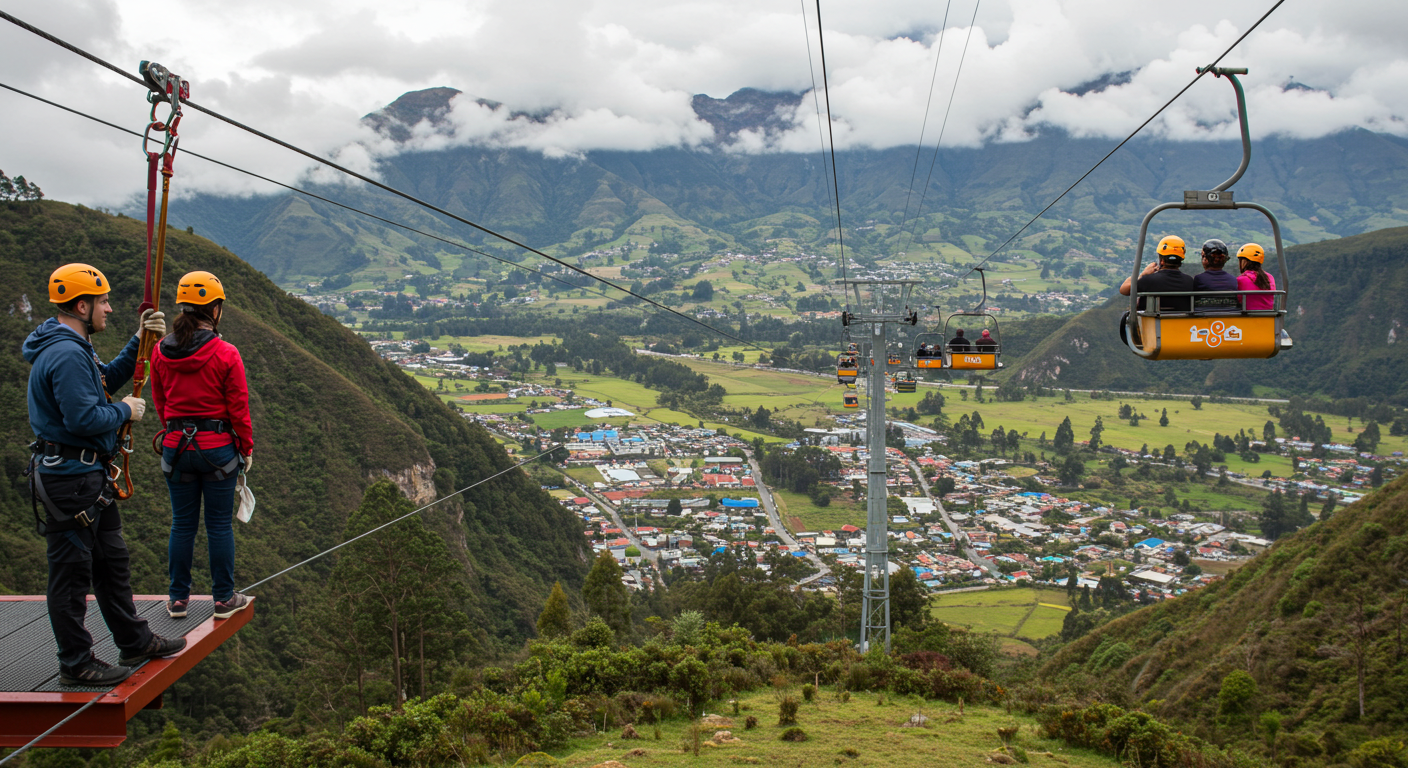
Reports circulating about a fatal zipline incident in Cotopaxi and a separate deadly cable ride accident in Baños have raised immediate concern among travelers, expats, and tourism businesses in Ecuador. At this stage, though, the most responsible approach is caution: the core facts, death tolls, circumstances, and any official findings still need verification.
That matters because Ecuador has built much of its international appeal around outdoor adventure. Stories involving possible safety failures do more than shock readers. They can affect visitor confidence, local livelihoods, and the reputation of destinations that depend heavily on tourism.
Why This Story Matters to Travelers and Expats in Ecuador
For many foreign residents and visitors, places like Cotopaxi and Baños represent the best of Ecuador’s tourism appeal: dramatic scenery, accessible adventure, and memorable day trips. When reports emerge of tourists being killed during recreational activities, the concern goes beyond a single headline.
If confirmed, such incidents would raise questions about operator standards, inspections, emergency preparedness, and how much travelers can realistically know before booking. At the same time, it is important not to treat early reports as settled fact or assume that two serious incidents automatically point to a broader industry failure.
What Has Been Reported About the Two Incidents
At present, this story is based on unverified reporting claims rather than confirmed documentation. The two reported incidents should be treated as separate cases.
One reported case involves a zipline activity in Cotopaxi in which tourists were allegedly killed. Another involves a cable ride in Baños that reportedly resulted in additional tourist deaths. Beyond those broad descriptions, key factual details remain unclear or unconfirmed in the material available for this draft.
That means essential points still need confirmation, including the dates of the incidents, the exact locations, the number of victims in each case, the nationalities of those involved, and the immediate circumstances that led to the fatalities. Without verified sourcing, it would be irresponsible to say more than that such reports are circulating and are serious enough to merit scrutiny.
What Still Needs Confirmation
Several core questions remain unanswered. First is the basic matter of whether the reported death toll of three tourists across the two incidents is accurate. It is also unclear which operators were involved, whether the activities were run by licensed businesses, and whether any official authority has publicly identified causes.
Other unanswered questions include the condition of the equipment, whether weather played a role, whether staff followed standard briefing and harness procedures, and how emergency response was handled. Just as importantly, there is no verified basis yet to connect the two incidents as part of a single broader pattern.
In stories like this, witness accounts, social media discussion, and secondhand summaries can spread quickly. But those should be distinguished from statements by police, prosecutors, tourism officials, municipal authorities, or recognized emergency services. Until that kind of confirmation exists, this remains a serious but unresolved safety question.
How Adventure Tourism Safety Is Supposed to Work in Ecuador
Adventure tourism typically depends on multiple layers of safety rather than a single rule or device. In principle, operators are expected to maintain equipment, train staff, brief participants, manage risk according to weather and terrain, and keep clear emergency protocols in place. Activities such as ziplines, cable systems, canyoning, rafting, and climbing all require strong operational discipline because even a small failure can have severe consequences.
Travelers often assume that a popular destination automatically means a uniformly enforced safety regime. In reality, oversight may depend on a mix of national regulations, local permitting, operator compliance, and practical enforcement capacity. That can create uneven standards from one region or activity to another.
Without verified reporting tied to these specific cases, it is not yet possible to say whether any required protocol was ignored or whether a regulatory gap contributed. Still, if confirmed, the incidents would likely intensify questions about inspections, licensing, staff qualifications, maintenance records, and the role of local authorities in monitoring high-risk attractions.
Do These Cases Point to a Larger Safety Problem?
It is too early to conclude that Ecuador’s adventure tourism sector has a systemic safety problem based on these reports alone. Two incidents, even serious ones, do not by themselves prove a nationwide pattern. They may turn out to be unrelated events with very different causes.
That said, serious accidents often trigger wider public debate for understandable reasons. People may begin asking whether rapid tourism growth has outpaced oversight, whether some operators function informally, or whether inspection and enforcement vary too much between locations. Those are legitimate questions, but they should remain questions, not conclusions, unless supported by documented evidence.
A responsible discussion should also recognize that many operators in Ecuador work carefully and depend on trust to survive. Public confidence can be damaged quickly, even before official investigations establish what happened.
What Travelers and Expats Should Watch For Before Booking
For readers considering ziplining, cable rides, rafting, climbing, or similar activities, the practical lesson is not panic but preparation. Before booking, ask who operates the activity, how often equipment is inspected, what training guides receive, and what emergency procedures are in place. Ask whether participants receive a formal safety briefing and whether weather conditions can delay or cancel the activity.
It is also reasonable to ask about insurance coverage, maximum weight or health restrictions, and whether the company uses backup systems or redundant safety checks. Recent reviews can be useful, but they should not be treated as proof that an operator meets all safety standards.
Families, solo travelers, and long-term foreign residents may also want to avoid making last-minute decisions based only on price or convenience. In adventure tourism, a cheaper option is not always a safer one, and a heavily marketed attraction is not automatically a well-regulated one.
The Local Stakes for Ecuador's Tourism Reputation
If these reported deaths are confirmed, the consequences could extend well beyond the families affected. Cotopaxi and Baños are both closely tied to Ecuador’s image as an adventure destination. High-profile fatalities can influence booking decisions, travel advisories, and word-of-mouth perceptions among international visitors.
That puts pressure on officials and industry groups to show that safety standards are credible, inspections are meaningful, and accountability exists when something goes wrong. At the same time, any response must be careful and evidence-based. Tourism workers, guides, drivers, and small business owners can all be harmed when fear spreads faster than facts.
What a Responsible Version of This Story Should Conclude
For now, the clearest conclusion is not that Ecuador’s adventure tourism sector stands condemned, but that serious reported incidents demand verified reporting and accountability. The current takeaway is a question of safety oversight, not a settled judgment.
Readers should expect the next meaningful developments to come from official confirmation: identification of victims, clarification of what happened in each location, findings about equipment or procedures, and any regulatory response directed at operators or local authorities.
Until then, this is best understood as an important developing story about risk, trust, and the standards that adventure tourism destinations must uphold.