Otavalo's Yamor Goes Dry This Year: Ten Days Honoring Seven Corns
Otavalo's Yamor Goes Dry This Year: Ten Days Honoring Seven Corns
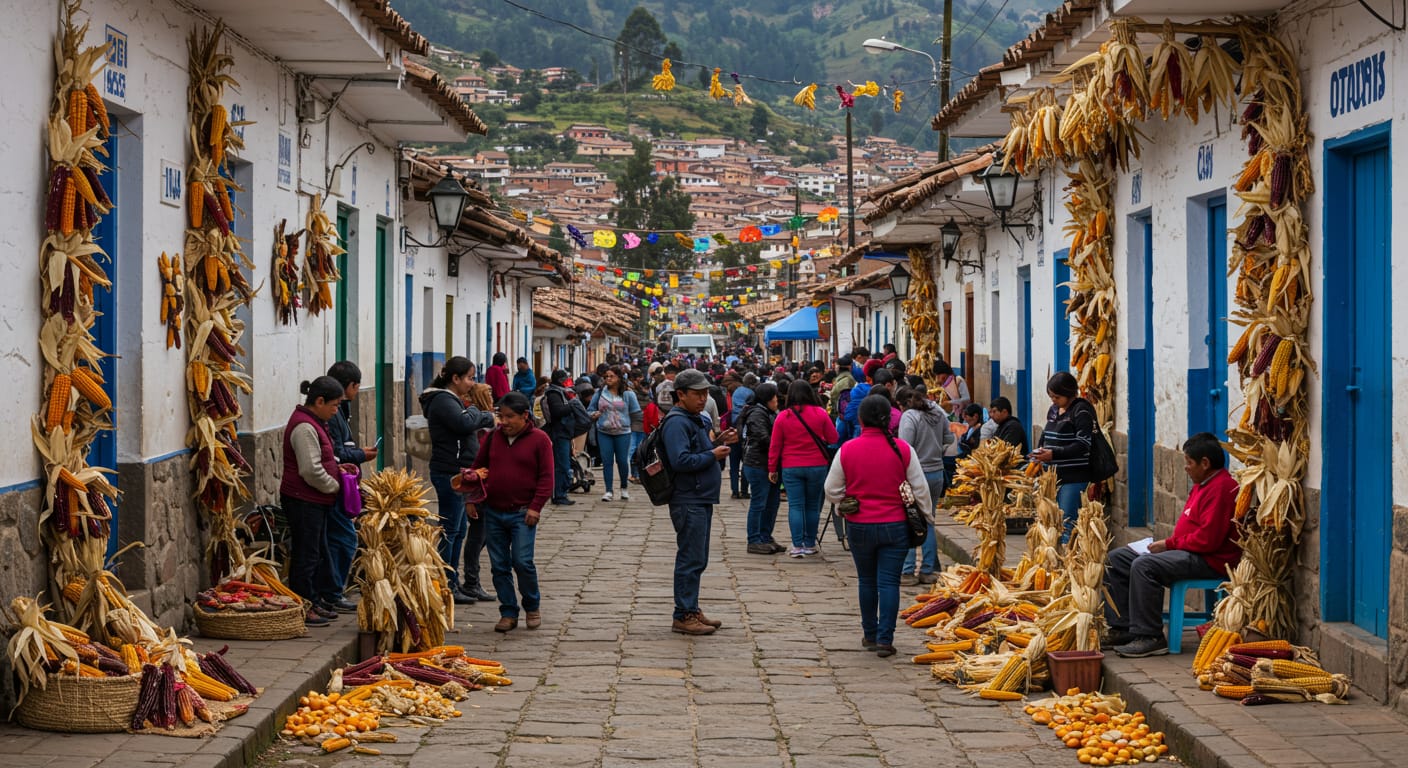
I arrived in Otavalo in the first days of September, and the energy was unmistakable before I even understood why. Vendors were setting up stalls along the streets near the market, banners were going up around the central plaza, and there was a kind of anticipatory hum in the air. Locals I spoke with told me the Fiesta del Yamor was beginning, running from September 4 to 13 this year — though I want to be upfront that these dates came from conversations with residents and organizers rather than any official document I could verify myself. Still, the Fiesta del Yamor is clearly one of Otavalo's most beloved traditions, a celebration tied to the corn harvest that draws both locals and travelers into ten days of music, food, and community gathering.
What Yamor Traditionally Means
Ask almost anyone in Otavalo about the festival's name, and you'll hear some version of the same story: Yamor refers to seven varieties of corn, each said to carry its own significance in local agricultural life. I heard slightly different explanations depending on who I asked, which suggests this is more community-shared understanding than a single documented history. What people agreed on consistently was the centrality of chicha de yamor, a traditional fermented corn beverage long considered a cultural cornerstone of the celebration. Several residents described it to me as inseparable from the festival's identity — at least, historically. The exact origins of the festival, including how far back it dates and how the seven-corn tradition began, remain unclear to me as an outsider, and I'm presenting what I heard as local lore rather than settled fact.
This Year's Twist: A 'Dry' Yamor
What made this year's festival particularly notable, at least from what I observed and was told, was a shift toward an alcohol-free format. Chicha de yamor, traditionally fermented, appeared to be largely absent or replaced with non-alcoholic versions in the stalls and gatherings I visited. When I asked around about why, the explanations I received were informal and varied — some mentioned health-conscious community decisions, others pointed to changing social norms around alcohol, and a few simply shrugged and said things change. None of this felt like an official policy explanation, so I want to be clear that these are possibilities offered by residents in casual conversation, not confirmed reasons. Whatever the cause, the shift noticeably altered the sensory and social texture of the festival, at least for someone experiencing it for the first time.
Walking Through the Ten Days
Over the course of the festival, the days took on a rhythm of parades, food stalls, music, and dance. Mornings often brought the smell of roasted corn drifting through the streets, mixing with the scent of empanadas and other market food. Afternoons and evenings filled with Andean music — panpipes, guitars, drums — accompanying dancers in traditional dress whose colors seemed to brighten the entire plaza. Communal gatherings spilled out from the main square into side streets, with families and visitors mingling around food vendors and performance areas. What stood out most, though, was an absence: the usual social ritual of chicha drinking that I'd been told to expect simply wasn't there in the way I imagined. For a first-time visitor, it was hard to know exactly what had changed versus what I'd simply misjudged from secondhand descriptions, but the atmosphere felt distinctly different from what I'd anticipated.
Community Reactions and Expat Perspective
In casual conversations, reactions to the dry format seemed mixed. Some residents spoke with a kind of quiet approval, suggesting the change felt healthier or more inclusive for families and children. Others expressed a gentle nostalgia, noting that something about the traditional atmosphere felt muted without chicha's presence. As an outsider experiencing this shift without a clear before-and-after of my own, I found myself more curious than qualified to judge — this is, after all, someone else's tradition evolving in real time, and my read on it is necessarily partial. What struck me most was how openly people were willing to discuss the change, treating it less as controversy and more as an ongoing community conversation about what the festival should look like going forward.
Final Reflections: Corn, Community, and Change
The symbolism of the seven corns — however precisely or loosely defined — seemed to point toward larger themes of continuity and adaptation that felt present throughout the festival. Traditions, even ones as rooted as Yamor, appear to shift in response to community needs and values, and this year's dry format may be one such adaptation, though I can't say with certainty what's driving it or whether it will continue in future years. I want to reiterate that much of what I've described here — the exact dates, the reasons behind the alcohol-free shift, the deeper history of the festival — comes from conversations and observation rather than verified documentation. What I can say confidently is that the experience of walking through Otavalo during these ten days was memorable, full of color, music, and community warmth. If you find yourself in Ecuador in early September, it's worth witnessing Yamor firsthand and drawing your own conclusions about how this tradition continues to evolve.