Otavalo Honors the Corn Harvest: Inside the Yamor Thanksgiving to Pachamama
Otavalo Honors the Corn Harvest: Inside the Yamor Thanksgiving to Pachamama
Arriving in Otavalo as the Yamor Season Begins
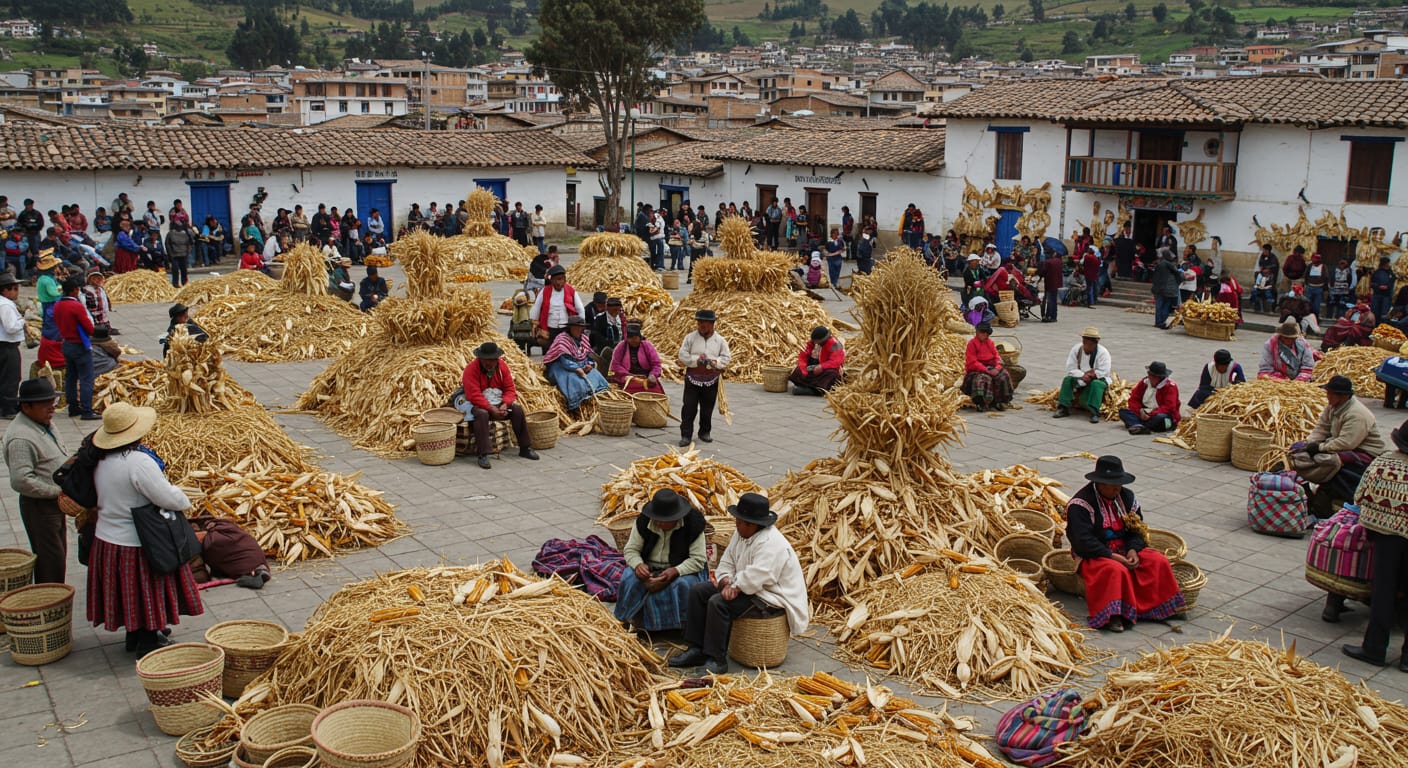
Otavalo sits in a valley ringed by volcanoes, its Saturday market known throughout the country and beyond. But in the final days of August, something shifts. Vendors hang extra strings of lights along the plazas, banners appear over the main streets, and there is a hum of anticipation that has little to do with the usual tourist rhythm. This is the lead-up to the Fiesta del Yamor, celebrated each year from August 30 to September 8, a Thanksgiving to Pachamama, or Mother Earth, centered on the corn harvest.
For those living in or visiting Otavalo during this window, the change in atmosphere is hard to miss. Local families begin preparations days in advance, and conversations in the market turn to which neighborhood's parade float will be best this year, or who might be crowned queen. As an outside observer settling into the town's rhythms, the ten days leading up to and through Yamor offer a rare window into how deeply the harvest cycle is woven into daily life here.
What Yamor Actually Means: Corn, Culture, and Gratitude
At its core, Yamor is a celebration of corn, the staple crop that has sustained Andean communities for centuries. The festival traces its roots to Kichwa indigenous traditions, in which the harvest was never merely an agricultural event but a spiritual one, an acknowledgment of what the earth had provided and a renewal of the relationship between people and land.
The festival takes its name from yamor itself, a fermented beverage made by combining seven varieties of corn. Preparing it is a labor-intensive process, and the drink carries deep symbolic weight, representing abundance, diversity, and the culmination of a season's work. Sharing yamor during the festival is an act of communal gratitude, a way of literally consuming the fruits of collective labor together.
This spirit of reciprocity with Pachamama runs through the entire celebration. Rather than treating the earth as a resource to be extracted from, the festival frames the harvest as part of an ongoing exchange, one where thanks and offerings are due in return for what has been given.
Inside the Celebrations: Parades, Music, and the Yamor Queen
The public face of Yamor unfolds through a series of events that stretch across the festival's ten days. Parades wind through Otavalo's streets, featuring traditional dress, indigenous music, and dance troupes representing different communities from the surrounding region. Fireworks mark key evenings, and the sound of Andean instruments, panpipes, guitars, and drums, drifts across the town well into the night.
One of the most anticipated moments is the crowning of the Reina del Yamor, the Yamor Queen. Far from a simple beauty pageant, this event is understood locally as a celebration of indigenous identity and cultural pride, with candidates often representing their communities and traditions through dress, language, and presentation. The crowning draws large crowds and carries genuine cultural significance beyond spectacle.
Alongside these events, Otavalo's famous artisan markets take on a festival energy of their own. Textile vendors, already central to the town's economy and identity, see increased foot traffic, and the interplay between commerce and celebration becomes especially visible during this period.
Tasting and Experiencing Yamor Firsthand
Trying yamor for the first time is something of a rite of passage during the festival. The drink has a mildly tart, fermented flavor that some visitors find unfamiliar, but it is typically offered with warmth and pride by those sharing it. Alongside yamor, festival stalls serve traditional foods, roasted corn, hearty soups, and other Andean dishes that complement the celebratory mood.
The sensory experience of Yamor is layered: the smell of street food mixing with wood smoke, the bright colors of traditional textiles and parade costumes, the steady rhythm of music carrying through the crowd. Unlike more curated tourist experiences elsewhere in Ecuador, Yamor feels lived-in and community-driven, a festival that continues regardless of who is watching, because it belongs first to Otavalo's own residents.
Why Yamor Matters for Visitors and Expats in Ecuador
For expats and travelers, attending Yamor offers something more valuable than a typical sightseeing stop: a chance at genuine cultural immersion, provided it is approached with respect. This means observing before participating, asking questions rather than assuming, and recognizing that the festival's meaning runs deeper than its visible celebrations.
Practically speaking, visitors hoping to experience Yamor should plan around the late August to early September window, expect crowds during peak parade days, and be prepared for a town that feels notably more animated than usual. Dressing modestly, being mindful during ceremonial moments like the queen's crowning, and supporting local vendors are simple ways to engage respectfully.
Ultimately, Yamor offers a lens into Andean life that extends far beyond the festival itself: a worldview in which gratitude to the earth is not an abstract sentiment but an active, communal practice. For anyone living in Ecuador or passing through, witnessing that gratitude in motion is a reminder of how differently, and how meaningfully, a harvest can be honored.