Old Riobamba’s Buried Past and the Reported Jesuit Convent Discovery
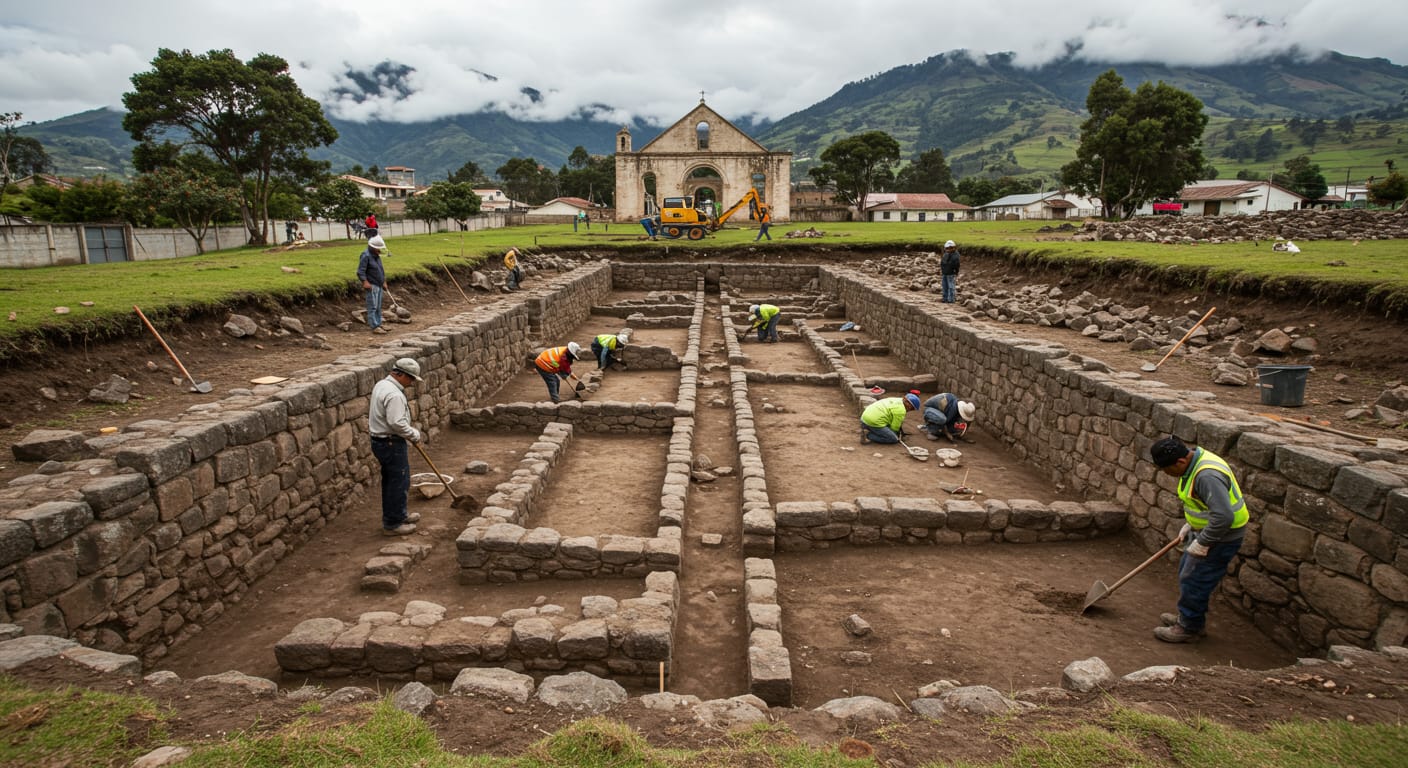
A reported archaeological discovery linked to a Jesuit convent in Old Riobamba has sparked interest for reasons that go far beyond a single structure. Even without a fully verified excavation report in the materials currently available, the story offers a compelling glimpse into how cities lost to disaster can reemerge through fragments, foundations, and memory.
For many people living in Ecuador, including expats and travelers who arrive later, places like Riobamba hold two timelines at once: the visible city of the present and the partially buried world that came before it. When a site tied to Old Riobamba is said to reappear, it resonates not just as archaeology, but as a reminder that history here often lies just beneath the surface.
A City Remembered Through Its Ruins
Old Riobamba holds a powerful place in Ecuadorian historical memory because of the 1797 earthquake that devastated the city. The destruction was so severe that Riobamba’s story effectively split in two: the original settlement and the city later reestablished elsewhere. That divide gives the area unusual emotional weight. It is not simply a former town or a ruined district, but a place associated with sudden destruction and a forced historical transition.
That helps explain why any reported unearthing from Old Riobamba draws immediate attention. Buried sites linked to catastrophic events often feel especially vivid. They suggest not just age, but interruption. They hint at lives, routines, and buildings that were not gradually abandoned, but overtaken in a single violent moment.
Why Old Riobamba Still Holds Such Power in Ecuadorian Memory
In Ecuador, Old Riobamba is often remembered as more than a historical location. It marks a before-and-after point in regional identity. The 1797 earthquake did not merely damage buildings; it changed the relationship between people and place. The original urban fabric, the institutions that anchored daily life, and the social geography of the city were all reshaped by the disaster and the relocation that followed.
That kind of rupture tends to endure in public memory. Even generations later, communities continue to tell stories about where a city once stood, what it once contained, and what may still remain underground. For outsiders, those stories can be surprising. For locals, they are often part of a deeper sense that the landscape keeps its own record, whether or not every detail is marked by plaques or preserved in guidebooks.
The Reported Jesuit Convent Discovery
The reported discovery of a Jesuit convent is especially striking because religious complexes played central roles in many colonial-era cities. A convent was rarely just a single-purpose building. It could serve as a spiritual center, a community landmark, a place of education, and an important part of the surrounding urban layout. If the identification of the site is eventually confirmed, it could offer valuable insight into how Old Riobamba was organized and how people lived there before the earthquake.
At the same time, caution is essential. Based on the materials available for this draft, the discovery is best treated as a reported finding rather than a fully documented excavation result. That does not make the story any less meaningful. It simply means the most responsible approach is to focus on why such a site would matter historically, rather than present unverified specifics as settled fact.
Even within that careful frame, the implications are significant. A convent linked to Old Riobamba could help illuminate the relationship between religion, public life, and urban space in the period before the city’s destruction. It could also deepen understanding of what was lost in 1797, and what traces of that world may still survive.
What Archaeology Can Reveal Even When Details Are Limited
One of archaeology’s strengths is its ability to answer questions that documents alone cannot. At a disaster-buried site, researchers often examine building layout, construction materials, evidence of daily use, spatial organization, and patterns of collapse or damage. Those details can help reconstruct not just what stood in a place, but how people moved through it, what mattered to them, and how an urban community functioned before catastrophe changed everything.
Buried structures can also preserve a kind of snapshot. Unlike sites that evolved gradually over centuries, places disrupted by sudden disaster may hold clues in unusually close proximity: walls, floors, objects, and debris patterns that reflect a specific historical moment. That is one reason stories like Old Riobamba’s are so compelling. They suggest the possibility of recovering not just architecture, but a more intimate picture of vanished civic life.
Without source-backed excavation details, it would be premature to describe exactly what has been found at this reported site. But in general terms, a discovery of this kind could contribute to broader questions about colonial religious institutions, urban planning, and the lived experience of a city remembered largely through its destruction.
More Than Stones: Why This Story Resonates With Expats and Travelers
For expats, stories like this often land differently than standard heritage news. Living in Ecuador can mean discovering that the places around you are deeper than they first appear. A plaza, a road, or an ordinary stretch of land may hold older histories that remain active in memory even when they are not fully visible in the present landscape.
That experience can be especially powerful in places shaped by migration, rebuilding, and reinvention. Many newcomers first encounter a city through its current rhythms, then gradually discover the earlier layers preserved in oral tradition, archives, and ruins. Riobamba’s story fits that pattern in a dramatic way. It invites people to look beyond the surface of modern geography and ask what older worlds still shape the atmosphere of a place.
For travelers, too, the appeal is not only historical. It is human. A reported buried convent in Old Riobamba points toward a city that once had its own daily routines, institutions, and spiritual centers before disaster transformed it. That sense of interrupted continuity can deepen appreciation for Ecuador far beyond the usual landmark checklist.
A Story Best Told With Curiosity and Caution
The reported unearthing of a Jesuit convent in Old Riobamba is compelling even before every detail is confirmed. It touches on memory, loss, faith, disaster, and the strange durability of place. At the same time, archaeological stories require patience. Early reports can be suggestive without being conclusive, and the most respectful response is to stay curious while allowing evidence to catch up with excitement.
That balance matters. It protects the historical record, respects the work of archaeologists and heritage specialists, and still leaves room for wonder. Old Riobamba remains one of those places where the ground itself seems to hold unfinished conversations with the present. Whether this reported convent discovery is later confirmed in detail or revised through further study, the larger truth remains the same: the lost city continues to speak through what lies beneath it.