Near Death on a Remote South American Road: A Journey to the Edge
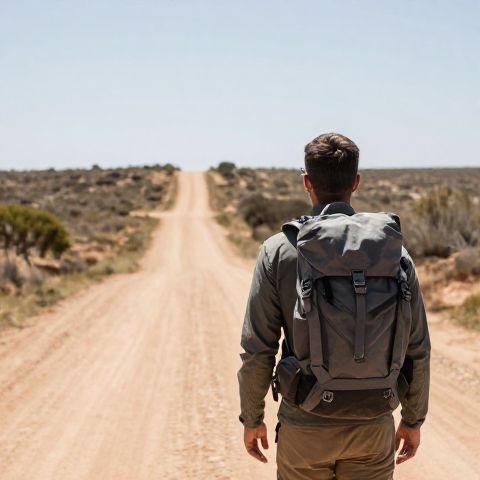
Some roads in South America exist more as aspirations than actual thoroughfares. The kind that appear on maps as confident red lines but reveal themselves as treacherous ribbons of gravel, mud, and hope clinging to impossible mountainsides. I learned this lesson in the most visceral way possible on a remote stretch of highway in the Bolivian Andes, where what began as an adventure nearly became my final story.
The Road to Nowhere
The decision seemed logical at the time. Rather than take the longer, well-traveled route through the valley, our small group of expat friends decided to cut across the mountains on what locals called "the direct road." The GPS showed it would save us six hours of driving, and we were eager to reach our destination before nightfall.
The warning signs were subtle at first. The hotel clerk's raised eyebrows when we mentioned our route. The mechanic who serviced our rented 4WD suggested we carry extra water "just in case." The last gas station attendant asked twice if we were sure about our direction. We dismissed these concerns with the casual confidence that often precedes disaster.
Within two hours of leaving the paved road, we understood why locals had seemed concerned. The path—calling it a road felt generous—carved a narrow ledge along precipitous cliffs. One side pressed against raw rock face, the other dropped into an abyss so deep that stones thrown over the edge disappeared without sound. No guardrails. No cell phone coverage. No other vehicles in sight.
When Everything Went Wrong
The crisis arrived without drama. A dull thud from beneath the vehicle, followed by the sickening scrape of metal on stone. Our driver pulled to the widest spot he could find—perhaps ten feet between cliff face and eternity—and the diagnosis was immediate and devastating. The oil pan had been punctured by a jagged rock, and our engine was bleeding to death.
Standing on that narrow ledge, watching our oil create a dark pool in the dirt, the full weight of our situation settled over us like a cold fog. We were at least 15,000 feet above sea level, with temperatures already dropping as afternoon shadows lengthened. The nearest town was sixty kilometers behind us, the next settlement of unknown distance ahead. Our cell phones showed no signal, and we had perhaps four hours of daylight remaining.
Fear arrives differently at altitude. The thin air makes your heart race even while standing still, and every breath feels insufficient. Combined with the growing realization that we might not survive the night, the physiological stress became overwhelming. One of my companions began hyperventilating. Another sat down heavily on a rock and stared at the darkening sky with the expression of someone calculating very poor odds.
Survival Mode
Training kicks in when panic threatens to take over, even training you didn't know you possessed. We inventoried our resources with methodical desperation: two bottles of water, some trail mix, a single blanket, and winter jackets that suddenly seemed pathetically thin. The vehicle, while immobile, could provide shelter from the wind that had begun to howl across the exposed mountainside.
The most crucial decision was whether to stay with the vehicle or attempt to walk back toward the last settlement. The approaching darkness made walking treacherous, but staying meant gambling that someone—anyone—would pass this desolate route before we succumbed to exposure or altitude sickness.
We chose to stay, huddling in the disabled vehicle as temperatures plummeted. The night stretched endlessly, filled with the sound of wind and our own labored breathing. We took turns staying awake, partly to monitor each other for signs of altitude sickness, partly because sleep felt too much like giving up.
Dawn brought both relief and growing desperation. We had survived the night, but our water was nearly gone, and the harsh mountain sun would soon create new challenges. That's when we saw the dust cloud in the distance, growing larger against the morning sky.
The Rescue
The vehicle that appeared seemed almost mythical—an ancient pickup truck driven by an indigenous Quechua man who regarded our predicament with the calm expression of someone who had seen foreign travelers in trouble before. He spoke little Spanish and we spoke no Quechua, but the universal language of automotive disaster required no translation.
From the back of his truck, he produced materials that seemed impossibly suited to our crisis: metal patches, epoxy, and tools worn smooth by decades of use. His repair technique would never appear in any manual, involving heated tree sap, hammered metal, and what appeared to be folk engineering passed down through generations of mountain mechanics.
Two hours later, our vehicle ran again. Not well, and certainly not reliably, but enough to limp toward civilization. Our rescuer refused payment beyond what we had for gas, waving away our attempts to express adequate gratitude. He pointed down the mountain road and spoke a single word in Spanish that we all understood: "Cuidado." Be careful.
The journey back to safety took six more hours of nervous driving, stopping frequently to check the improvised repair. But we made it, arriving in the valley town as local mechanics were closing their shops, our strange story adding to their collection of tales about foolish foreigners and the roads that nearly claimed them.
Lessons from the Edge
That night on the mountain taught me more about South American travel than years of guidebooks and blog posts ever could. The most important lesson: local advice isn't cautious paranoia—it's accumulated wisdom about landscapes that don't forgive mistakes. When multiple people express concern about your travel plans, that concern deserves serious consideration.
Practically speaking, remote travel in South America requires preparation that goes beyond typical tourist needs. Quality maps that show road conditions, not just routes. Emergency supplies adequate for extended delays. Most importantly, communication plans that account for the reality that cell coverage simply doesn't exist in vast areas of the continent.
The experience fundamentally changed how I approach adventure and risk. There's a fine line between accepting calculated risks for the sake of authentic experience and reckless endangerment disguised as bold travel. Learning to recognize that line—and respect it—might be the most valuable skill any expat can develop.
Perhaps most importantly, the incident revealed the profound generosity that exists in remote communities throughout South America. Our rescuer had no obligation to help strangers whose poor decisions had created their own crisis. Yet he stopped, devoted hours to repairing our vehicle, and asked for nothing in return except that we be more careful. That kindness, appearing when we needed it most, remains the most powerful memory from our brush with disaster.
The direct road saved us no time in the end. But it taught us something more valuable: that the longest way around is sometimes the shortest way home, and that survival often depends less on preparation than on the unexpected kindness of strangers who understand that we all share the same dangerous, beautiful roads through life.