Near Death on a Remote South American Road: A Journey I Almost Didn't Survive
Near Death on a Remote South American Road: A Journey I Almost Didn't Survive
The Road That Shouldn't Have Been Ordinary
It was supposed to be an unremarkable trip. A few hours in the car, a familiar route stitched together from secondhand directions and a half-charged phone. I had made similar drives before, or told myself I had, and that borrowed confidence rode with me as I pulled away from town that morning. The sky was clear. The road, at least at the start, was paved and predictable.
Looking back, there were signs I chose not to weigh properly. A local shopkeeper had mentioned, almost in passing, that the pass ahead could be tricky this time of year. A fellow expat had shrugged when I mentioned the route, saying only, “Just take it slow.” I nodded, filed it away as caution rather than warning, and kept driving. Naivety, I've come to understand, rarely announces itself. It simply rides quietly in the passenger seat until it's needed.
Into Isolation
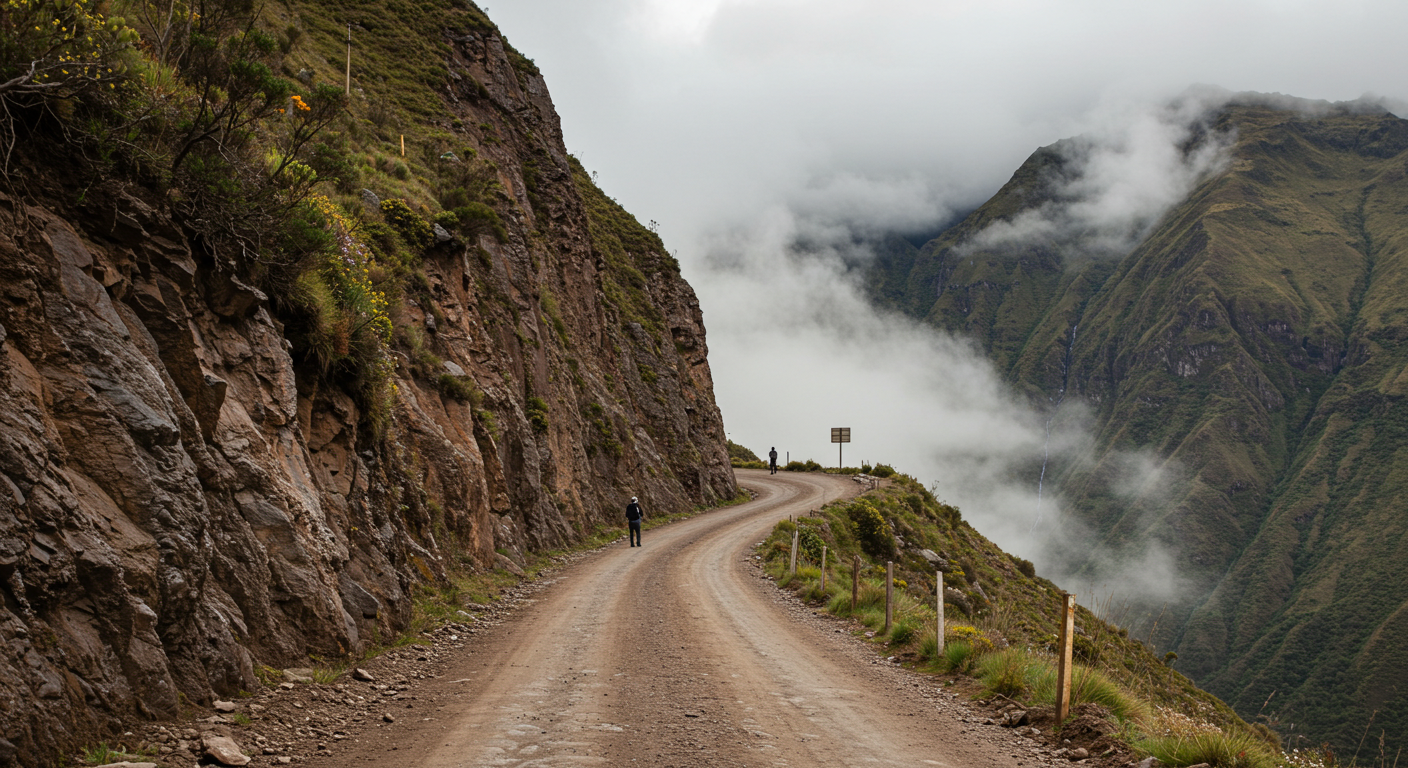
The transformation was gradual, then sudden. Pavement gave way to gravel, then to a narrower track carved into the mountainside. Switchbacks multiplied, each turn tighter than the last, with a wall of rock rising on one side and an open drop on the other. Guardrails, where they existed at all, were rusted remnants rather than real protection.
My phone lost signal somewhere after the third switchback, though I didn't notice until I reached for it out of habit. Traffic thinned to nothing. No other headlights, no taillights ahead, just the occasional shrine or faded marker suggesting others had passed this way before, and not always successfully. The air grew cooler and thinner. Clouds drifted low across the road itself, reducing visibility to a few car lengths at a time.
I remember the sounds most clearly now: the crunch of loose stone under tires, the low hum of the engine straining uphill, my own breathing, oddly loud in the quiet cabin. Every so often the road narrowed enough that I instinctively slowed, gripping the wheel tighter, aware in some primal way that a mistake here would not be a minor one.
The Moment Everything Changed
It happened without warning, the way these things almost always do. Rounding a blind curve, I saw it too late: a section of the road partially collapsed, rock and loose earth spilled across half the lane from recent rain. My instinct was to brake, but the wheels found no purchase on the wet gravel. The car slid sideways, and for a moment that felt suspended outside of normal time, I watched the edge of the road, and the drop beyond it, drift closer through the windshield.
Everything narrowed to sensation: the scrape of metal against rock, the jolt as the front wheel caught something solid, my hands, white-knuckled, correcting instinctively though I couldn't have said how. The car came to a stop at an angle, half on the remaining road, half on the collapsed shoulder, engine stalled, dust settling slowly in the sudden silence.
My heart was pounding so hard I could feel it in my ears. I sat frozen for several seconds, unsure if I was fully stopped or still sliding, before the stillness convinced me otherwise.
Aftermath in the Middle of Nowhere
The first task was simply assessing what had happened. I checked myself for injury before I checked the car, hands trembling as I ran through a mental inventory: head, neck, limbs, all seemingly intact, though shock has a way of masking pain until later. The car had fared worse. The front bumper was crumpled against a rock outcrop, and one tire had lost most of its air.
There was no cell signal, no passing traffic, and no clear sense of how far I was from the nearest town. I remember the particular helplessness of standing beside a damaged vehicle on a mountain road with no one to call and no way to signal for help. It was the kind of isolation that reframes everything you thought you understood about self-sufficiency.
Eventually, and to my enormous relief, a truck appeared, driven by two local men transporting goods along the same route. They spoke little English, and my Spanish was functional at best, but between gestures, patience, and a shared understanding of the situation, they helped me maneuver the car back onto stable ground and pointed me toward the nearest village with a mechanic. Whether it was luck, timing, or simple rural hospitality, their appearance likely changed the outcome of that day.
What the Road Left Behind
In the days that followed, the physical effects were surprisingly minor: some bruising, stiffness, the lingering ache of adrenaline finally leaving the body. The emotional aftermath took longer to settle. For weeks, I found myself replaying the slide toward the road's edge, waking with a jolt at the memory of that suspended, silent moment.
The experience reshaped how I think about travel, and about life as an expat more broadly. Confidence, I realized, had quietly slipped into complacency, and remoteness, the very quality that had made this place appealing, was also what made a single mistake so dangerous. I became more deliberate afterward: checking road conditions, respecting local warnings even when delivered casually, understanding that isolation cuts both ways, offering freedom and exposing vulnerability in equal measure.
More than anything, the road left me with a clearer sense of resilience, not the dramatic kind, but the quiet, practical kind that comes from navigating uncertainty in unfamiliar terrain, literally and otherwise. Living abroad means accepting a level of risk that home never quite demands, and that day taught me, more viscerally than any warning ever could, what that risk actually means.