Near Death on a Remote South American Road
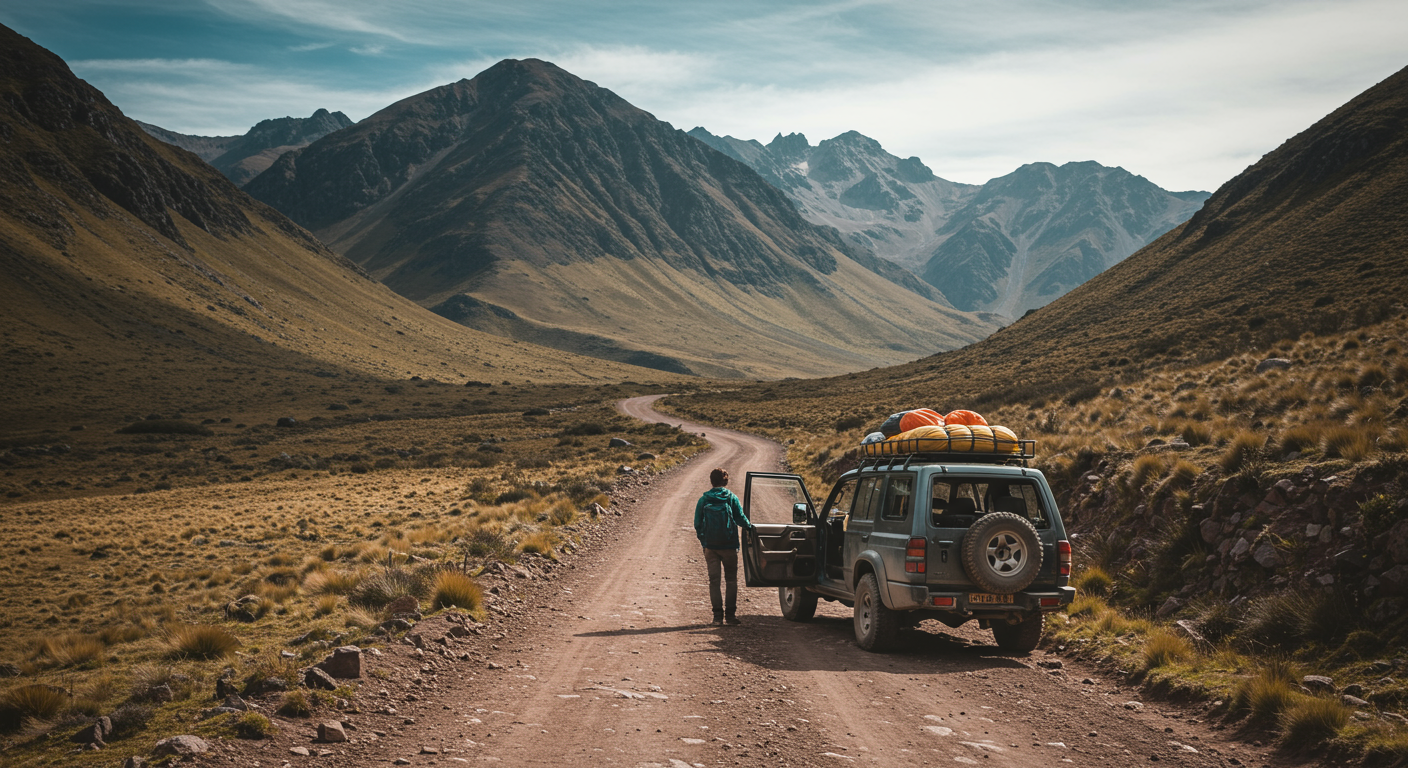
The gravel crunched beneath our tires as we climbed higher into the Andes, each switchback taking us further from civilization and deeper into a landscape that seemed to belong to another world. What started as an adventure would become the closest I've ever come to death—on a road where one wrong move means a 2,000-foot drop into oblivion.
The Road Less Traveled
The Carretera de la Muerte—Death Road—earned its name honestly. Carved into the mountainside decades ago, this narrow dirt track connects the Bolivian highlands to the Amazon basin below, winding through cloud forest and sheer cliff faces where guardrails are a luxury few sections can claim. At barely ten feet wide in most places, it's a single lane where downhill traffic yields to uphill vehicles, assuming anyone sees you coming around those blind curves.
I was traveling with two other expats, all of us seasoned enough in South American travel to think we knew what we were doing. We'd rented a sturdy 4x4 in La Paz, loaded it with supplies, and set out for a remote eco-lodge deep in the Yungas region. The GPS showed a blue line snaking through green terrain—it couldn't capture the reality of what lay ahead.
The first hour felt like adventure tourism. We marveled at the dramatic scenery, snapped photos of waterfalls cascading across the road, and laughed nervously at the occasional wooden cross marking where someone's luck had run out. The isolation was complete—no cell service, no other vehicles, just us and the mountain.
When Everything Went Wrong
It happened at kilometer 47, according to the faded marker we'd passed minutes before. A section of road, weakened by recent rains, simply gave way beneath our right rear tire. One moment we were navigating a particularly narrow stretch, the next we were sliding sideways toward the edge, our vehicle tilting at an impossible angle.
Time slowed to a crawl. I remember the sound of rocks tumbling into the abyss, the creak of metal as our vehicle teetered on the brink, and the absolute silence that followed when our engine died. We sat frozen, afraid that any movement might tip us over the edge. Through the passenger window, I could see nothing but empty air and the valley floor impossibly far below.
The realization hit like ice water: we were balanced on the precipice of death, and any rescue would have to come from our own desperate ingenuity. The nearest town was hours away, assuming we could even get there. No one knew exactly where we were, and our last communication with the outside world had been eight hours ago.
Survival Mode
Moving with surgical precision, we managed to extract ourselves from the vehicle one by one, the driver's side now our only exit to solid ground. Every shift in weight sent more rocks tumbling, a constant reminder that our lifeline was measured in inches and degrees.
With the vehicle empty, we faced our next crisis: it contained all our water, most of our food, and our emergency supplies. The altitude—nearly 12,000 feet—made every breath a conscious effort, and the temperature was dropping as clouds rolled in. We had perhaps two hours of daylight left.
My medical training kicked in as I assessed our situation. We had minor cuts and bruises, but hypothermia and dehydration posed greater immediate threats than our injuries. We needed shelter, warmth, and a plan. The psychological impact was just as challenging—the constant awareness that death had missed us by mere feet left us all shaken and struggling to think clearly.
Hope and Help
Salvation came from an unexpected source. As we huddled in the limited shelter of a rock outcropping, the distant sound of an engine echoed off the canyon walls. A local transport truck, one of the few vehicles brave enough to navigate this route regularly, rounded the bend just as full darkness fell.
The driver, a weathered Bolivian named Carlos who'd been running cargo on this road for twenty years, took our situation in stride with the calm competence of someone who'd seen it all before. He carried chains, ropes, and tools that suggested vehicle recovery was just another part of his job description.
Working by headlamp and with remarkable skill, Carlos managed to winch our vehicle back from the brink. The damage was extensive—crumpled bodywork, a destroyed tire, and a chassis bent beyond safe driving—but we were alive, and we had our supplies back. He offered to take us to the nearest village, a forty-minute drive further down the mountain.
That night, in a small guesthouse where the proprietor asked no questions about three shaken foreigners arriving after midnight, we learned that Carlos made this rescue run several times a year. "The mountain takes what it wants," he told us over hot coffee, "but sometimes it gives back a second chance."
Lessons from the Edge
The experience fundamentally changed how I approach travel, risk, and life itself. The casual confidence I'd developed during years of South American adventures revealed itself as dangerous overconfidence. Remote travel demands not just preparation, but respect for forces beyond our control and consequences beyond our imagination.
I learned that survival often depends less on what you know and more on accepting what you don't. Our rescue came not from our careful planning or travel experience, but from the knowledge and generosity of someone who understood this landscape in ways we never could.
For fellow expats drawn to South America's remote corners, my advice is hard-earned: tell people exactly where you're going and when you expect to arrive. Carry communication equipment that works beyond cell towers—satellite communicators have saved countless lives in situations like ours. Most importantly, build relationships with locals who know the terrain. Their knowledge isn't just helpful—it can mean the difference between adventure and tragedy.
The road that nearly killed us is still there, still claiming vehicles and occasionally lives. But it also taught me that survival isn't just about avoiding death—it's about understanding how precious and precarious our adventures really are. Every journey since then has carried the weight of that lesson, and perhaps that's made me not just a more careful traveler, but a more grateful one.
The locals have a saying in that region: "The mountain teaches, but only to those who survive the lesson." Six years later, I'm still learning from what it taught me in those terrifying hours balanced between life and death, 12,000 feet above the world.