Near Death on a Remote South American Road
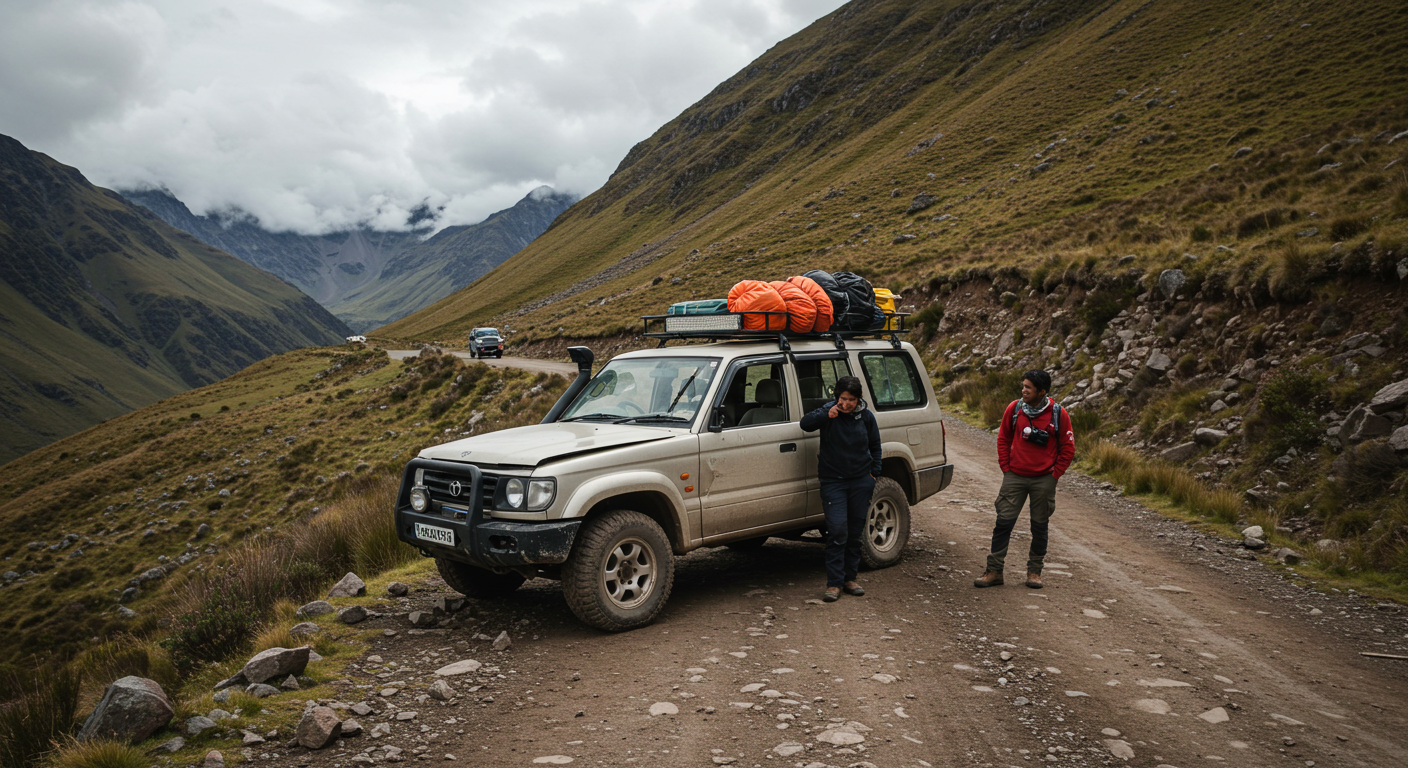
I did not start that day expecting it to divide my life into a before and after. By then, I had been living abroad long enough to feel comfortable with long distances, unpredictable roads, and the kind of loose travel plans that start to feel normal after enough time in South America. The drive was supposed to be simple: a necessary stretch between one small town and the next, long but manageable, the kind of trip that feels more adventurous than risky when you first set out.
At the beginning, I had that dangerous kind of confidence that does not feel like arrogance in the moment. I had done remote drives before. I knew how to read rough roads, carry water, leave early, and trust that eventually another vehicle would appear if something went wrong. The landscape around me was immense and beautiful, and for the first part of the trip, the isolation felt like a privilege. It was the kind of scenery that made me feel lucky to be living abroad at all.
Why I Was on That Road in the First Place
I was traveling between rural communities on a road that locals had described as passable, if slow. In practice, that usually means something very different from what it suggests on a map. Distances stretch. Weather shifts without warning. “A few hours” can become most of a day. Even so, nothing about the plan felt reckless at the time. I had a destination, enough fuel to reach it, and the assumption that careful driving would be enough.
What I remember most clearly from the start of the trip is how ordinary I felt. I was not chasing danger or trying to prove anything. I was simply moving through the practical realities of life abroad, where errands and transitions can take you across roads that would be considered extreme elsewhere. That sense of normality is part of what made what happened next so unsettling. Disaster did not arrive with a dramatic warning. It entered quietly, on what had seemed like a regular day.
The Isolation Hit Me Before the Danger Did
The road narrowed as I went farther out. Pavement gave way to gravel, and gravel gave way to a rough surface cut into the landscape like an afterthought. There were long stretches without houses, fences, or any sign of life beyond scrub, rock, and the occasional bird lifting suddenly from the roadside. The sky felt too large. The silence inside the car grew heavier with every kilometer.
There were clues, though I only recognized them later. Small washouts at the shoulder. Loose stones gathering in the bends. Ruts deep enough to tug at the steering wheel if I relaxed for even a second. At one point, I realized I had not seen another vehicle for nearly an hour. My phone signal had disappeared well before that. I remember looking at the fuel gauge, then at the empty horizon, and feeling the first thin edge of unease.
Remote places have a way of changing scale. A minor problem becomes a serious one simply because no one is nearby. A simple delay carries its own threat when there is no reception, no shade, no mechanic, and no reliable sense of when help might pass. Even before the incident, the road had started to feel less like an adventure and more like a test I had underestimated.
The Moment Everything Went Wrong
It happened on a bend that looked no different from the dozen before it. The outer edge of the road sloped toward a drop, not a cliff exactly, but steep enough to make recovery difficult if a vehicle went over. I eased into the turn slowly, but the ground beneath the tires was looser than it appeared. One side of the car slipped first, not dramatically, just enough to break traction and shift the weight in the wrong direction.
That was the moment when routine vanished. The steering wheel went light in my hands. Gravel hissed under the tires. The car began to slide sideways toward the edge, slow enough for me to understand exactly what was happening and fast enough that understanding offered no comfort. I remember the horrible clarity of that second: the drop to my right, the uselessness of braking too hard, the awareness that one bad correction could roll the car.
Time did what people always say it does in moments like that. It stretched. I was aware of everything at once and nothing in order. My hands. My breathing. The angle of the hood. The instinct to wrench the wheel back. The equally strong instinct not to. There is a very specific terror in realizing that survival may depend on staying calm at the exact moment your body is least willing to cooperate.
What Panic Feels Like in the Middle of Nowhere
When the car finally stopped, it did not feel like safety. It felt like a pause. The vehicle had come to rest at an angle, one side disturbingly close to the eroded edge of the road. I froze with both hands still locked on the wheel. My heart was pounding so hard I could feel it in my throat. I remember taking one breath, then another, both shallow and useless.
Panic is physical before it is emotional. My mouth went dry. My hands shook. My thoughts became both frantic and strangely practical. Don’t move too fast. Don’t shift the weight. Check the ground. Check the tires. Check whether the car is still sliding. Every decision felt dangerously important because there was no margin for error and no obvious backup plan. If I made the situation worse, there was no guarantee anyone would find me soon.
The isolation amplified everything. In a city, an accident means witnesses, traffic, noise, options. Out there, it meant exposure. It meant the possibility that this could become not just a crash but a long wait in a hostile place. Fear expanded to fill the silence. I was not only afraid of what had almost happened. I was afraid of what could still happen next.
How I Got Out Alive
I forced myself to slow down and assess the situation step by step. First, I turned off the engine and sat still long enough to feel whether the car was continuing to shift. It was not, at least not noticeably. Then I carefully opened the door on the uphill side and climbed out as gently as I could, placing each foot deliberately. The sight from outside was worse than I had imagined. One rear tire was close enough to the crumbling edge that I could see broken dirt beneath it.
I knew I could not simply get back in and try to power out with instinct and hope. The shoulder was too unstable. The wrong movement could have sent the whole vehicle over. I gathered loose stones from the road and wedged them as best I could behind the tires, more for reassurance than certainty. Then I stood there in the heat, staring down an empty road, waiting for the impossible thing I suddenly needed: another person.
Luck arrived in the form of a truck so far in the distance that at first I thought I had imagined it. I waved both arms until it slowed. The driver and his passenger took one look at the position of my car and immediately understood how serious it was. They did not dramatize it. They did not lecture me. They simply helped. With a tow strap, careful guidance, and the kind of practical calm that comes from experience, they pulled the car back onto firmer ground.
I still think about how thin that line was. A little more speed, a little less traction, a little longer before that truck came along, and the story might have ended differently. My survival was not a triumph of skill alone. It involved caution, yes, but also timing, chance, and the kindness of strangers who happened to appear on a nearly empty road.
The Aftermath Stayed With Me Longer Than the Incident
Once the car was safe, my body reacted as if it had been waiting for permission. I felt weak, almost hollow. My legs shook. My concentration came and went in strange waves. The men who had helped me asked if I was all right, and I gave the automatic answer people give when they are not ready to describe what just passed through them. I thanked them more than once, probably more than necessary, because gratitude was easier to reach than fear.
I kept driving that day, but I was no longer the same driver. Every soft patch of road felt like a threat. Every bend seemed sharper. The confidence I had started with was gone, replaced by a heightened awareness of how quickly ordinary movement can turn into irreversible danger. I reached my destination, but the incident stayed active in my mind long after the engine stopped.
In the days that followed, I replayed the slide over and over. I thought about what I should have noticed earlier, what I might have done differently, and how close I may have come to disappearing into one of those blank spaces that look so beautiful from a distance. There were no major physical injuries, which almost made the emotional residue harder to explain. On paper, I was fine. Inside, I was still catching up to what had happened.
What That Road Taught Me About Living Abroad
Living abroad had given me many good habits: flexibility, resilience, and the ability to adapt when plans fell apart. But that road taught me the limits of adaptation when it begins to drift into overconfidence. Experience can help, but experience can also make risk feel familiar enough that you stop treating it with the respect it deserves.
I did not come away from that day with some grand conclusion about South America as a whole. The lesson was more personal than that. Remote roads anywhere demand humility. Beautiful landscapes do not care whether you are capable, optimistic, or well-intentioned. Preparation matters. Local advice matters. Turning back matters. So does admitting that being used to uncertainty is not the same as being protected from it.
That experience changed the way I travel, but more than that, it changed the way I think about control. Expat life can create the illusion that competence is mostly about confidence and improvisation. Sometimes it is. But sometimes real competence is quieter. It is caution. It is restraint. It is understanding that survival may depend less on boldness than on respect for what you cannot command.
I still remember that road in sensory fragments: the scrape of gravel, the angle of the car, the emptiness of the horizon, the truck appearing like an answer I had no right to expect. It remains one of the clearest reminders I have ever had that life abroad is not only about freedom and discovery. It is also about vulnerability. And sometimes the moments that shape you most are the ones you are lucky enough to leave behind.