Near Death on a Remote South American Road
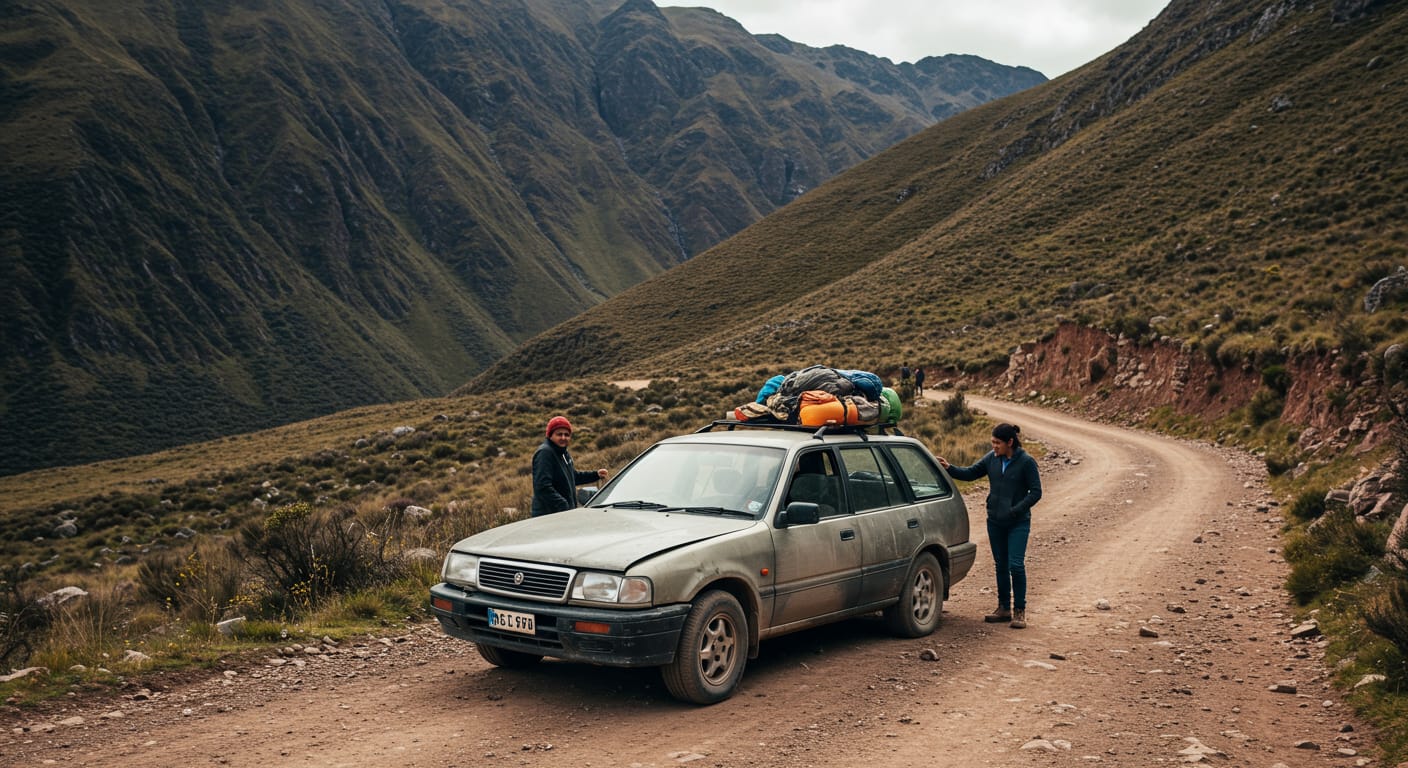
I did not start that day thinking I would come close to dying. I started it the way many bad stories begin: with a plan that seemed reasonable enough in the morning.
I was traveling a remote road in South America because it looked like the most direct way to reach my destination before nightfall. On a map, it was just a thin line cutting through a huge open space. In my head, that thin line still counted as a road, and a road implied a certain minimum level of safety. I told myself I had enough fuel, enough daylight, and enough experience to handle it. That combination of confidence and impatience can be dangerous.
The landscape was beautiful in a harsh, stripped-down way. There were long stretches of pale dirt and rock, distant ridgelines fading into haze, and a sky so wide it made me feel both free and very small. The wind pushed dust in low sheets across the road. Every now and then I passed a patch of scrub, a washout, or a section where the track looked less built than simply worn into the earth by years of tires. It felt remote, but not yet threatening. At first, the isolation even felt like part of the adventure.
Why I Was on That Road in the First Place
I was trying to make up time. That was the simple truth. I had already spent longer on the trip than expected, and I did what travelers often do when they are tired and eager to arrive: I started treating uncertainty like a manageable inconvenience. I assumed the route would be rough but passable. I assumed that if anything went wrong, someone would eventually come along. I assumed I was making a bold choice, not a reckless one.
There is also a strange optimism that comes with movement. As long as the vehicle keeps going, you keep believing the decision was correct. Every mile seems to confirm your judgment. You stop asking whether you should have turned back an hour ago because now you are already there, and continuing feels more logical than reversing course.
By then I was tired enough to ignore the small voice telling me to slow down. I noticed the road narrowing, the loose surface, the uneven edges, and the absence of other vehicles, but I translated all of it into inconvenience instead of risk. I thought I was adapting. Really, I was normalizing warning signs.
The Long Stretch Where Everything Started to Feel Wrong
The road became progressively worse in ways that were easy to dismiss one at a time. The surface shifted from rough to unstable. Ruts deepened. Sections of gravel gave way to soft dirt that pulled at the tires. In a few places, the track tilted just enough toward the edge to make me grip the wheel harder. The weather was not dramatic, but it did not need to be. A little wind, a little dust, and inconsistent visibility were enough to turn every correction into a guess.
I remember the silence almost as much as I remember the road. No engines in the distance. No houses. No movement except dust and the occasional bird. The remoteness stopped feeling cinematic and started feeling absolute. If I had broken down there, I realized, I could be waiting a very long time before anyone found me.
The first real warning came as a physical sensation. The tires lost traction for a second on a patch of loose material, and the vehicle gave that unsettling sideways drift that feels wrong before your brain fully names it. I corrected, overcorrected slightly, and got it back. My pulse jumped. I told myself to slow down.
Then came another warning: the road ahead was harder to read than the road behind me. Small dips appeared too late. The edges blurred into the surrounding ground. What looked firm could suddenly crumble under the weight of the vehicle. I began noticing how little margin there was between staying on the track and sliding off it.
Even then, I kept going. That is the part I replayed later. Not because I enjoy blaming myself, but because danger rarely arrives as a single dramatic moment. More often, it comes through a chain of decisions that seem tolerable right up until they are not.
The Moment It Turned Into a Near-Death Experience
The critical moment happened fast enough that I still remember it in fragments.
I hit a section of road that looked solid from a distance but was not. One side gave way just enough to pull the vehicle off line. I turned into it instinctively, trying to bring it back, but the tires found loose ground instead of grip. The steering went light and then violently heavy. I felt the whole vehicle lurch at an angle that made my stomach drop before anything else did.
There is a split second in a crisis when the mind stops narrating and the body takes over. I remember the sound first: gravel and metal, the sickening scrape underneath, loose objects slamming around inside. Then I remember the force of being thrown against the seat belt, the shock of realizing I no longer fully controlled where I was going, and the immediate animal fear that this was how people die in places no one can reach quickly.
The vehicle slid and tipped far enough that I was sure it was going over. Time stretched. I could see nothing clearly except flashes of ground, sky, and dust. My hands were still on the wheel, but by then that felt almost ceremonial. I was bracing, not driving. I remember shouting, though I could not later remember the words.
When the motion finally stopped, the silence was worse than the noise had been. For a second I did not move because I was waiting for another roll, another shift, some final drop. My chest hurt from the belt. My hands were shaking so badly that I could not tell at first whether I was injured or simply flooded with adrenaline.
What I Did to Stay Alive
My first task was simple: figure out whether I was alive in a way that still allowed action. I checked my arms, my legs, my breathing. Everything hurt in the blunt, confusing way it does right after impact, but nothing seemed catastrophically broken. I could think. I could move. That was enough to begin.
I forced myself not to rush the next steps. Panic kept trying to take over with useless instructions: get out now, run, do something immediately. Practical thinking was quieter. It said: check whether the vehicle is stable, look for fuel, listen, breathe, then move carefully.
I unlatched the belt slowly and braced myself so I would not fall awkwardly. Getting out was harder than I expected because nothing was level anymore. The angle of the vehicle had changed my sense of balance. Dust had gotten everywhere. The air smelled hot and mechanical. Once outside, I stepped back and saw how close I had come to something much worse. The vehicle was partly off the road, tilted in a way that suggested one more bad movement could have changed the ending completely.
I tried to assess my options. There was no immediate help, no obvious sign of human presence, and no guarantee that anyone would pass soon. I checked for a phone signal more from instinct than hope. Nothing. I looked up and down the road and saw only distance.
So I did what people do when the world suddenly shrinks to essentials: I prioritized survival over dignity. I took stock of my water, looked for anything useful, and tried to make myself visible from the road. My thoughts came in waves. One minute I was methodical. The next I was fighting off the urge to imagine every possible bad outcome. I kept returning to tasks because tasks were the only thing keeping fear from becoming paralysis.
How Remote It Really Felt
That stretch of time afterward is hard to measure accurately. Isolation distorts the clock. Minutes feel long enough to contain entire arguments with yourself. You listen for engines that do not come. You scan the horizon until your eyes invent movement. You become aware of how dependent normal life is on invisible systems: roads, coverage, traffic, rescue, other people, simple chance.
What frightened me most was not only the accident itself but the realization of how alone I was afterward. In a city, or even on a busy highway, the same event might have brought immediate help, witnesses, direction, reassurance. Out there, none of those things existed. The gap between “something went wrong” and “someone can help” felt enormous.
I also remember how quickly confidence evaporated. Earlier that day, I had felt capable, independent, and prepared enough. Standing there in the dust beside a damaged vehicle, I felt fragile in a way that was almost humiliating. The landscape had not changed. I had. It was no longer scenery. It was a reminder that distance and silence are not romantic when you need assistance.
That psychological shift was one of the most powerful parts of the experience. The danger had already happened, but fear continued because uncertainty continued. Was I safe where I was? Should I stay with the vehicle? Would the weather change? Was someone likely to come before dark? Every unanswered question seemed larger because there was nobody nearby to answer it with me.
The People, Luck, or Timing That Changed the Outcome
What ultimately changed the story was a combination of luck and timing. After what felt far longer than it may actually have been, I heard the distant sound of an engine. At first I did not trust it. I had imagined rescue more than once already. But then the sound grew louder, and eventually a vehicle appeared on the road like something unreal.
I have never been so relieved to see another human being.
The people who stopped did not need a long explanation. One look at the scene was enough. Their presence changed everything instantly. The practical situation improved, of course, but so did the emotional one. Terror gave way to fragile hope the moment I was no longer facing the problem alone.
What I remember most is not dramatic dialogue or heroic speeches. It is tone. Calm voices. The feeling of being anchored by other people’s competence. The basic miracle of being seen. When you have just learned how thin your margin of safety really is, ordinary human help feels extraordinary.
Whether they had arrived five minutes earlier or much later, the emotional meaning would have been different. As it happened, they arrived at the precise moment when I was starting to understand how vulnerable I truly was. Their timing did not erase what had happened, but it changed the ending from a private emergency into a survivable one.
What Stayed With Me Afterward
In the immediate aftermath, I cycled through shock, gratitude, embarrassment, and disbelief. Shock because the body does not catch up emotionally right away. Gratitude because I was still there to feel anything at all. Embarrassment because many near-disasters have a human component, and I knew my own judgment had played a role. Disbelief because just hours earlier, I had considered the road a manageable inconvenience.
The experience stayed with me physically for a while in the form of soreness and fatigue, but the deeper impact was psychological. It changed the way I think about remoteness. I had once treated isolation as a travel aesthetic, something that made a journey feel authentic or adventurous. After that day, I understood isolation more soberly. It means fewer margins, fewer witnesses, fewer second chances.
I also became more honest with myself about the stories we tell before trouble starts. We say we are being flexible. We say we are experienced. We say it will probably be fine. Sometimes those things are true. Sometimes they are just the language we use to make a bad decision feel adventurous.
I do not think the lesson is to fear every remote place or avoid every difficult road. But I do think the experience stripped away a layer of arrogance I did not know I was carrying. I came away with more respect for terrain, distance, weather, fatigue, and the simple fact that once you are far enough out, your mistakes become much more expensive.
What I’d Tell Anyone Traveling Remote Roads Now
If I were giving advice now, it would be painfully unglamorous. Prepare more than feels necessary. Leave earlier than you think you need to. Do not assume a road on a map is a road in the way you mean it. Do not confuse passable with safe. If something starts feeling wrong, treat that feeling as information, not weakness.
I would also say this: isolation is its own hazard. It magnifies everything. A minor mechanical problem becomes serious. A navigational mistake becomes costly. A small accident becomes a crisis. If you are going to travel remote roads, respect the fact that help may not be close, fast, or guaranteed.
And perhaps most of all, do not let the desire to arrive override the responsibility to reassess. Pride, impatience, and optimism can sound very reasonable inside your own head. They certainly did inside mine.
I survived that day, but survival is a poor substitute for better judgment. The memory that remains strongest is not the impact itself. It is the moment before, when I still had choices and did not fully understand what the road was asking of me. Now I do.