Near Death on a Remote South American Road
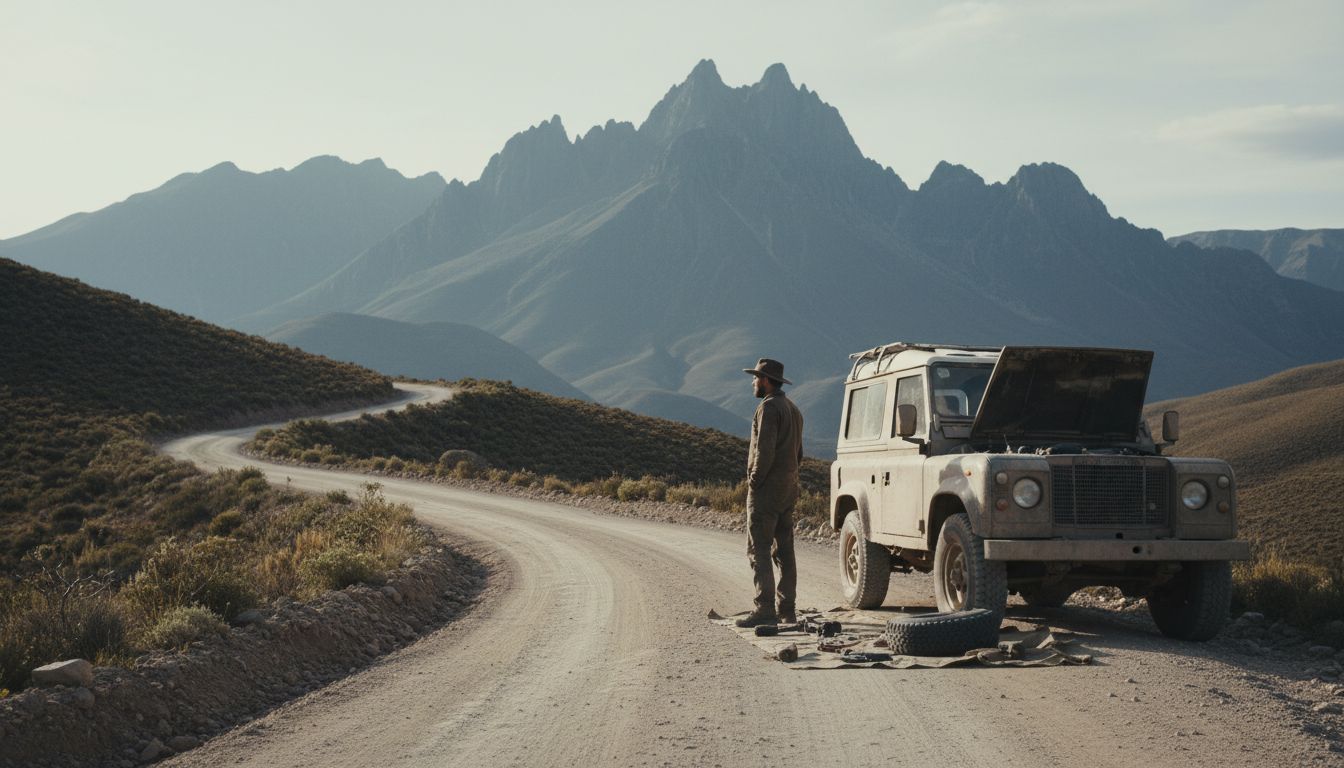
The road looked harmless at first.
It was one of those long, quiet stretches that seem to erase the rest of the world. No towns. No gas stations. No houses close enough to matter. Just a narrow ribbon of road cutting through a harsh, open landscape that felt both beautiful and indifferent. The sky was huge, the wind steady, and the kind of silence you only notice in remote places hung over everything.
At the start of the drive, I felt more alert than afraid. I had enough confidence to believe careful driving and common sense would be enough. The road was rough in places, but still passable. The weather shifted, but not dramatically. It felt like the kind of trip that demanded respect, not alarm.
That illusion lasted until it didn’t.
The Road That Felt Empty Until It Didn’t
What I remember most clearly is the isolation. On a city road, danger comes with witnesses, traffic, noise, and at least the possibility that help is nearby. Out there, danger came with distance. If something went wrong, there was no quick fix waiting around the bend. No mechanic. No ambulance in five minutes. No easy way to explain where I was, even if I had managed to call someone.
The landscape had a way of shrinking confidence without announcing it. The farther I went, the more every decision seemed to matter. Was the road surface stable ahead? Was that darker patch gravel, mud, or shadow? Was the shoulder solid, or the kind that gives way the moment a tire touches it?
Remote roads can look simple right up until they ask too much of you.
Why I Was Out There in the First Place
I was out there for the same reason many expats and long-term travelers end up on roads like that: a mix of practicality and misplaced confidence. I had somewhere to get to, a route that seemed reasonable on paper, and just enough experience to believe I understood what the day required.
Part of expat life is learning to normalize what would once have felt adventurous. Distances get reframed. Conditions that would send you home become part of the plan. You start to think, I’ve handled rough roads before. I know how to pace myself. I know what to watch for.
Sometimes that confidence is earned. Sometimes it is only comfort wearing the mask of competence.
I did not feel reckless when I started. That is worth saying clearly. I felt prepared enough. That turned out to be the problem.
The Moment Everything Changed
The change came fast.
One moment I was driving with the low, steady concentration remote roads demand. The next, the surface under me shifted in a way I hadn’t expected. It may have been loose gravel, a washed-out section, or the edge of the road offering less support than it seemed to from a distance. What matters is that the vehicle stopped feeling connected to the road and started feeling like something separate from me, moving according to its own logic.
The sound changed first. Tires that had been humming began scraping and skidding with a harder, uglier noise. Then came the sensation every driver dreads: that brief, sickening loss of certainty when steering no longer produces the response you expect.
Time did what people always say it does in moments like that. It stretched.
I remember gripping the wheel too hard. I remember seeing the edge of the road far too clearly. I remember a rush of thoughts that were not really thoughts at all, just fragments: not here, not like this, hold it, don’t overcorrect, please stop moving, please.
The body reacts before language catches up. Adrenaline arrived instantly. Every sound got louder. Every movement felt both too slow and too fast.
How Close It Really Was
I hesitate to dramatize it beyond what my memory justifies, but I also can’t honestly call it anything less than a near-death moment from my perspective.
What made it terrifying was not only the loss of control. It was the setting. On a safer, busier road, the same incident might have ended as an expensive mistake and an unpleasant story. On that road, in that isolation, every consequence felt multiplied.
If the vehicle had gone farther off the road, rolled, or become disabled in the wrong position, I do not know how long it would have been before anyone came by. I do not know whether I could have counted on a signal, shade, water, or quick help. Those are ordinary concerns in remote terrain, but they become brutally concrete when danger stops being hypothetical.
That was the moment the fantasy of rugged independence gave way to a much plainer truth: when you are far from help, small failures become serious very quickly.
What Survival Looked Like Minute by Minute
Survival, if that word is not too dramatic for what followed, did not look heroic. It looked procedural.
First: stop making things worse.
I focused on getting the vehicle stable, controlling my breathing, and resisting the urge to react wildly. Panic wants motion. Survival often asks for the opposite. Slow down. Assess. Do the next obvious thing correctly.
Once the immediate slide or loss of control had ended, I took stock in fragments. Was I injured? Was the vehicle still operable? Was I in a dangerous position? Could I move safely, or would trying to continue turn one bad moment into a worse one?
I remember how physical the thinking became. My hands were shaking, but my attention narrowed. Check this. Listen for that. Test the response. Look at the road ahead. Look behind. Decide whether to continue, turn around, or sit still and recover before making the next move.
If you’ve never experienced that swing between panic and focus, it is hard to explain. Fear does not disappear. It simply gets pushed to the edge while practical decisions take center stage.
Eventually, I did what was needed to get out of immediate danger. That may sound simple written down. It did not feel simple then. Every small success felt provisional, as if the road might take back the little bit of control I had recovered.
The Long Aftermath of a Short Event
The most intense part probably lasted only minutes. The aftermath lasted much longer.
Once I was safe enough to breathe normally, the delayed reaction hit. My body felt weak in that strange, hollow way adrenaline leaves behind. My thoughts became jumpy and repetitive. I replayed the moment again and again, each time noticing some tiny detail that made it feel worse: how empty the road was, how close the edge seemed, how casually I had started the day.
Relief came first, then gratitude, then embarrassment. Embarrassment is not always mentioned in stories like this, but it belongs there. It is uncomfortable to realize how vulnerable you really were, especially after believing you had measured the risks correctly.
The rest of the trip changed after that. I drove differently. I stopped pretending fatigue, road quality, weather, and isolation were separate variables. They accumulate. They interact. A road does not have to be extreme to become dangerous. It only has to meet you at the wrong moment, with the wrong assumption, at the wrong speed.
What That Road Taught Me About Expat Life
Living abroad can quietly train you into a dangerous kind of adaptability. You become proud of figuring things out. You learn to navigate uncertainty. You handle new systems, long distances, unfamiliar terrain, and imperfect information. Those are useful skills. They can also become the raw material for overconfidence.
Adventure is attractive in the abstract. Vulnerability is not. But the two are often much closer together than expat storytelling likes to admit.
That road taught me that resilience is not the same as invincibility. It taught me that competence should include the willingness to turn back, slow down, or admit that a route is asking more than you can responsibly give that day. It taught me that there is nothing romantic about being stranded, injured, or unreachable in a remote place.
Most of all, it taught me humility. Not fear of the region, not suspicion of every road, and not some sweeping conclusion about South America as a whole. Just humility about scale, distance, conditions, and my own limits within them.
What I’d Do Differently Now
If I were making that trip again, I would prepare differently and make different decisions sooner.
I would treat route research as seriously as packing. I would be stricter about vehicle checks, stricter about time of day, and less willing to trust a plan just because it seems manageable from afar. I would communicate my route more clearly. I would carry the basics more intentionally. And I would give myself permission to stop pretending progress matters more than judgment.
I would also respect hesitation more. If a road feels wrong, if the weather feels unstable, if fatigue is creeping in, if the margin for error seems too thin, that feeling deserves more than a quick argument from pride.
I survived that road. I am grateful for that in a way that still feels physical when I think about it. But survival is a poor substitute for wisdom. If the experience gave me anything worth keeping, it was this: remote places do not care how confident you felt an hour earlier. Respect is better than bravado, and sometimes the smartest story is the one that turns around before it becomes a near-death story at all.