María Angula's Ghost Story Has Crossed Generations in Ecuador, and Cayambe Tells the Darkest Version
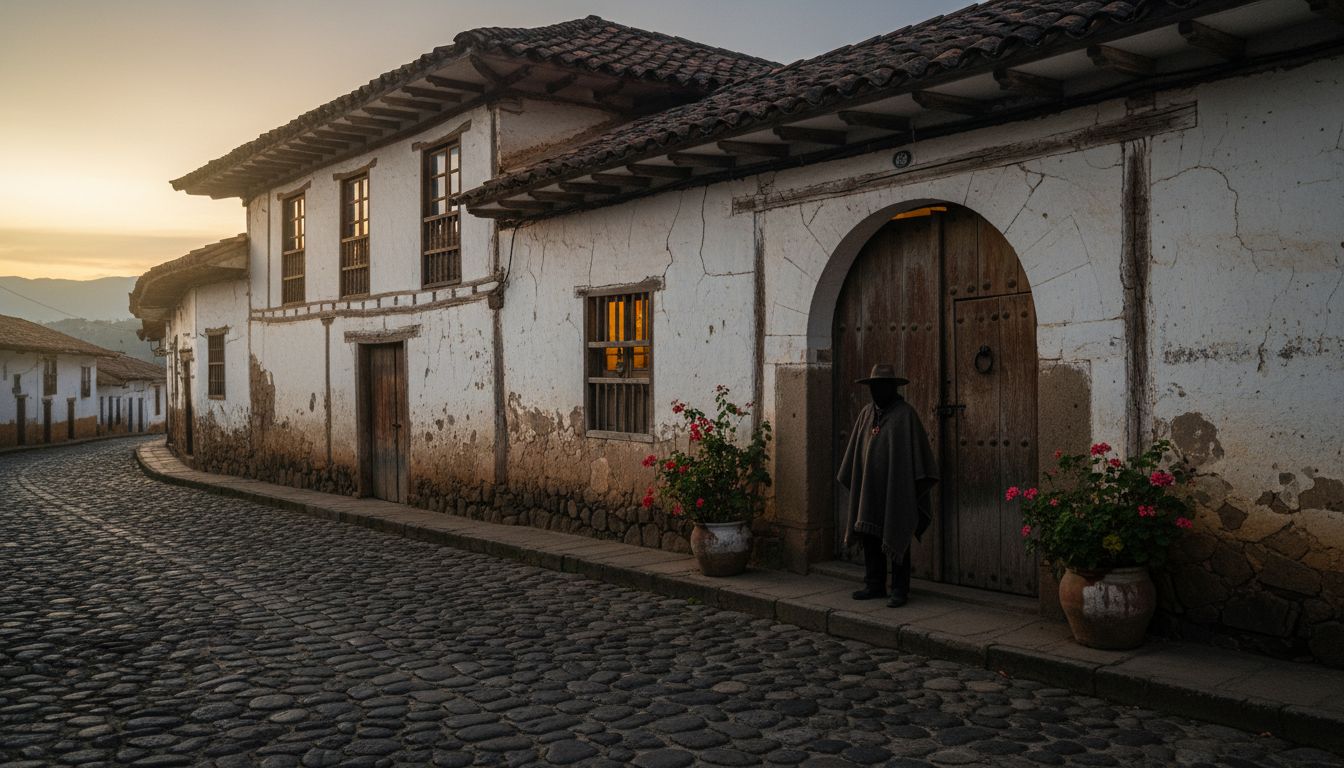
María Angula's Ghost Story Has Crossed Generations in Ecuador, and Cayambe Tells the Darkest Version
Across Ecuador, ghost stories have long served as a kind of cultural glue, binding grandparents to grandchildren and neighbors to neighbors through the shared thrill of a well-told tale. Few legends have endured as persistently as that of María Angula, a figure whose story has been whispered, dramatized, and reshaped for generations. Almost every region of the country claims some connection to her tale, and each version carries its own local texture.
Among these retellings, Cayambe's version has developed a reputation as one of the darkest. It's worth saying plainly, for readers and expats alike, that this is folklore, not verified history. What follows is an exploration of a legend as it lives in oral tradition, not a fact-checked historical account.
The Core Legend: Who Was María Angula?
In its most commonly told form, the legend of María Angula centers on a woman whose fate becomes intertwined with grief, punishment, or a fateful bargain, depending on who is telling the story. Storytellers across Ecuador have long used her tale as a vehicle for moral lessons, often framing her suffering as a consequence of pride, desperation, or a broken promise.
The imagery associated with her spirit is among the most recognizable in Ecuadorian ghost lore: a skeletal, wandering figure said to appear suddenly and vanish just as fast, leaving those who encounter her shaken. This image — bone, shadow, and sudden terror — recurs across many regional tellings, even as the surrounding plot details shift from town to town.
It's this flexibility that has helped the legend survive. Rather than a single fixed narrative, María Angula's story functions more like a shared template, one that each community fills in with its own details, warnings, and local landmarks.
Oral Tradition and Generational Storytelling
Stories like this one rarely survive through books alone. They live in kitchens, on porches, and at evening gatherings, passed from grandparents to grandchildren in the unhurried rhythm of oral tradition. Elders often serve as the primary keepers of these tales, lending weight and authority to the telling simply through their role as trusted narrators.
As the story moves through communities, it naturally absorbs local color: a nearby ravine becomes the setting, a real family name becomes attached to the legend, a specific hour of night becomes the moment of greatest danger. This kind of regional customization is a hallmark of oral folklore everywhere, and María Angula's tale appears to be no exception.
It's within this pattern of localized retelling that Cayambe's own claimed variation fits. A recurring theme among those who study or simply enjoy Ecuadorian folklore is that each town believes its version to be the most authentic — or, in Cayambe's case, the most frightening.
Cayambe's Darker Take: What Sets It Apart
The central claim explored in this piece is that Cayambe holds what many locals describe as the darkest known version of the María Angula legend. It's important to be direct about the limits of what can be confirmed here: specific plot details, dates, and named storytellers tied to this version are not independently verified, and no documented historical record has been identified to confirm the claim.
Speculating cautiously, within the bounds of what folklore scholars generally observe about regional legend variation, a "darker" version might involve more graphic imagery, a harsher moral consequence for the characters involved, or an ending that offers less resolution or comfort than tellings found elsewhere. These are reasonable possibilities given how oral traditions tend to intensify over time and geography, but they remain speculative in this specific case.
This section, then, should be read as a reflection of Cayambe's local reputation and the pride many residents take in their town's particular version of the story — not as a documented or fact-checked historical claim. A recurring pattern in Ecuadorian storytelling is that a town's version of a shared legend becomes a point of local identity, and Cayambe's may well be no different.
Why This Matters for Expats and Travelers
For expats settling into life in Ecuador, stories like María Angula's offer more than entertainment. They provide a doorway into the values, fears, and humor embedded in local culture — the kinds of things that don't always show up in guidebooks or official histories.
Encountering a legend like this can deepen one's sense of place, especially when it's tied to a specific town or landscape. Learning that a particular ravine or old house is said to be haunted by a wandering spirit adds a layer of meaning to an otherwise ordinary walk through a neighborhood.
Many longtime residents and cultural observers suggest that the richest way to experience these stories is to hear them firsthand from local tellers, rather than relying solely on written accounts. A grandmother's pause before the frightening part, a neighbor's insistence that "it really happened to my cousin" — these details rarely translate fully to the page. Expats are encouraged to approach such storytelling with curiosity, while also respecting the cultural weight these legends carry for the communities that keep them alive.
Conclusion: A Story Still Being Told
María Angula's legend has endured across generations not because it has been fixed in place, but because it has been allowed to change — picking up new details, new fears, and new local flavor with each telling. Cayambe's darker version, while genuinely intriguing, remains very much part of that same living oral tradition rather than a settled historical fact.
Readers curious about the "real" version — or at least the version told with the most conviction — are encouraged to seek out local storytellers themselves, ideally over a shared meal or a quiet evening conversation. It is in these moments, more than in any written record, that legends like María Angula's continue to do their work: reminding both locals and newcomers why a good ghost story never really dies.