Malqui-Machay and the Andean Mystery of Atahualpa’s Resting Place
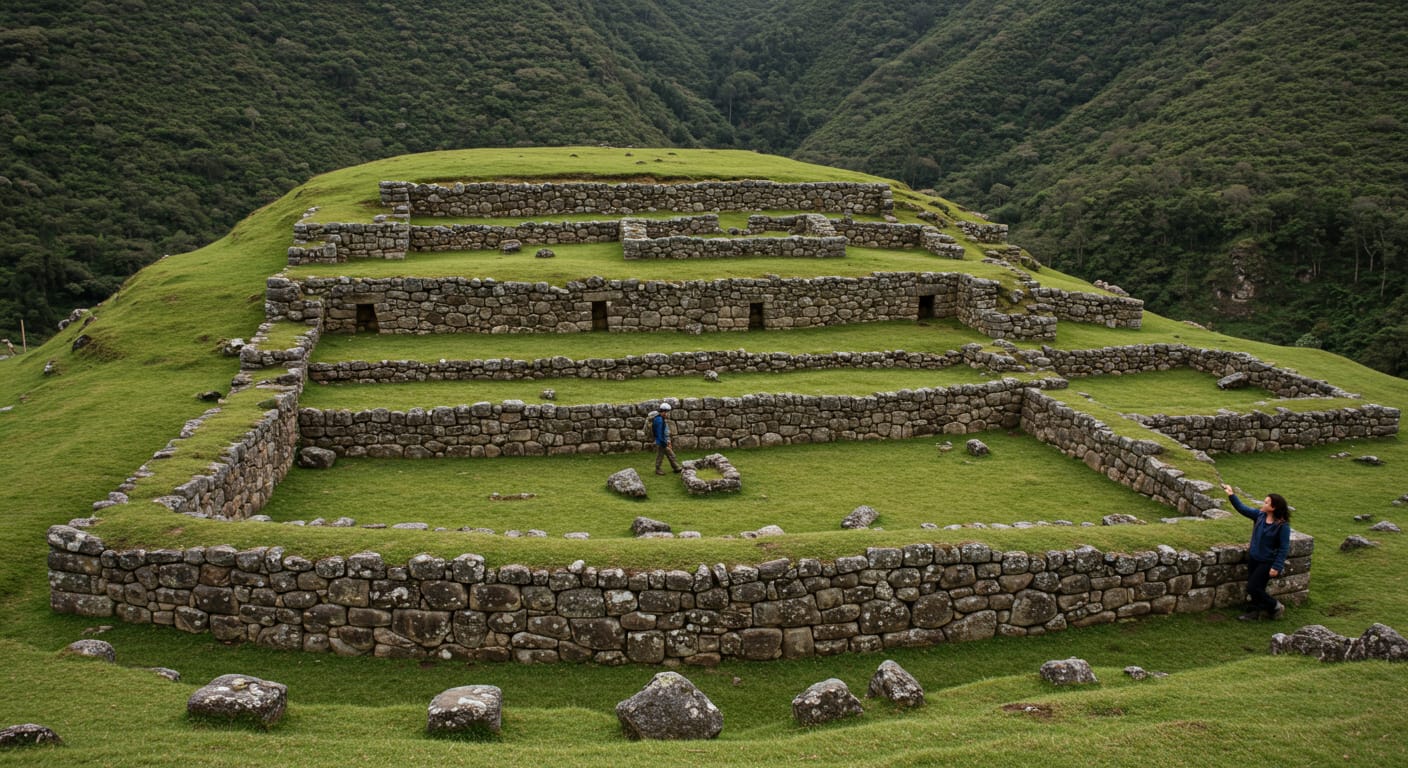
There are places in the Andes where the landscape seems to hold its breath. Malqui-Machay is often described that way: remote, elevated, quiet, and wrapped in the kind of silence that makes every historical question feel bigger. For travelers, expats, and anyone drawn to the emotional geography of the region, it is the sort of place that lingers in the imagination long after a visit ends.
Its fascination, however, does not rest on archaeological consensus. Malqui-Machay matters in modern conversation largely because of interpretation, historical reading, and belief. It is a place wrapped in imperial memory, and much of its power comes from what people think it might represent rather than from anything definitively proven.
Why Atahualpa Still Haunts the Andes
Atahualpa remains one of the most resonant figures in Andean history. As the last Inca emperor to rule before the Spanish conquest shattered the empire’s political order, he occupies a space that is both historical and deeply symbolic. His death is remembered not simply as the end of a ruler, but as a turning point in the fate of a civilization.
That is why questions about his final resting place still matter. They are not only about bones, tombs, or hidden chambers. They are also about dignity, memory, and the unfinished emotional business of conquest. In the Andes, unresolved history rarely stays in the past. It moves through stories, place names, family memory, and the landscapes themselves.
Because of that, any location associated with Atahualpa carries unusual weight. Even uncertainty can deepen its significance. A mystery tied to such a figure becomes part history, part mourning, and part national imagination.
Tamara Estupiñán’s Hypothesis About Malqui-Machay
Much of the modern attention around Malqui-Machay is linked to historian Tamara Estupiñán, who has argued that the site may be connected to Atahualpa’s final resting place. Her idea has drawn interest because it offers a possible answer to one of the most enduring unanswered questions in Andean history.
It is important to frame this carefully: this is a hypothesis, not a settled conclusion. In conversations about Malqui-Machay, Estupiñán’s interpretation is central, but the claim is best understood as part of an ongoing debate rather than a confirmed discovery. For many readers, that distinction is exactly what makes the story so compelling. It stands at the border between documented history and historical possibility.
The theory resonates because it gives shape to a longing that has never fully disappeared. If a site like Malqui-Machay were truly tied to Atahualpa, it would reshape how many people imagine the final chapter of the Inca world. Even the possibility is enough to keep attention fixed on the hillside.
What Makes the Site So Compelling
Belief in places like Malqui-Machay is rarely built on one thing alone. It usually grows from an accumulation of suggestive elements: the character of the terrain, the atmosphere of remoteness, local tradition, the meanings attached to names, and the sense that a place fits an unresolved historical narrative almost too well to ignore.
That does not make such interpretations automatically true, but it helps explain why they endure. People are drawn to sites that seem to gather scattered clues into a meaningful whole. In the Andes especially, landscape is never just scenery. Mountains, valleys, and ruined structures often carry memory as much as beauty.
Malqui-Machay also fits a larger pattern in post-conquest historical imagination. The search for hidden royal burials, lost ceremonial places, or concealed chapters of Inca history reflects more than scholarly curiosity. It also reflects a desire to recover something interrupted. In that sense, the site is compelling not only because of what may be there, but because of what people hope can still be recovered from the past.
Between Evidence, Legend, and National Imagination
Sites associated with major historical figures often exist in a tense space between evidence and legend. Malqui-Machay is a good example of that uneasy borderland. Archaeology asks for proof. Oral memory preserves stories. National identity sometimes embraces symbols before certainty arrives. Popular storytelling, meanwhile, can turn possibility into near-fact in everyday conversation.
That tension does not weaken the emotional force of the place. If anything, it strengthens it. A site tied to unresolved grief or interrupted sovereignty can become a vessel for collective meaning. People project onto it hope, loss, pride, and the wish that history might still yield one final revelation.
For that reason, uncertainty should not be mistaken for insignificance. Some places matter because they are proven. Others matter because they remain open, argued over, and alive in the public imagination. Malqui-Machay seems to belong to the second category.
How an Expat or Traveler Encounters a Place Like This
For expats living in the Andes, or travelers moving through Ecuador with a curiosity about deeper histories, encounters with sites like Malqui-Machay can be unexpectedly humbling. You arrive expecting a destination and leave thinking instead about layers: conquest and survival, scholarship and folklore, stone and silence.
One of the lessons of living in this region is that history is rarely contained neatly in museums or textbooks. It appears in conversations, in local pride, in competing versions of the same story, and in the way people speak about the land. A hillside may be just a hillside to one visitor and something far more charged to the community around it.
The most respectful approach is often the simplest: listen carefully, stay curious, and resist the urge to turn uncertainty into certainty. Places like Malqui-Machay invite attention, but they also ask for restraint. Their meaning is not exhausted by a single theory, no matter how intriguing it may be.
Why the Mystery Endures
Whether Malqui-Machay truly holds Atahualpa’s remains remains unresolved. That uncertainty is not a flaw in the story. It is the story. The site continues to fascinate because it sits at the intersection of landscape, belief, historical interpretation, and the lasting emotional aftershocks of conquest.
For many people, the appeal lies less in solving the mystery than in standing near it. A remote Andean hillside associated with a fallen emperor carries a kind of gravity that facts alone cannot explain. It reminds us that history is not only a record of what is known, but also a map of what still aches to be understood.
Some places remain powerful precisely because they cannot be fully explained. Malqui-Machay is one of them.