Love Across Borders: How Moving to Ecuador Changed Our Relationship
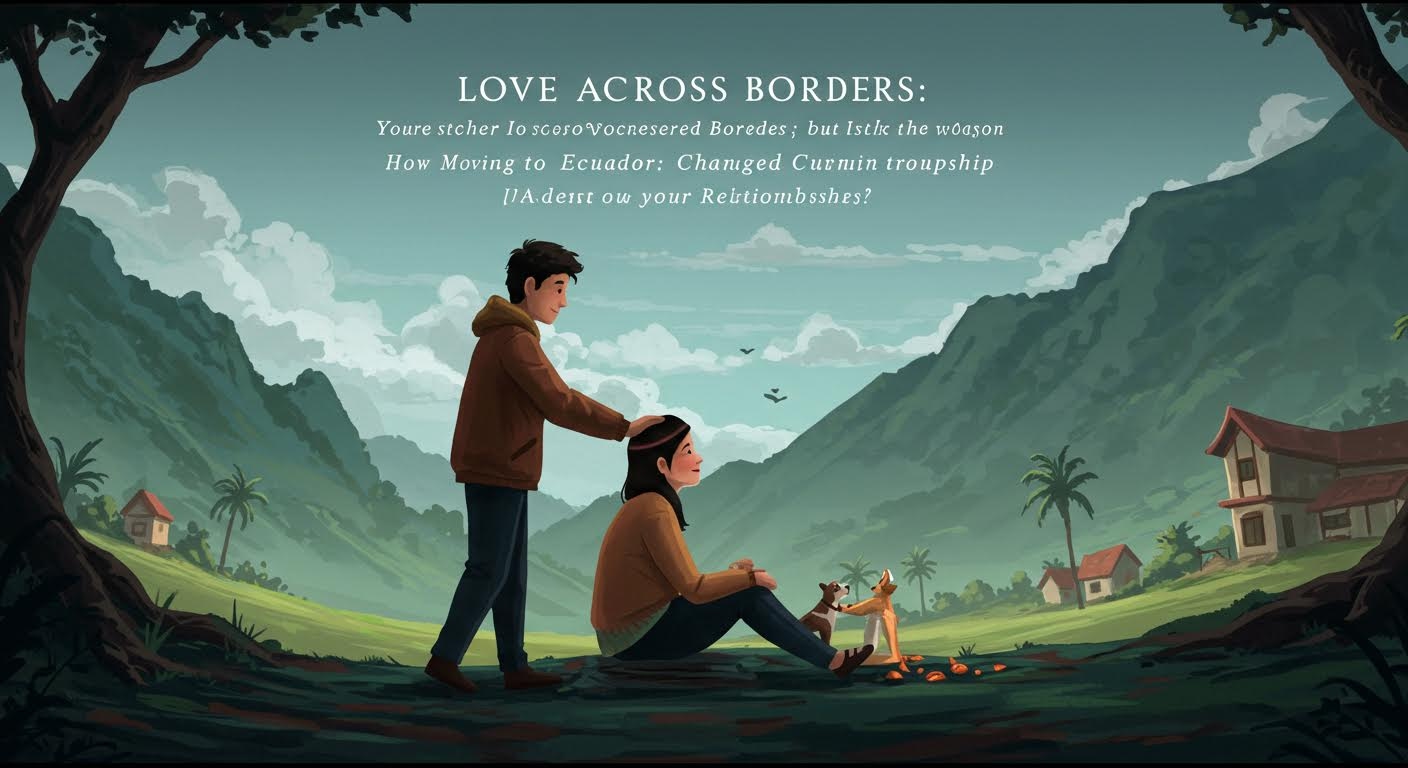
When we first talked about leaving everything behind and moving to Ecuador, it felt like planning an extended vacation. We had no idea that crossing borders would fundamentally reshape not just our geography, but the very foundation of our relationship.
The Decision to Leave Everything Behind
The seed was planted during a particularly gray winter morning back home. Over coffee, we found ourselves dreaming aloud about warmer weather, lower living costs, and the adventure of experiencing life in South America. What started as wishful thinking gradually evolved into serious planning sessions.
Making the decision together required countless late-night conversations. We created pros and cons lists, researched visa requirements, and had those difficult discussions about what we'd be leaving behind. The excitement was intoxicating—imagining ourselves exploring Andean markets and learning Spanish together. But underneath the enthusiasm was a quiet fear: What if this dream turned into a nightmare for our relationship?
Saying goodbye to our support system proved harder than we'd anticipated. Friends and family cycled through disbelief, concern, and eventually reluctant support. We realized that in choosing this adventure, we were also choosing to rely primarily on each other for emotional support in ways we never had before.
First Impressions: Ecuador Through Four Eyes
Our plane touched down in Quito, and immediately we experienced Ecuador differently. While I was overwhelmed by the altitude and the bustling energy of the city, my partner was energized by the vibrant colors and sounds surrounding us. These different initial reactions became a pattern—where one of us felt challenged, the other often found excitement.
The language barrier hit us both hard, but in different ways. I became frustrated when simple tasks like ordering food became complex negotiations, while my partner embraced the challenge as an opportunity to practice Spanish. We quickly learned that patience with each other was just as important as patience with ourselves.
Cultural norms that we hadn't anticipated began surfacing immediately. The pace of life, social interactions, even concepts of time operated differently here. We found ourselves becoming each other's cultural interpreters, helping decode situations and supporting one another through moments of confusion.
Navigating the Practical Maze Together
The visa process tested our teamwork skills in unexpected ways. Hours spent in government offices, deciphering paperwork in Spanish, and navigating bureaucratic requirements that seemed to change daily became our new reality. We developed a system: one of us would handle the research and preparation while the other managed the actual office visits and interactions.
Finding housing required us to make joint decisions about neighborhoods, amenities, and budgets while still learning what life in Ecuador actually looked like. We toured apartments in areas we couldn't properly evaluate yet, making major decisions with incomplete information. These choices required a level of trust and compromise we hadn't needed before.
Managing our finances across two countries while establishing new income streams created unexpected stress. Currency exchange rates, international banking fees, and different employment structures forced us to completely reimagine our financial partnership.
When Adventure Becomes Stress
About three months in, the novelty began wearing thin. The daily challenges of communication, the exhaustion of constant cultural translation, and the weight of having made such a permanent-feeling decision started taking their toll on both of us.
We had our first major fight during a particularly frustrating day trying to set up internet service. What should have been a simple transaction turned into a six-hour ordeal involving multiple office visits and miscommunications. By evening, we were snapping at each other about things completely unrelated to internet service. We realized we needed new strategies for handling stress when our usual escape routes—visiting friends, familiar restaurants, or comfortable routines—weren't available.
Learning to communicate effectively during high-stress situations became crucial. We discovered that our typical conflict resolution patterns didn't work as well when we were both operating outside our comfort zones constantly. We had to develop new ways to support each other and new signals for when one of us was reaching a breaking point.
Building Our New Life From Scratch
Creating social connections required us to be more intentional about community-building than we'd ever been. We started attending expat meetups, joined language exchange groups, and gradually built relationships with both international and local residents. Watching each other develop new friendships revealed sides of our personalities that had been dormant in our previous environment.
Embracing Ecuadorian traditions became a shared project. From learning to properly celebrate festivals to understanding local customs around family and social obligations, we became students together. This shared learning experience created new bonds and inside jokes while helping us feel more integrated into our new home.
Establishing routines in our new environment required constant negotiation. Everything from grocery shopping to weekend activities needed to be reinvented. This process of creating new patterns together, rather than falling into established habits, made us more intentional about how we spent our time and energy.
The Relationship We Never Expected
Facing uncertainty together on a daily basis created an intimacy we hadn't experienced before. When almost everything in your environment is unfamiliar, your partner becomes your constant—your reference point and your anchor. This heightened interdependence initially felt overwhelming but gradually became a source of strength.
The challenges of living in Ecuador revealed capabilities in both of us that had been hidden in our more comfortable previous life. Watching my partner confidently navigate complex Spanish conversations with government officials, or seeing them adapt quickly to local customs, showed me new dimensions of their personality and competence.
We learned that partnership isn't just about supporting each other through familiar challenges, but about growing together through completely unprecedented situations. Every problem we solved, every cultural barrier we navigated, every small victory in our new life became shared accomplishments that strengthened our bond.
Looking Back: Love Lessons From Our Ecuador Journey
Moving to Ecuador taught us that relationships tested by major change don't just survive—they can emerge fundamentally stronger. The key insight was learning to see challenges as opportunities for deeper partnership rather than sources of relationship stress.
For couples considering international moves, our advice would be to prepare for the practical challenges, but more importantly, prepare for the emotional and relational adjustments. Discuss how you'll handle stress, establish communication strategies for high-pressure situations, and remember that adaptation happens at different speeds for different people.
Ecuador didn't just become our new home—it became the place where we discovered what we were capable of as partners. The mountains, markets, and communities here provided the backdrop for the strongest, most resilient phase of our relationship. Looking back, we realize that love across borders isn't just about maintaining connection despite distance—it's about building something entirely new together in uncharted territory.