Lost in the Andes With No Signal and One Bottle of Water
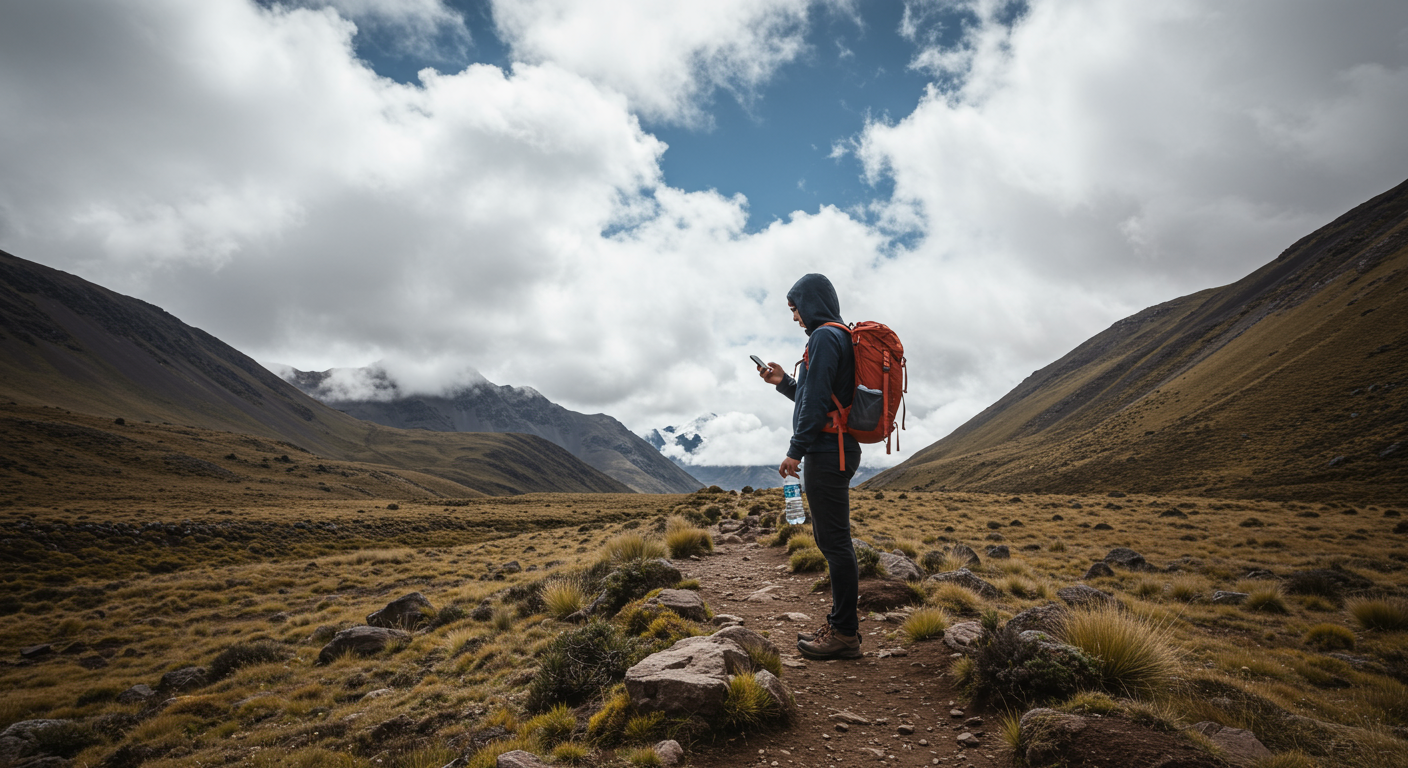
The Andes had always called to me since moving to South America. Those towering peaks visible from the city promised adventure and perspective. What I didn't expect was how quickly a routine day hike could transform into a fight for survival at 12,000 feet above sea level.
The Plan That Went Wrong
My hiking plan seemed straightforward enough. The trail to Mirador del Cóndor was marked as "moderate difficulty" in my guidebook, with an estimated round-trip time of six hours. I'd tackled similar hikes back home, so I packed light: some snacks, a single water bottle, and my phone for photos.
The first hour unfolded perfectly. The marked trail wound steadily upward through sparse vegetation, and I made good time. But somewhere around the two-hour mark, the path began to fork repeatedly. Each junction looked equally worn, equally plausible. I chose what seemed like the main route, then chose again at the next fork.
It wasn't until I stopped to check my progress that the cold reality hit me. The landscape around me bore no resemblance to the photos I'd seen of the mirador. Instead of the distinctive rock formations I expected, I was surrounded by endless rolling peaks that looked identical in every direction. I was completely, utterly lost.
Taking Stock: One Bottle, No Signal, Endless Mountains
My first instinct was to reach for my phone. Zero bars. Not even the faintest whisper of a signal. I held it above my head, walked to higher ground, tried every trick I could think of. Nothing. The device that had become my lifeline for navigation, communication, and emergency help was now just dead weight.
I took inventory of what I had: one water bottle, about three-quarters full. A handful of energy bars. A light jacket that felt pathetic against the mountain wind. No compass, no GPS device, no emergency whistle. In my overconfidence, I'd committed nearly every rookie mistake in the book.
The scale of the Andean landscape was staggering. Peak after peak stretched to every horizon, a maze of ridges and valleys that seemed designed to swallow travelers whole. From my vantage point, I couldn't spot a single sign of human presence—no roads, no buildings, no power lines. Just stone, sky, and the growing certainty that I was in serious trouble.
Survival Mode: Making Critical Decisions
With daylight starting its inevitable march toward evening, I had to make hard choices. The water bottle became my most precious possession. I allowed myself tiny sips, just enough to keep my mouth from going completely dry. Every drop had to last, though I had no idea how long that might need to be.
Choosing a direction without any navigational aids felt like gambling with my life. I tried to remember the sun's position when I started hiking, attempted to retrace my steps, but every ridge looked the same. Eventually, I decided to follow what appeared to be a natural water course, reasoning that streams eventually led to valleys, and valleys to civilization.
As the afternoon wore on, I learned to read the mountain's moods. I found overhangs that provided shelter from the wind, identified spots where I could rest without losing too much body heat. Each decision felt monumental—rest too long and risk nightfall in the open, move too quickly and exhaust my limited energy reserves.
The Mental Game: Fighting Panic in Thin Air
The altitude made everything harder. At over 12,000 feet, every breath felt insufficient, every decision clouded by the thin air. I found myself stopping frequently, not just from physical exhaustion but from the mental effort of staying rational when panic kept clawing at the edges of my thoughts.
The fear came in waves. One moment I'd feel reasonably confident about my chosen direction, the next I'd be convinced I was walking deeper into the wilderness. My mind conjured worst-case scenarios: spending the night exposed to mountain weather, running out of water completely, becoming another cautionary tale for future hikers.
What saved me was focusing on the immediate present. Not the overwhelming reality of being lost in one of the world's most formidable mountain ranges, but the simple task at hand: placing one foot in front of the other, conserving water, watching for landmarks. When everything felt hopeless, I reminded myself that people got lost in mountains and survived. I could be one of those people.
Signs of Life: The Path to Safety
After what felt like an eternity but was probably only three hours, I spotted something that made my heart leap: a piece of trash. A discarded plastic bottle wedged between rocks was the most beautiful sight I'd seen all day. Where there was litter, there had been people.
Following the faint trail markers—more litter, then footprints, then finally what looked like an actual path—I eventually heard voices. A group of local shepherds was moving their flock to higher pastures. My Spanish, never great under normal circumstances, became a frantic mixture of words and gestures as I tried to explain my situation.
Their response was immediate and generous. They shared water from their own supplies, pointed me toward the correct path back to town, and one of the younger men even offered to escort me partway down the mountain. The relief was overwhelming—not just the physical safety, but the reminder that people look out for each other, especially in places where nature shows no mercy for mistakes.
Hard-Won Lessons for Mountain Travel
That day in the Andes taught me lessons that no guidebook could convey. Essential gear isn't just recommended equipment—it's insurance against disaster. A proper map and compass, a GPS device with offline capabilities, extra water, emergency shelter, and a way to signal for help aren't luxuries for serious hikers. They're necessities, even for what seems like a simple day trip.
I learned about communication strategies for remote areas too. Satellite communicators, while expensive, provide a lifeline where cell phones fail. Leaving detailed plans with someone reliable isn't paranoia—it's basic safety protocol. And understanding how to read terrain, even without instruments, is a skill worth developing before you need it desperately.
Most importantly, this experience transformed my relationship with adventure travel entirely. I still seek out challenging hikes and remote places, but now I approach them with the respect they deserve. The mountains will always be there, magnificent and dangerous in equal measure. The key is ensuring you're prepared to meet them on their terms, not yours.
Every time I see those Andean peaks now, I remember both the terror and the gratitude of that day. They're a reminder that adventure and disaster often differ by nothing more than preparation, respect, and sometimes just luck. In the mountains, there's no room for overconfidence—only for careful planning and humble acknowledgment of forces much larger than ourselves.