Lost in the Andes With No Signal and One Bottle of Water
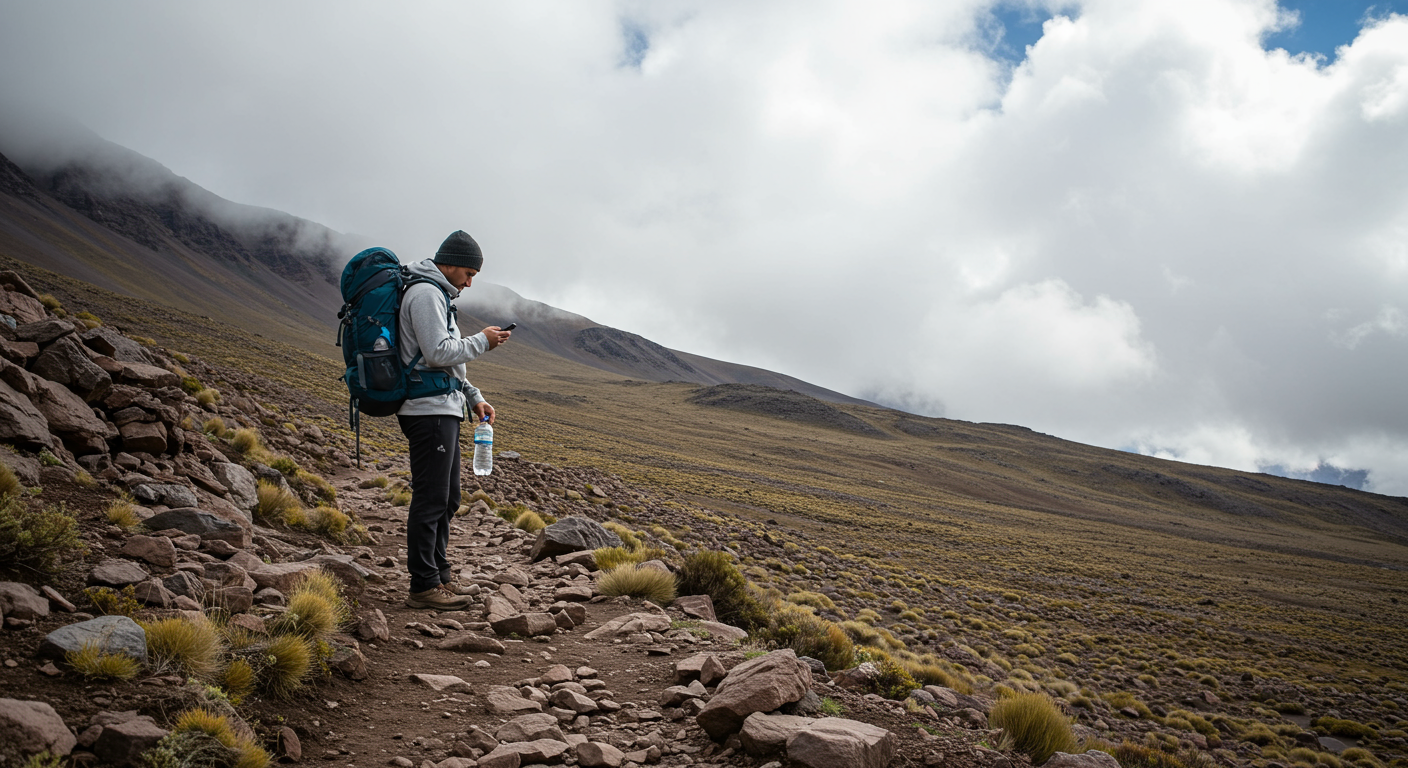
The moment it became real was strangely quiet. I stood still, phone in my hand, watching the screen search and fail, search and fail, while the wind moved over the grass and rock as if nothing had changed. I had one bottle of water left, already half-warm from the sun. The trail I thought I had been following had dissolved into dirt, slope, and guesswork. Behind me, everything looked unfamiliar. Ahead of me, everything looked the same.
I had not started the day alone. What began as an easy outing in the Andes felt manageable, almost casual. There had been other people earlier, along with more confidence than planning, and the cheerful assumption that the way back would reveal itself when needed. At some point, through a mix of separation, hesitation, and one wrong choice that did not feel wrong at the time, I ended up on my own. The mountains did not announce that shift dramatically. They simply widened around me until I understood I no longer knew where I was.
The Andes have a way of making a person feel very small without doing anything theatrical. The air felt thin and dry. Sound traveled oddly, swallowed by distance. The light changed faster than I expected, sharpening some ridges while pushing others into shadow. It was beautiful in the way large landscapes often are, but beauty was no comfort once I realized I could not read what I was seeing.
How I Ended Up Alone in the Andes
If I am honest, the trouble began before I knew I was in trouble. I was moving with the confidence of someone who thought partial understanding was enough. I recognized a bend in the path, or believed I did. I assumed the route looped, or should have. I thought I could catch up, reconnect, and correct course easily. Each of those thoughts was small on its own. Together, they carried me farther away from certainty.
I remember telling myself not to be dramatic. That inner voice can be useful in ordinary situations, but in unfamiliar terrain it can also become a trap. I kept minimizing the problem because admitting it would have forced me to stop earlier, think harder, and accept that I did not know where I was. Instead, I kept walking through ambiguity, treating it like a temporary inconvenience instead of the beginning of a real problem.
The First Mistake Felt Small
The first mistake was not some cinematic blunder. It was ordinary. It was the decision to continue instead of pause. A choice to trust my impression of the terrain rather than my uncertainty about it. A belief that if I kept moving, the path would clarify.
Then came the second mistake: assuming that because the landscape looked open, it would be easy to navigate. From a distance, slopes and trails seemed legible. Up close, they broke into fragments. A faint track turned into loose ground. What looked like a route became an animal path or a wash of worn earth. The mountain offered many things that resembled answers until I got close enough to see they were not.
That is the danger of small mistakes. They do not feel like mistakes at first. They feel like confidence.
What Panic Feels Like at Altitude
I can only describe what it felt like for me. This is personal experience, not advice. Panic at altitude did not arrive all at once. It built in waves. First there was the quickened breathing, then the dry mouth, then the way my thoughts began tripping over each other. I would tell myself to slow down, then immediately imagine spending the night outside, then force myself to focus on the next ten steps, then lose that focus again.
Time became unreliable. Ten minutes felt like forty. A short stop felt dangerous because I feared losing momentum, but moving too fast made me more breathless and less capable of thinking clearly. My body and mind were no longer working as a team. One was tired and thirsty. The other was loud, scattered, and intent on rehearsing worst-case scenarios.
What made it more unsettling was the indifference of the landscape. The mountains were not hostile in any active sense. They simply did not care. The sky remained enormous. The wind kept moving. The ridgelines held their shape. My fear did not register anywhere except inside me.
One Bottle of Water Changes the Math
Once I understood I had only one bottle of water and no clear idea how long I would be out there, every decision began orbiting that fact. Should I sip now or wait? Keep moving while the light held, or stop to think more carefully? Head downhill because it felt logical, or stay near what looked like a track? Even my pace changed because water was no longer just something I had. It had become a clock.
I kept negotiating with myself. One small sip now, then nothing for a while. Walk to that outcropping, then reassess. Reach that patch of shade, then decide. Each minor target gave me the illusion of control. Maybe that illusion helped. Maybe it was simply the only manageable way to think.
The bottle itself became strangely important. I kept checking it, weighing it in my hand as if the amount might somehow have changed in my favor. It had not. But fear narrows attention. Soon the world was reduced to light, distance, and the sound of water moving inside plastic whenever I lifted it.
Trying to Read a Landscape I Didn't Understand
I tried to navigate using whatever seemed available: the angle of the sun, the shape of slopes, traces of paths, and the logic that people must have passed through somewhere. But the Andes, at least from where I stood that day, felt impossible to interpret from the ground. Every ridge promised perspective and delivered confusion. Every descent suggested a connection and led into another fold of land that looked uncannily like the one before it.
I started inventing confidence from thin evidence. That cluster of rocks looked familiar. That cut in the hillside must lead somewhere. That open stretch surely meant I was nearing a road or settlement. Again and again, I was reading meaning into shapes because I needed them to mean something.
What I remember most is not just uncertainty, but the embarrassment of uncertainty. It is a specific kind of shame to realize that a landscape you admired casually now contains you completely. From a distance, mountains can feel romantic. From inside them, when you do not understand them, they can feel unreadable.
The Longest Hours
The middle stretch was the hardest because nothing dramatic happened. No rescue appeared. No sudden answer presented itself. There was only the slow accumulation of fatigue: sun on my face, then wind on my arms, then cold when shadows lengthened. My legs began to feel heavy in that dull, unspectacular way that makes every incline seem personal.
Small decisions took on absurd weight. Sit for a minute or keep moving? Follow the faint line in the dirt or cut across toward a more obvious opening? Drink now or later? These were tiny choices, but isolation enlarges everything. With no one to consult and no signal to reach beyond the moment, every judgment felt final.
I also remember how sound changed. Sometimes there was only wind. Sometimes my own footsteps seemed too loud. At one point I spoke out loud just to hear a human voice, and the effect was not reassuring. It only emphasized how alone I was.
Fear did not stay constant. It rose, eased, and returned. There were moments when I convinced myself I was close to figuring it out, followed by moments when doubt hit so hard it felt physical. The shadows lengthening across the terrain did not help. Light was becoming another resource, and I could feel it slipping away.
The Moment Something Finally Shifted
What changed was not a miracle. It was a clue, then another. A shape in the distance that looked too regular to be natural. A line that held its direction long enough to seem intentional. Then, after too much second-guessing, the unmistakable signs of human presence: a structure, rough but real, and not far beyond it, a workable path that looked used rather than imagined.
The relief was not immediate joy. At first I did not trust what I was seeing. I had misread the landscape enough by then to be suspicious of hope. But as I got closer, the ground began to make more sense. The path connected rather than vanished. My breathing slowed, not because my body felt strong again, but because my mind finally had something solid to hold.
I was not suddenly heroic. I was tired, thirsty, and deeply humbled. But I was no longer guessing in every direction at once. That alone felt enormous.
Getting Out Didn't End It Right Away
Even after I found my way out, my body did not understand that the emergency had ended. My hands still shook. My thoughts were jumpy and disorganized. Relief came mixed with embarrassment so sharp I could feel it in my chest. I kept replaying the day, trying to identify the exact point where confidence had turned into carelessness.
There was also delayed fear. While I was in it, I had been too occupied with the next step to feel the full emotional weight of the situation. That came later, once safety returned and imagination had room to work. The what-ifs arrived all at once. What if I had kept going in the wrong direction? What if the light had gone sooner? What if I had started with less water, or more pride, or both?
I did not come away feeling triumphant. Mostly I felt lucky, tired, and a little rattled by how thin the line can be between a story you tell lightly and one that keeps replaying in your mind.
What the Andes Taught Me About Control
The lasting lesson was not that I am resilient, though maybe I was resilient enough. It was that confidence travels badly when it is not matched by knowledge. I had mistaken calm for preparedness and familiarity with the idea of the Andes for familiarity with the Andes themselves. Those are not the same thing.
There is a version of expat life and travel that rewards improvisation. You learn to adapt, to solve, to move through uncertainty with humor. That can be a strength. It can also become vanity. You start believing that because you have managed unfamiliar situations before, unfamiliarity itself is no longer dangerous. The mountains corrected that belief quickly.
If I took anything useful from the experience, it was personal rather than universal: stop earlier than your pride wants to, respect places you do not yet understand, and never confuse a beautiful landscape with a simple one. I lost my way in the Andes with no signal and one bottle of water, but what unsettles me most in hindsight is how ordinary the beginning was. Trouble did not start with drama. It started with me thinking I had more control than I did.