Logroño de los Caballeros: The Lost Spanish Gold Town Still Hunted in Ecuador's Morona Santiago
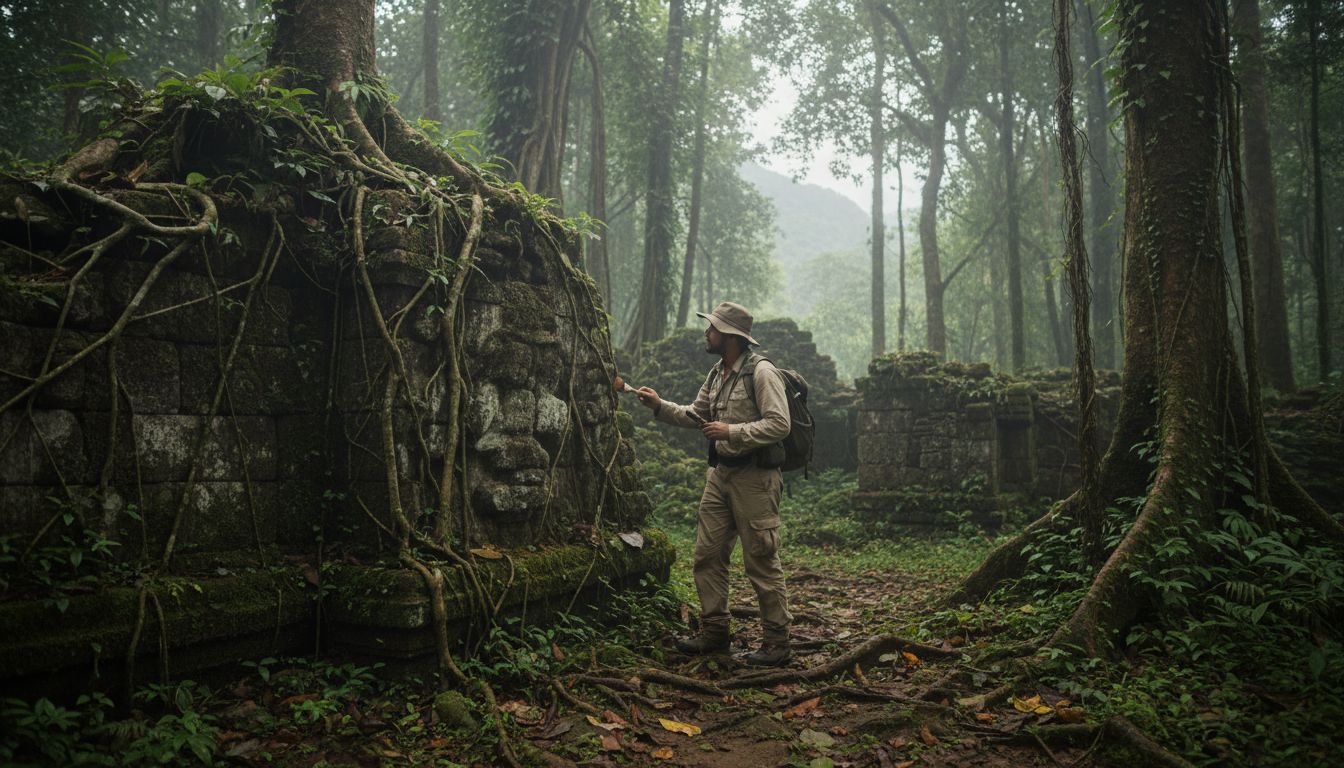
Logroño de los Caballeros: The Lost Spanish Gold Town Still Hunted in Ecuador's Morona Santiago
Somewhere in the tangled foothills where the Andes dissolve into the Amazon basin, a Spanish colonial town is said to have simply disappeared. Logroño de los Caballeros has become one of Ecuador's most enduring legends, a tale of gold, ambition, and resistance that still circulates among locals and curious travelers in Morona Santiago province today. What follows is less a documented history than a living legend, and it should be read as such: a story shaped as much by folklore as by fact.
A Legend Buried in the Cloud Forest
Morona Santiago sits in a dramatic transition zone, where the eastern slopes of the Andes drop into dense Amazonian lowlands. This is a region of steep, forested ridges, swift rivers, and a climate that shifts from misty highland cool to humid lowland heat within a matter of kilometers. It was here, according to local tradition, that Spanish colonizers founded a town built on the promise of gold.
Many who hear the story today describe it with a mix of fascination and uncertainty. Few written records survive to confirm the town's exact location, its population, or the precise sequence of events that supposedly led to its destruction. What remains is a legend passed down through generations, embellished and reshaped over centuries. Before going further, it is worth stating plainly: this is a piece of storytelling grounded in regional lore, not a verified historical account.
The Gold Rush That Built a Colonial Town
To understand why a town like Logroño might have existed at all, it helps to consider the broader context of Spanish colonization in 16th-century Ecuador. Spanish expeditions pushed into the eastern Andean foothills in search of mineral wealth, drawn by rumors of gold-rich rivers and mountains. Settlements were established as forward outposts for mining operations, often with little regard for the people already living on that land.
Logroño is frequently mentioned alongside another, somewhat better-documented legend: Sevilla de Oro, or the "City of Gold." The two towns are often spoken of as sister settlements, both reputedly built on gold extraction in the same general region, and both said to have met similarly abrupt ends. This pairing has helped keep the Logroño story alive, even as it remains the lesser-known of the two in historical discussion.
These towns were established in territory long inhabited by Shuar and other Jivaroan-speaking peoples. The imposition of Spanish mining operations, forced labor demands, and colonial authority in this territory created deep and lasting tensions, tensions that, according to legend, would eventually boil over.
The Uprising That Erased It From the Map
The most dramatic part of the Logroño legend concerns its ending. As the story is commonly told, the town was violently destroyed by an indigenous uprising, its Spanish inhabitants killed or driven out, and the settlement itself left to be reclaimed by the forest.
This popular narrative is often connected to a real and historically documented event: the Jivaroan rebellion of 1599, a large-scale indigenous uprising against Spanish colonial settlements in the region. It is at this point that legend and recorded history appear to intersect, since historians acknowledge the broader rebellion as part of the era's record, also linking it to the fall of Sevilla de Oro.
However, it's important to be clear about where verified history ends and folklore begins. Specific details frequently attached to the Logroño story, exact dates, casualty figures, the names of individuals involved, or dramatic blow-by-blow accounts of the town's final hours, are not supported by reliable documentation available for this piece. These elements should be understood as embellishments that have accumulated around a kernel of broader historical conflict, rather than as established fact.
Treasure Hunters and Living Folklore
Despite, or perhaps because of, this uncertainty, the legend of Logroño has never really faded. In towns and villages across Morona Santiago, versions of the story are still shared by locals, sometimes as cautionary tales, sometimes as pure adventure. A recurring thread in these retellings is the idea that gold from the lost town remains hidden somewhere in the surrounding mountains, waiting to be found.
This idea has attracted its share of modern treasure hunters over the years, drawn by the romance of a "lost gold city" swallowed by jungle. Many observers note that such expeditions rarely produce verifiable discoveries, and the appeal of the hunt often seems to matter as much as any actual find. The myth functions less as a treasure map and more as an enduring invitation to imagination.
For the region itself, the legend has become part of local identity. It surfaces in conversations with guides, in stories told to visitors, and in the general sense of mystery that surrounds Morona Santiago's less-traveled corners. Whether or not gold was ever truly lost here, the story of Logroño has become a kind of cultural landmark in its own right.
Encountering the Myth as an Outsider
For expats and travelers living in or passing through Ecuador, hearing the Logroño story for the first time often comes as a surprise, usually from a local resident, a guide, or a chance conversation in a small highland or jungle-edge town. There's a particular kind of magic in hearing a legend recounted firsthand, in a place where the landscape itself seems to hold the memory.
At the same time, this is a story that deserves to be approached with some care. It sits at the intersection of colonial ambition and indigenous resistance, and the way it's told can easily tip into romanticizing one side of that history while flattening the other. Those who engage seriously with this kind of folklore often stress the importance of listening to how Shuar and other indigenous communities themselves understand this history, rather than treating it purely as backdrop for an adventure tale.
Engaging with the Logroño legend as an outsider means holding multiple things at once: genuine curiosity about a captivating story, respect for the unresolved and painful history underlying it, and honesty about how much remains unverified. Perhaps that tension is part of what keeps the legend alive. Logroño de los Caballeros may never be definitively found, confirmed, or fully explained, but in the cloud forests of Morona Santiago, the search, and the story, continue.