Las Vampiras de San Diego: A Quito Legend Told in Whispers
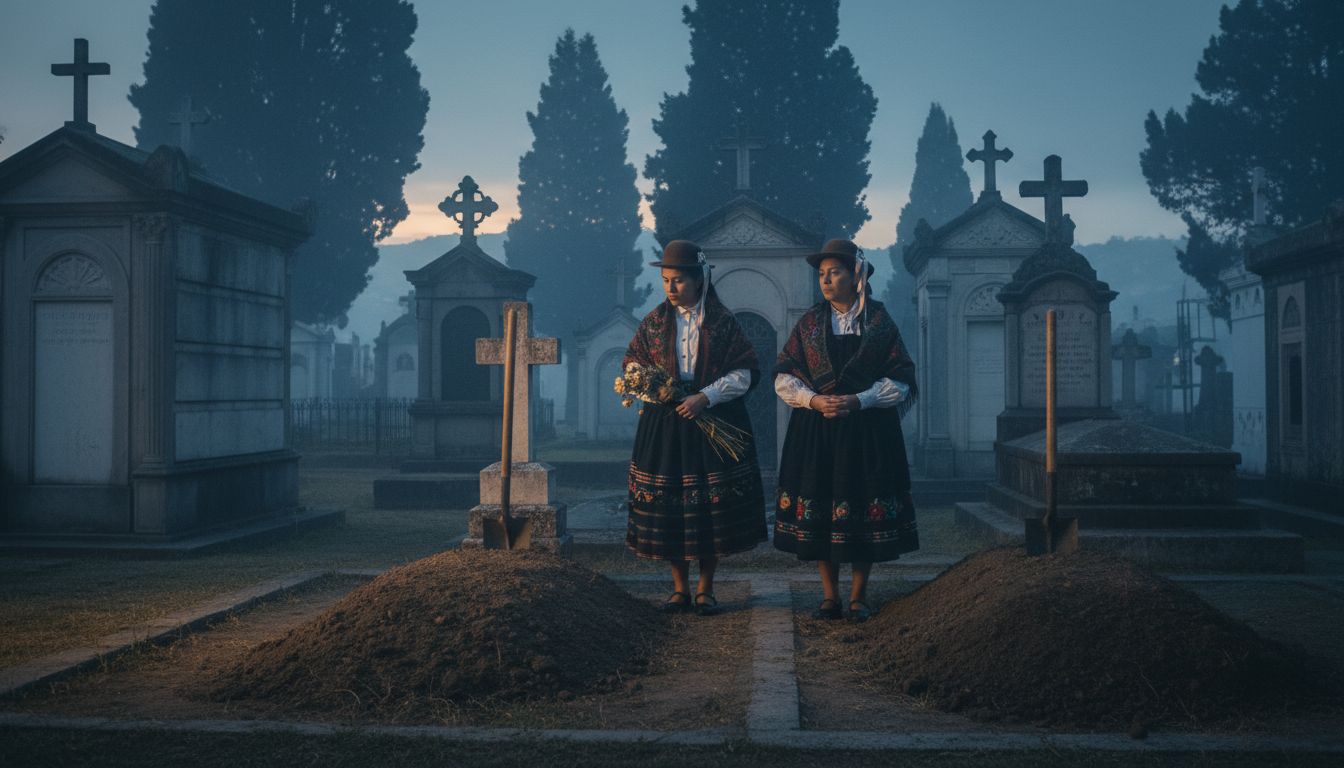
In Quito, as in many old cities, some stories survive precisely because nobody can fully pin them down. One of the darkest tales whispered through the historic center is that of Las Vampiras de San Diego, a macabre legend about two women said to prowl near burial grounds and feed from freshly opened graves. Whether the story was ever tied to a real event remains unclear. Documentation is absent or elusive, and the details shift with each retelling.
That uncertainty matters. Rather than verified history, this tale is better understood as folklore: a disturbing story shaped by fear, imagination, and the atmosphere of old Quito after dark. Its power comes less from proof than from the setting around it: narrow streets, old stone walls, religious memory, and the uneasy silence that gathers around cemeteries.
A Quito tale told in whispers
Urban legends tied to death and burial tend to last. They thrive in places where the past feels physically close, and Quito's historic neighborhoods offer exactly that kind of landscape. In stories like this, the cemetery is never just a cemetery. It becomes a borderland between the sacred and the profane, the living and the dead, the feared and the forbidden.
The legend of Las Vampiras de San Diego belongs to that world. It is usually told not as a documented episode, but as a local warning, a grisly anecdote, or a story meant to unsettle the listener. The lack of fixed facts does not weaken the tale. If anything, it gives the story more room to grow.
What the legend says
The core version is simple and shocking: two women associated with the San Diego area of Quito were said to raid fresh graves and consume what they found there. Beyond that, the narrative splinters. Some versions emphasize secrecy and nocturnal habits. Others focus on discovery, capture, or disappearance. In oral storytelling, those differences are common.
A recurring feature of legends like this is their reliance on vivid images rather than verifiable records. Listeners remember the graveyard, the night, the horror of violated burial space, and the scandal of human appetite turned monstrous. That emotional force carries the tale forward, even when names, dates, and specifics remain unstable or unproven.
Why stories like this take hold
Folklore often reveals a community's anxieties more clearly than its archives do. A story about women feeding from graves touches several fears at once: contamination, hunger, sacrilege, death, and the collapse of social boundaries. It takes what should remain protected, both the dead and the rituals around them, and imagines that protection failing in the most intimate way.
There is also a social dimension to such tales. Stories of bodily violation or forbidden consumption can express deeper worries about poverty, desperation, or exclusion. Even when no factual event can be established, the legend may echo real fears about what happens when people are pushed outside the moral and economic order. At the same time, moral panic can turn rumor into something that feels true simply because it is repeated often enough.
Shocking details endure because they are memorable. Oral tradition tends to preserve what is emotionally effective, not what is historically precise. That is one reason legends can outlast documentation: they answer emotional needs that records do not.
Gender, transgression, and the figure of the "monster woman"
It is significant that this legend centers on women. Across many cultures, female figures become the focus of stories about temptation, witchcraft, impurity, and uncontrolled appetite. The "monster woman" is a familiar figure in traditional storytelling because she embodies multiple forms of transgression at once: she crosses social rules, bodily boundaries, and moral expectations.
In that sense, Las Vampiras de San Diego can be read as more than a horror story. It may also reflect older cultural fears about women who stand outside accepted roles. A woman who hungers too much, knows too much, wanders too freely, or rejects conventional morality can become a powerful object of suspicion in legend. Folklore often turns marginalized women into cautionary symbols, especially when a community wants to dramatize the danger of social deviance.
That does not mean the story is only symbolic. It means the symbolism may help explain why it remained memorable. Horror becomes a vehicle for policing boundaries: between male and female, pure and impure, civilized and savage.
San Diego, Quito, and the power of place
Legends become more persuasive when they are anchored to recognizable places. Attaching this tale to San Diego gives it texture and local credibility, whether or not the story can be historically confirmed. A named neighborhood or cemetery allows listeners to imagine that the events happened not in some abstract realm, but just around the corner, in a space they can point to.
Historic districts are especially fertile ground for this kind of storytelling. They accumulate layers of devotion, violence, mourning, architecture, and rumor. Churches stand near cemeteries; ordinary daily life unfolds beside reminders of mortality. In that setting, ghost stories and warnings feel almost inevitable.
Place, however, should not be confused with proof. A powerful location can preserve memory, but it can also preserve atmosphere. The fact that a story belongs to a real part of Quito tells us something important about cultural imagination, even if it does not confirm the literal truth of the events described.
How to read the legend today
For modern readers, especially expats and travelers encountering Quito's older stories for the first time, this legend is most useful when approached as folklore rather than fact. It offers a glimpse into the city's darker imaginative life: the fears it stages, the moral boundaries it tests, and the way place can deepen belief.
It is also a reminder to keep atmosphere and evidence separate. The tale of Las Vampiras de San Diego is memorable because it is unsettling, not because it has been firmly documented. Its endurance says less about what can be proved than about what people find impossible to forget.
And that may be why stories like this survive. They give old streets an afterlife. They turn neighborhoods into stages for collective anxiety. They invite each new listener to decide, somewhere between skepticism and fascination, how much of the city's shadow world they are willing to believe.